 August 2023 in “JAAD Case Reports”
 A woman with lupus experienced hair regrowth after treatment, but hair transplantation is not advised for her condition.
 July 2023 in “Drug testing and analysis (Print)”
 Homemade hair treatments can significantly lower drug levels in hair, possibly causing false-negative drug tests.
 July 2023 in “Pharmacognosy Magazine”
 Cerasus serrulata flower extracts have strong antibacterial and antioxidant effects and may help prevent hair loss.
 May 2023 in “bioRxiv (Cold Spring Harbor Laboratory)”
 Telocytes, cells with long extensions, are vital for hair growth because they produce Wnt signals, which are necessary for hair follicle regeneration.
 April 2023 in “Journal of Investigative Dermatology”
 The mTOR signaling pathway might play a role in radiation dermatitis, but more research is needed.
November 2022 in “Journal of Investigative Dermatology” ILC1-like cells can cause alopecia areata by affecting hair follicles.
 October 2022 in “IntechOpen eBooks”
 Hair loss due to scarring can be treated by reducing inflammation, removing scar tissue, and transplanting hair. The Follicular Unit Extraction technique is effective but requires skill and time. Future focus should be on scar-less healing methods.
ILC1-like cells can independently cause alopecia areata by affecting hair follicles.
ILC1-like cells may contribute to hair loss in alopecia areata and could be new treatment targets.
 August 2022 in “Journal of Comprehensive Pediatrics”
 A girl with a rare genetic disorder had a unique bone condition, highlighting the need for careful diagnosis and suggesting the disorder might be more common than thought.
 June 2022 in “bioRxiv (Cold Spring Harbor Laboratory)”
 ILC1-like cells can cause alopecia areata by attacking hair follicles.
January 2022 in “Journal of clinical and diagnostic research” A rare skin bump with tiny hairs was successfully removed from a man's face.
 January 2022 in “Clinical Cases in Dermatology”
 Stress can cause temporary hair loss, which usually gets better after the stress is gone.
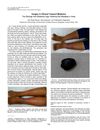 November 2021 in “American Journal of Tropical Medicine and Hygiene”
 Marking nuts can cause skin irritation and allergies.
October 2021 in “The journal of investigative dermatology/Journal of investigative dermatology” Herpes simplex virus infections should be considered in pemphigus patients to avoid unnecessary changes in treatment.
 September 2021 in “Physiology News”
 The Society had a promising start to 2021 with a new online platform, grants program, and elected Trustees.
 February 2021 in “Pakistan Armed Forces Medical Journal”
 A rare skin condition usually found near the eyes was found on a farmer's scalp.
January 2021 in “Indian dermatology online journal” The document lists various skin conditions and structures named "corona" that are not related to the coronavirus.
June 2020 in “Authorea (Authorea)” First-time mothers had higher stress hormone levels in late pregnancy than mothers who had given birth before.
March 2020 in “DOAJ (DOAJ: Directory of Open Access Journals)” Hair follicle stem cells improve burn wound healing and strength in rats.
 September 2018 in “PubMed”
 Hair becomes thinner, grayer, and may fall out more as people get older, and styling habits can worsen these effects.
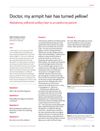
A 15-year-old boy's smelly, yellow armpit hair improved with clindamycin treatment.
 August 2018 in “Journal of The American Academy of Dermatology”
 A 16-year-old girl's skin rash was likely caused by an infection and improved with topical steroids.

Alopecia Areata is treated with drugs and therapies to reduce inflammation and immune response.
Cryotherapy is the best depigmentation method for vitiligo but needs an expert to perform it.
January 2018 in “프로그램북(구 초록집)” Botulinum toxin type A is a safe and effective treatment for male pattern baldness.
 August 2016 in “Journal of Investigative Dermatology”
 Blocking the CCR5 receptor may be a new way to treat hair loss from alopecia areata.
 April 2016 in “Journal of Investigative Dermatology”
 Sonic hedgehog signaling is needed for the development of touch-receptor cells in the skin, and the loss of Polycomb repressive complex 2 can lead to more of these cells.
 April 2015 in “Cambridge University Press eBooks”
 Many women experience sexual dysfunction, but few seek help, and better treatment and medical training are needed.
 September 2014 in “Springer eBooks”
 Aging causes hair to gray and thin, with the timing of graying varying by race, and factors like oxidative stress and genetics can lead to hair loss.