112 citations
,
April 2009 in “Cochrane library” Spironolactone may reduce excessive hair growth in women but its effectiveness for acne is not supported.
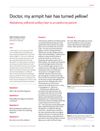
A 15-year-old boy's smelly, yellow armpit hair improved with clindamycin treatment.
 April 2019 in “The journal of investigative dermatology/Journal of investigative dermatology”
 DHT may reduce inflammation caused by certain bacteria in skin cells.
 67 citations
,
January 2020 in “Cellular & Molecular Immunology/Cellular & molecular immunology”
67 citations
,
January 2020 in “Cellular & Molecular Immunology/Cellular & molecular immunology” Tissue-resident memory T cells can protect against infections and cancer but may also contribute to autoimmune diseases.
15 citations
,
March 2015 in “PloS one” Scientists restored fertility in male mice lacking a key fertility gene by using a modified gene.
 9 citations
,
June 2020 in “Actas Dermo-Sifiliográficas”
9 citations
,
June 2020 in “Actas Dermo-Sifiliográficas” Spironolactone is effective for acne, hidradenitis suppurativa, female hair loss, and hirsutism but is underused in dermatology.
January 2025 in “SSRN Electronic Journal” 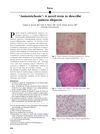 25 citations
,
April 2007 in “Journal of The American Academy of Dermatology”
25 citations
,
April 2007 in “Journal of The American Academy of Dermatology” The document suggests "anisotrichosis" as a new term for hair thickness variation in common baldness.
46 citations
,
August 1977 in “Journal of Morphology” The big-clawed shrew's sinus hair follicles are highly specialized for sensing vibrations.
11 citations
,
October 2024 in “International Journal of Molecular Sciences” Psoriasis patients have different skin bacteria, which may cause flare-ups.
8 citations
,
August 2015 in “Experimental Dermatology” Hidradenitis suppurativa may involve gut and oral bacteria, suggesting targeted treatments could help.
2 citations
,
January 2014 in “Photochemical & photobiological sciences” Grasp protein helps maintain skin health after UVB exposure.
 3 citations
,
August 2020 in “Case Reports in Dermatology”
3 citations
,
August 2020 in “Case Reports in Dermatology” Tofacitinib treatment significantly improved a patient's psoriasis, psoriatic arthritis, and alopecia universalis.
Lychnophora salicifolia extract in liposomes may protect skin from UV damage and inflammation.
5 citations
,
November 2024 in “Cells” Fish cell spheroids are a promising tool for replicating real-life conditions in research.
 84 citations
,
March 2004 in “Veterinary Dermatology”
84 citations
,
March 2004 in “Veterinary Dermatology” Cyclosporin is effective in treating dog skin diseases and has fewer side effects compared to other treatments.
 November 2023 in “Berkala Ilmu Kesehatan Kulit dan Kelamin/Berkala ilmu kesehatan kulit dan kelamin (Periodical of dermatology and venerology)”
 A dermoscope helps accurately tell apart Pityrosporum folliculitis and Acne vulgaris.
 January 2026 in “Environmental Science and Pollution Research”
 Wheat sprout extract can protect skin from toxin damage.
3 citations
,
January 2024 in “3 Biotech”  April 2014 in “Jurnal Biomedik : JBM”
 An 8-year-old girl had nail and hair issues that improved without specific treatment, but fungal nail infection was hard to cure.
Pangolin scales evolved for protection, hardening with age, due to keratin gene diversification.
4 citations
,
October 2024 in “International Journal of Molecular Sciences” GCN reduces lung inflammation and damage from air pollution in mice.
 January 2022 in “Research Square (Research Square)”
 High TSPEAR levels in colorectal cancer predict worse outcomes.
 March 2014 in “Journal of The American Academy of Dermatology”
 Tavaborole is a safe and effective toenail fungus treatment, with the 5% solution being the best option.
7 citations
,
December 2023 in “International Journal of Molecular Sciences” Forsythiaside A helps protect cells and liver from damage by reducing oxidative stress and boosting antioxidants.
 45 citations
,
July 2009 in “Journal of Investigative Dermatology”
45 citations
,
July 2009 in “Journal of Investigative Dermatology” The S100A4 protein is more common in psoriatic skin and could be a target for treating psoriasis.
June 2025 in “Preprints.org” Baricitinib improves alopecia areata and may help psoriasis but might not be ideal for psoriatic arthritis.
 January 2018 in “bioRxiv (Cold Spring Harbor Laboratory)”
 Auxin helps root hairs grow in high phosphate by affecting ROS and involving RSL2 and RSL4.
Henna extracts effectively fight fungi.
July 2024 in “Journal of Investigative Dermatology” ATR04-484 ointment shows promise for treating skin issues from cancer therapies.