1 citations
,
January 2012 in “Human health handbooks” Hair color is determined by melanin types and gene activity.
 41 citations
,
June 2013 in “PLOS ONE”
41 citations
,
June 2013 in “PLOS ONE” Engineered skin substitutes can grow hair but have limitations like missing sebaceous glands and hair not breaking through the skin naturally.
9 citations
,
December 2018 in “Journal of Analytical Toxicology” Ethyl glucuronide levels in hair can change when exposed to artificial sunlight, depending on hair color and thickness.
 45 citations
,
May 2019 in “Scientific Reports”
45 citations
,
May 2019 in “Scientific Reports” Low color temperature light (1900 K) benefits health by promoting melatonin, protecting eyes, and aiding healing.
13 citations
,
November 2016 in “Human & Experimental Toxicology” Maternal exposure to artificial food coloring may increase skin disease risk in rat offspring.
Human hair color is determined by melanin types and genetic factors.
January 2010 in “Elsevier eBooks” Hair color is important in many fields and is measured for various purposes.
1 citations
,
March 2025 in “JAAD reviews.” Significant progress has been made in treating skin, hair, and nail disorders in people with skin of color, but disparities still exist.
 50 citations
,
October 1918 in “The journal of experimental zoology”
50 citations
,
October 1918 in “The journal of experimental zoology” Artificially inducing hair regrowth in mice can change the normal pattern and timing of hair growth, with minimal color differences between old and new fur.
1 citations
,
February 2003 UV radiation causes significant protein loss and color changes in hair, especially blond hair.
Different methods like wigs, extensions, and devices can help improve hair volume for thinning hair.
2 citations
,
March 2017 in “Sultan Qaboos University medical journal” An infant had two different natural hair colors on the scalp with no health issues.
 September 2020 in “British Journal of Dermatology”
 The document highlights advancements and findings in dermatology, including AI use, disease prevention, treatment efficacy, and the impact of conditions on patients' lives.
 October 2020 in “Journal of bio innovation”
 DanEraTM hair tonic effectively treats dandruff and hair fall using natural ingredients.
 74 citations
,
March 1963 in “Archives of Dermatology”
74 citations
,
March 1963 in “Archives of Dermatology” Triparanol therapy can cause hair loss and skin dryness without inflammation or damage to hair follicles or skin structures.
 7 citations
,
January 2012
7 citations
,
January 2012 Neural networks can effectively predict hair loss.
 1 citations
,
January 2022 in “Electronic Imaging”
1 citations
,
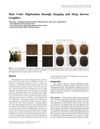
January 2022 in “Electronic Imaging” A new method accurately captures and renders hair color for virtual reality and hair dye use.
 1 citations
,
March 1985 in “Head & neck surgery”
1 citations
,
March 1985 in “Head & neck surgery” Hair-bearing punch grafting effectively repaired damage from artificial hair implants.
 April 2021 in “Journal of Investigative Dermatology”
 An AI photographic device effectively tracked hair growth improvements in women treated for hair loss.
 10 citations
,
September 2020 in “Metabolites”
10 citations
,
September 2020 in “Metabolites” Hair color and length affect metabolite profiles in hair, so they should be considered in hair analysis.
 10 citations
,
January 2007 in “Dermatologic Surgery”
10 citations
,
January 2007 in “Dermatologic Surgery” Artificial hair fibers help treat scalp scars with few complications and a 20% yearly fiber fall rate.
 9 citations
,
November 2008 in “Journal of Cosmetic Dermatology”
9 citations
,
November 2008 in “Journal of Cosmetic Dermatology” Artificial hair implantation is generally safe and can restore hair when other treatments fail, but some patients may experience side effects.
 2 citations
,
April 2025 in “Frontiers in Genetics”
2 citations
,
April 2025 in “Frontiers in Genetics” The ASIP gene is crucial for determining cattle coat color.
 1 citations
,
February 2021 in “Journal of Dermatological Treatment”
1 citations
,
February 2021 in “Journal of Dermatological Treatment” Artificial hair implants can quickly improve looks and life quality, but they have risks like infection and early fiber loss, so more research is needed to confirm their safety and effectiveness.
 December 2025 in “Frontiers in Medicine”
 Biofibre ® 4.0 hair implants are safe and satisfy most patients with hair loss.
 January 2007 in “Dermatologic Surgery”
 Artificial hair fibers help treat scalp scars with few complications and a 20% yearly fiber fall rate.
 7 citations
,
December 2017 in “Open Access Macedonian Journal of Medical Sciences”
7 citations
,
December 2017 in “Open Access Macedonian Journal of Medical Sciences” Biofibre® hair implants are safe and effective for alopecia when proper procedures are followed, with high patient satisfaction.
 4 citations
,
January 2021 in “Dermatologic Therapy”
4 citations
,
January 2021 in “Dermatologic Therapy” AI is effective in diagnosing and treating hair disorders, including detecting hair loss and scalp conditions with high accuracy, but it should supplement, not replace, doctor-patient interactions.
 March 2026 in “Aesthetic Plastic Surgery”
 AI is revolutionizing non-surgical cosmetic procedures by improving personalization, safety, and access.
 October 2025 in “Dermatology Practical & Conceptual”
 ChatGPT 4.0 and Gemini 1.5 Flash are effective for educating patients about androgenetic alopecia, while Deepseek R1 is less reliable.