 July 2025 in “Russian Journal of Transplantology and Artificial Organs”
 Combining surgical and nonsurgical methods is key to reducing post-burn scars.
32 citations
,
December 2015 in “PloS one” P144® improves hypertrophic scars by reducing size and thickness and increasing elasticity.
 9 citations
,
September 2017 in “Nanoscale Research Letters”
9 citations
,
September 2017 in “Nanoscale Research Letters” Graphene oxide helps deliver a skin healing agent over time, improving skin and hair follicle regeneration.
 August 2003 in “International Journal of Cosmetic Surgery and Aesthetic Dermatology”
 Fiber implants effectively treat permanent hair loss with few complications.
 6 citations
,
August 2003 in “Aesthetic Surgery Journal”
6 citations
,
August 2003 in “Aesthetic Surgery Journal” Hair restoration using micrografts and minigrafts can provide natural-looking hair without scars and good density in 1 or 2 sessions.
 18 citations
,
January 2013 in “International Society of Hair Restoration Surgery”
18 citations
,
January 2013 in “International Society of Hair Restoration Surgery” Proper cell preservation is crucial for successful hair transplants and other medical treatments.
 85 citations
,
July 2025 in “Nature Communications”
85 citations
,
July 2025 in “Nature Communications” Nanozymes greatly improve biocatalysis by being stable, efficient, and versatile.
 75 citations
,
January 2011 in “Plastic and Reconstructive Surgery”
75 citations
,
January 2011 in “Plastic and Reconstructive Surgery” The dermal regeneration template is effective in skin regeneration, reducing scarring, and has potential for future improvements.
 74 citations
,
October 1998 in “Journal of biological chemistry/The Journal of biological chemistry”
74 citations
,
October 1998 in “Journal of biological chemistry/The Journal of biological chemistry” The 190-kbp domain contains all human type I hair keratin genes, showing their organization and evolution.
 70 citations
,
December 2004 in “Differentiation”
70 citations
,
December 2004 in “Differentiation” The study identified and characterized new keratin genes linked to hair follicles and epithelial tissues.
 54 citations
,
August 2009 in “Dermatologic Surgery”
54 citations
,
August 2009 in “Dermatologic Surgery” Modern hair transplants use small grafts for a natural look and drugs to prevent further loss, with high patient satisfaction.
 47 citations
,
March 2017 in “Materials Science and Engineering: C”
47 citations
,
March 2017 in “Materials Science and Engineering: C” Human amniotic membrane helps heal skin wounds faster and with less scarring.
 39 citations
,
September 2011 in “Tissue Engineering Part B-reviews”
39 citations
,
September 2011 in “Tissue Engineering Part B-reviews” Hair follicle regeneration in skin grafts may be possible using stem cells and tissue engineering.
 29 citations
,
March 2020 in “Stem Cell Research & Therapy”
29 citations
,
March 2020 in “Stem Cell Research & Therapy” Fat stem cells from diabetic mice can help heal skin wounds in other diabetic mice.
 24 citations
,
August 2011 in “Experimental Dermatology”
24 citations
,
August 2011 in “Experimental Dermatology” The flap assay grows the most natural hair but takes the longest, the chamber assay is hard work but gives dense, normal hair, and the patch assay is quick but creates poorly oriented hair with some issues.
 11 citations
,
January 2015 in “Annals of Dermatology”
11 citations
,
January 2015 in “Annals of Dermatology” Using a hair removal laser can make hairs finer for better hairline correction in hair transplants, with most patients happy and few side effects.
 5 citations
,
May 2005 in “Seminars in Plastic Surgery”
5 citations
,
May 2005 in “Seminars in Plastic Surgery” The document concludes that correcting poor hair transplants requires a careful plan and a mix of techniques to achieve a natural look and address various challenges.
 1 citations
,
December 2010 in “Elsevier eBooks”
1 citations
,
December 2010 in “Elsevier eBooks” Cell transplantation faces challenges in genitourinary reconstruction, but alternative tissue sources and microencapsulation show promise.
 June 2026 in “Journal of Biological Engineering”
 Stem cell therapies are advancing quickly with new technologies and need supportive regulations for clinical use.
Dynaplast tape reduces swelling after hair transplants effectively.
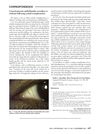 December 2012 in “Canadian journal of ophthalmology”
 Eyelash transplantation can cause eye damage and pain if not done carefully.
 June 1999 in “Proceedings of SPIE”
 The CO₂ laser is better for hair transplantation because it causes less damage than the Ho:YAG laser.
 3 citations
,
July 1997 in “Current problems in dermatology”
3 citations
,
July 1997 in “Current problems in dermatology” Hair restoration surgery has evolved over time, with a focus on natural-looking results and managing patient expectations, while also considering potential complications and the lifelong progression of male pattern baldness.
 January 2021 in “Journal of clinical and cosmetic dermatology”
 Human skin responds to light with protective mechanisms, but more research is needed to understand these processes and their implications for health and therapy.
 6 citations
,
January 2013
6 citations
,
January 2013 Hyperadrenocorticism in ferrets is linked to neutering and indoor housing, and is best treated with surgery and a deslorelin implant.
 86 citations
,
June 2017 in “Stem cell investigation”
86 citations
,
June 2017 in “Stem cell investigation” Stem cells from hair follicles can safely treat hair loss.
 71 citations
,
February 2020 in “Journal of Translational Medicine”
71 citations
,
February 2020 in “Journal of Translational Medicine” Progress has been made in skin and nerve regeneration, but more research is needed to improve methods and ensure safety.
 51 citations
,
June 2021 in “Signal Transduction and Targeted Therapy”
51 citations
,
June 2021 in “Signal Transduction and Targeted Therapy” The document concludes that while there are promising methods to control CRISPR/Cas9 gene editing, more research is needed to overcome challenges related to safety and effectiveness for clinical use.
 48 citations
,
September 2017 in “Frontiers in Bioscience”
48 citations
,
September 2017 in “Frontiers in Bioscience” Nanoparticles show promise for better wound healing, but more research is needed to ensure safety and effectiveness.
 40 citations
,
November 1998 in “The journal of investigative dermatology/Journal of investigative dermatology”
40 citations
,
November 1998 in “The journal of investigative dermatology/Journal of investigative dermatology” S100A3 protein is crucial for hair shaft formation in mice.