 December 2023 in “Journal of the Endocrine Society”
 Blocking glucocorticoid receptors improves glucose metabolism in a PCOS mouse model.
August 2020 in “Benha Journal of Applied Sciences” Higher FABP4 levels may help diagnose androgenetic alopecia early.
 11 citations
,
March 2019 in “Journal of Medicinal Chemistry”
11 citations
,
March 2019 in “Journal of Medicinal Chemistry” Some synthetic carbohydrate receptors, especially compounds 3 and 15, show strong potential for treating Zika virus.
 35 citations
,
March 2011 in “International Journal of Dermatology”
35 citations
,
March 2011 in “International Journal of Dermatology” No true link between AGA and insulin resistance, but coexistence may worsen AGA.
114 citations
,
September 1985 in “Journal of Investigative Dermatology” 8 citations
,
August 2022 in “Pharmaceutics” Erythrocyte-anchored nanoparticles improved Cepharanthine delivery and effectiveness for treating acute lung injury.
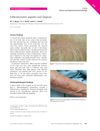 May 2014 in “Clinical and Experimental Dermatology”
 A 70-year-old woman with a rare skin condition improved after treatment with topical steroids and acitretin.
1 citations
,
September 2025 in “The Oncologist” Effective management of side effects is crucial for safe use of sacituzumab govitecan in advanced breast cancer treatment.
10 citations
,
April 2003 in “Clinical neurology and neurosurgery” Autoimmune polyglandular syndrome can cause temporary brain issues that may improve on their own.
September 2025 in “Blood Advances” Targeting androgen receptor signaling may improve acute myeloid leukemia treatment.
 January 2025 in “Journal of the European Academy of Dermatology and Venereology”
 Newer GLP-1 drugs like semaglutide may cause hair loss.
 2 citations
,
January 2013 in “International Journal of Dermatology”
2 citations
,
January 2013 in “International Journal of Dermatology” ALDOA levels drop in hair cells during hair loss.
 48 citations
,
February 2013 in “Molecular and Cellular Endocrinology”
48 citations
,
February 2013 in “Molecular and Cellular Endocrinology” The protein StAR is found in 17 different organs and can affect hair loss and brain functions, but its full role is not yet fully understood.
1 citations
,
October 2022 in “The American Journal of Gastroenterology” Chronic arsenic exposure can cause liver damage and other health issues.
5 citations
,
August 2024 in “Cureus” GLP-1 receptor agonists help women with PCOS lose weight and improve health, but more research is needed on long-term effects.
147 citations
,
August 2005 in “The Plant Cell” The TIP1 gene is crucial for normal plant cell growth in Arabidopsis.
July 2026 in “Journal of Enzyme Inhibition and Medicinal Chemistry” Improved CRBN ligands make protein degraders more effective and drug-like.
 17 citations
,
February 2019 in “Journal of steroid biochemistry and molecular biology/The Journal of steroid biochemistry and molecular biology”
17 citations
,
February 2019 in “Journal of steroid biochemistry and molecular biology/The Journal of steroid biochemistry and molecular biology” AKR1D1 controls glucocorticoid levels and receptor activity in liver cells.
 56 citations
,
December 2011 in “The Plant Journal”
56 citations
,
December 2011 in “The Plant Journal” AGD1 is important for root hair development in Arabidopsis, working with phosphoinositide signaling and the actin cytoskeleton.

DOPE:DOPC liposomes can improve targeted cancer drug delivery, reducing side effects and increasing effectiveness.
 1 citations
,
January 2023 in “Journal of Drugs in Dermatology”
1 citations
,
January 2023 in “Journal of Drugs in Dermatology” Early detection of Graham-Little-Piccardi-Lasseur syndrome is key for better management.
 16 citations
,
January 2003 in “Nuclear Receptor Signaling”
16 citations
,
January 2003 in “Nuclear Receptor Signaling” Androgens and SARMs play a role in body mass, frailty, skin health, and hair growth, and are used in treating prostate cancer, acne, and hair loss, with potential for new uses and improved versions in the future.
 June 2023 in “Medical records-international medical journal”
 Decreased IGF-1R expression may contribute to sacrococcygeal pilonidal sinus development.
4 citations
,
January 2023 in “Journal of Clinical Investigation” Specific mutations in a receptor cause facial abnormalities and hair loss.
2 citations
,
December 2013 in “Cancer research” Enobosarm may effectively treat androgen receptor-positive breast cancer with fewer side effects.
 62 citations
,
January 2010 in “Hormone research in paediatrics”
62 citations
,
January 2010 in “Hormone research in paediatrics” Genetic screening is crucial for accurately diagnosing APS-1 due to its varied symptoms.
 1 citations
,
January 2025 in “American Journal of Translational Research”
1 citations
,
January 2025 in “American Journal of Translational Research” PPARα agonists may help treat alopecia areata by reducing inflammation.
 April 2019 in “Journal of Investigative Dermatology”
 Eating grape powder may reduce the severity of skin allergy symptoms.
93 citations
,
January 2000 in “Annals of Medicine” Mutations in the androgen receptor gene cause various disorders.
 2 citations
,
August 2019 in “BMC Complementary and Alternative Medicine”
2 citations
,
August 2019 in “BMC Complementary and Alternative Medicine” Asiasari radix extract may be a potential treatment for melanoma because it selectively triggers cell death in melanoma cells by affecting p53 regulation.