 11 citations
,
October 2018 in “Pediatric dermatology”
11 citations
,
October 2018 in “Pediatric dermatology” Leflunomide and anthralin may effectively treat severe alopecia areata.
December 2021 in “Benha Journal of Applied Sciences” Higher Alarin levels may predict androgenetic alopecia and metabolic syndrome.
March 2026 in “The Journal of Dermatology” Ritlecitinib is cost-effective for severe alopecia areata in Japan.
 4 citations
,
May 2019 in “Zeitschrift für Naturforschung C”
4 citations
,
May 2019 in “Zeitschrift für Naturforschung C” Ishige sinicola extract helps bone-building cells grow and mature, which could aid in treating osteoporosis.

Baricitinib is more effective than tofacitinib for hair regrowth in alopecia patients.
 February 2025 in “Biomolecules”
 RORA boosts autophagy in hair follicle stem cells, potentially aiding hair growth.
 2 citations
,
January 2018 in “International journal of research in dermatology”
2 citations
,
January 2018 in “International journal of research in dermatology” Intralesional corticosteroids are the best for limited alopecia areata, oral steroids are less effective, and PRP is safe and promising, especially for children and severe cases.
November 2025 in “Journal of Investigative Dermatology” IMG-007 helps regrow hair and reduce scalp inflammation in severe alopecia areata.
April 2026 in “ACS Applied Materials & Interfaces” Sper-12 nanoparticles may help treat hair loss by delivering siRNA to target androgen receptors.
July 2024 in “Journal of Investigative Dermatology” PH-762 shows promise in treating skin cancer by effectively targeting and silencing PD-1 in tumors with minimal side effects.
July 2025 in “Journal of Investigative Dermatology” Reduced AhR signaling in HS tunnels leads to persistent inflammation and microbial imbalance.
June 1985 in “Journal of the American Academy of Dermatology”  April 2023 in “Journal of Investigative Dermatology”
 Sunlight simulation causes skin inflammation, with different skin types reacting at different levels of exposure.
 June 2024 in “IP Indian journal of clinical and experimental dermatology”
 PRP therapy effectively treats alopecia areata and atrophic acne scars.
 31 citations
,
November 2013 in “Dermatologic Clinics”
31 citations
,
November 2013 in “Dermatologic Clinics” The ARTAS robotic system for hair restoration is efficient with fewer cuts than manual methods, but it's limited to certain hair types and can still leave scars.
 November 2018 in “Annals of oncology”
 A scalp-cooling system effectively prevents hair loss in breast cancer patients treated with eribulin.
48 citations
,
July 2023 in “Pediatric Dermatology” Ritlecitinib effectively regrows hair in adolescents with alopecia areata and is safe.
 1 citations
,
November 2016 in “Hanbang an'i'bi'in'hu pibu'gwa haghoeji”
1 citations
,
November 2016 in “Hanbang an'i'bi'in'hu pibu'gwa haghoeji” Low level laser therapy and acupuncture significantly improved hair growth in a patient with alopecia.
 April 2023 in “Journal of Investigative Dermatology”
 The research developed methods to test drugs that could protect and restore hair follicle protection in a hair loss condition.
 November 2024 in “SKIN The Journal of Cutaneous Medicine”
 Ritlecitinib provides new treatment options for diverse alopecia areata patients.
 7 citations
,
January 2021 in “Dermatology and therapy”
7 citations
,
January 2021 in “Dermatology and therapy” Both dermatologists and patients in Japan agree that treatment success for alopecia areata is having 20% or less scalp hair loss.
 November 2025 in “SKIN The Journal of Cutaneous Medicine”
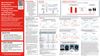
 Baricitinib effectively regrows scalp hair in most people with severe alopecia areata.
 2 citations
,
August 2022 in “BMC veterinary research”
2 citations
,
August 2022 in “BMC veterinary research” Hair follicle stem cells from Arbas Cashmere goats can become fat, nerve, and liver cells.
CRPS I is complex, linked to immune and nerve issues, and needs comprehensive treatment.
 23 citations
,
May 2009 in “International Journal of Dermatology”
23 citations
,
May 2009 in “International Journal of Dermatology” AR gene not major factor in female hair loss; different from male hair loss.
 April 2017 in “Journal of Investigative Dermatology”
 SIG-1451 could be a promising new treatment for atopic dermatitis.
January 2024 in “Kafkas Universitesi Veteriner Fakultesi Dergisi” A specific genetic variation affects wool quality in sheep.
 July 2022 in “Journal of Investigative Dermatology”
 The conclusion suggests that a new system for measuring hair loss could be created using automated analysis of photographs.
2 citations
,
February 2024 in “Medicine” A mutation in the IL2RA gene increases the risk of alopecia areata.