 17 citations
,
January 2019 in “International journal of biological sciences”
17 citations
,
January 2019 in “International journal of biological sciences” Researchers used CRISPR/Cas9 to create a goat with a gene that increased cashmere production by 74.5% without affecting quality.
25 citations
,
December 2018 in “Journal of Investigative Dermatology” TRPV4 slows hair growth by affecting hair follicle cells.
 1 citations
,
January 2013 in “MedChemComm”
1 citations
,
January 2013 in “MedChemComm” PF-05314882 selectively activates androgen receptors without much effect on prostate and may help in prostate cancer treatment and hair loss prevention.
 October 2019 in “European heart journal”
 Androgen-deprivation therapies increase the risk of certain heart conditions, but testosterone treatment may help.
 March 2022 in “International Journal of Trichology”
 Tofacitinib may be effective for treating hair loss caused by alopecia areata that doesn't respond to other treatments.
 July 2012 in “European journal of cancer”
 MPA increases cancer spread by boosting Eph A2 activity.
6 citations
,
June 2025 in “Nano Biomedicine and Engineering” Smart nano-PROTACs improve cancer treatment by targeting proteins more precisely and reducing side effects.
7 citations
,
January 2022 in “SAGE open medical case reports” Upadacitinib successfully treated a child's severe skin and hair loss issues.
7 citations
,
September 1991 in “Journal of Andrology” 4‐MAPC reduces rat prostate weight and prostatein levels.
Topical GT20029 effectively promotes hair regrowth and is well-tolerated for treating androgenetic alopecia.
March 2026 in “Journal of Investigative Dermatology” Generative AI tools like GPT-4o can effectively automate SALT scoring for alopecia areata, matching clinician accuracy.
 1 citations
,
September 2023 in “Meditsinskiy sovet = Medical Council”
1 citations
,
September 2023 in “Meditsinskiy sovet = Medical Council” Combining NB-UVB 311 nm therapy with standard treatment improves hair regrowth in children with alopecia areata and atopic dermatitis.
 6 citations
,
June 2018 in “PLOS ONE”
6 citations
,
June 2018 in “PLOS ONE” The Alopecia Areata Assessment Tool (ALTO) effectively identifies alopecia areata from other hair loss types but needs more validation.
 1 citations
,
July 2019 in “Medicina Clínica (English Edition)”
1 citations
,
July 2019 in “Medicina Clínica (English Edition)” Tofacitinib partially improved hair regrowth in a patient with severe hair loss.
42 citations
,
July 2013 in “Gene” IL-4 gene variation may increase the risk of alopecia areata in Turkish people.
 October 2021 in “Dermatology Reports”
 Tofacitinib, a hair regrowth treatment, may worsen acne.
November 2025 in “Journal of Investigative Dermatology” Chronic refractory alopecia areata has more skin-resident memory T cells, and JAK inhibitors may help reduce them.
Not having the gene PLAAT3 leads to fat loss, high insulin resistance, and abnormal fat levels in the blood due to a disruption in fat cell development and function.
 3 citations
,
November 2022 in “Frontiers in molecular biosciences”
3 citations
,
November 2022 in “Frontiers in molecular biosciences” Plasmalogens activate a channel in cells that may stimulate hair growth.
February 2023 in “Research Square (Research Square)” Autologous Cellular Micrografts effectively treat hair loss with significant improvements and no dangerous side effects.
 4 citations
,
June 2021 in “Journal of Microbiology and Biotechnology”
4 citations
,
June 2021 in “Journal of Microbiology and Biotechnology” Ginsenoside Rg4 from ginseng may help hair growth by activating certain cell signals.
July 2024 in “Journal of Investigative Dermatology” May 2025 in “OPAL (Open@LaTrobe) (La Trobe University)” Linoleic acid and magnesium are key in alopecia areata progression, and tofacitinib can help by affecting their pathway.
 January 2025 in “Journal of Crohn s and Colitis”
 Tofacitinib is effective and safe for elderly patients with ulcerative colitis.
 8 citations
,
May 2017 in “Singapore Medical Journal”
8 citations
,
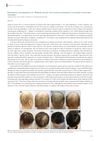
May 2017 in “Singapore Medical Journal” A Korean woman with complete hair loss regrew her hair after taking tofacitinib, with no side effects.
 1 citations
,
May 2017 in “Journal of the American Academy of Dermatology”
1 citations
,
May 2017 in “Journal of the American Academy of Dermatology” Tofacitinib helped a teenager with severe hair loss grow hair back, but more research is needed.
 2 citations
,
July 2019 in “PLOS ONE”
2 citations
,
July 2019 in “PLOS ONE” Certain genetic variations are linked to higher liver enzyme levels in patients treated for chronic hepatitis C with specific drugs.
 August 2025 in “Scientific Electronic library online (Sciences Carlos III Health Institute)”
 Tofacitinib can help regrow hair in about 50% of people with moderate-severe alopecia areata.
November 2025 in “Bioactive Materials” TQC shows promise for better hair regrowth in treating hair loss.