5 citations
,
December 2023 in “Current Biology” A feedback loop between LRH and RSL4 controls root hair growth in Arabidopsis.
 39 citations
,
April 2019 in “Journal of Biomaterials Science, Polymer Edition”
39 citations
,
April 2019 in “Journal of Biomaterials Science, Polymer Edition” RADA16 is a promising material for tissue repair and regenerative medicine but needs improvement in strength and cost.
August 2025 in “International Journal of Molecular Sciences” AVT is highly conserved and may have antimicrobial properties.
 26 citations
,
May 2012 in “Cellular and Molecular Life Sciences”
26 citations
,
May 2012 in “Cellular and Molecular Life Sciences” NcoA4 may have roles beyond helping control gene activity, possibly affecting cell behavior and stability.
 200 citations
,
November 1997 in “Planta”
200 citations
,
November 1997 in “Planta” Calcium affects where root hairs grow, but other unknown factors determine their growth direction.
15 citations
,
September 2018 in “Frontiers in Plant Science” BcFLA1 protein is crucial for root hair growth in response to low phosphate in Brassica carinata.
The scant hair in snthr-1Bao mice is likely caused by a deletion affecting the Plcd1 gene.
27 citations
,
April 2004 in “Biochemical and Biophysical Research Communications” Two new gene clusters important for hair formation were found on human chromosome 11.
 2 citations
,
April 2022 in “Cutaneous and Ocular Toxicology”
2 citations
,
April 2022 in “Cutaneous and Ocular Toxicology” Tofacitinib may help treat hair loss in children with alopecia areata.
 4 citations
,
January 2022 in “Dermatologic Therapy”
4 citations
,
January 2022 in “Dermatologic Therapy” Tofacitinib was found to be a safe and effective treatment for hair regrowth in patients with alopecia areata.
June 2025 in “British Journal of Dermatology” Tofacitinib is more effective than methotrexate for treating moderate-to-severe alopecia areata.
 January 2025 in “Cellular and Molecular Life Sciences”
 BMP4 helps stem cells turn into pigment-producing cells, affecting hair color and growth.
April 2023 in “Journal of Investigative Dermatology” TGFβ-2 may cause hair loss in androgenetic alopecia.

Baricitinib is more effective than tofacitinib for hair regrowth in alopecia patients.
 11 citations
,
November 2019 in “Journal of the American Academy of Dermatology”
11 citations
,
November 2019 in “Journal of the American Academy of Dermatology” Oral tofacitinib is a promising treatment for beard hair loss in alopecia areata.
June 2025 in “British Journal of Dermatology” Ruxolitinib helped a woman with a genetic mutation regrow her hair and improved her health.
April 2019 in “The journal of investigative dermatology/Journal of investigative dermatology” A specific mutation in the TRPV3 gene causes hair follicle cells to develop improperly, leading to hair loss.
August 2023 in “Zenodo (CERN European Organization for Nuclear Research)” October 2024 in “Frontiers in Oncology” A new gene mutation linked to Olmsted syndrome may increase cancer risk, suggesting the need for ongoing patient monitoring.
 August 2016 in “Journal of Investigative Dermatology”
 Researchers found a new genetic mutation linked to a hair condition in a Japanese boy.
288 citations
,
January 2001 in “Journal of Biological Chemistry” Tgm2 helps stabilize dying cells and aids fibroblast attachment to the extracellular matrix.
109 citations
,
November 2011 in “Nature Neuroscience” 21 citations
,
September 2019 in “International Journal of Nanomedicine” RADA16-I can effectively deliver and release mangiferin, improving its solubility and bioavailability.
 14 citations
,
February 2021 in “Journal of the European Academy of Dermatology and Venereology”
14 citations
,
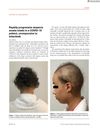
February 2021 in “Journal of the European Academy of Dermatology and Venereology” A COVID-19 patient with severe hair loss did not improve with hair loss medication after stopping and restarting it due to the infection.
January 2026 in “Experimental Dermatology” Skin-resident memory T cells may contribute to chronic alopecia areata and baricitinib could be a potential treatment.
5 citations
,
August 2024 in “Frontiers in Immunology” Upadacitinib effectively treats psoriasiform eczema and some related conditions.
 April 2023 in “Journal of Investigative Dermatology”
 Keeping human skin stem cells is easier with low temperatures and mTOR inhibition.
January 2013 in “edoc (University of Basel)” TRF1 is crucial for creating and maintaining stem cells and marks both pluripotent and adult stem cells.
January 2022 in “SSRN Electronic Journal” LncRNA RP11-818024.3 helps hair growth and recovery in hair loss by boosting cell survival and reducing cell death.
17 citations
,
May 2021 in “Journal of Cell Science” N1-acetylspermidine promotes hair follicle stem cell self-renewal.