4 citations
,
July 2023 in “Nature Medicine” The FDA approved a new Pfizer drug for hair loss in teens.
48 citations
,
April 2008 in “Human Molecular Genetics” Progerin affects cell shape but not hair or skin in mice.
 May 2024 in “JCI insight”
 A variant in the ADAM17 gene causes hair loss by increasing protein degradation through TRIM47.
 9 citations
,
March 2018 in “European journal of dermatology/EJD. European journal of dermatology”
9 citations
,
March 2018 in “European journal of dermatology/EJD. European journal of dermatology” A new mutation in the ST14 gene causes a rare skin and hair disorder in a specific family.
October 2014 in “Cancer research” Blocking mTORC1 reduces skin tumor growth in mice.
 July 2025 in “JAAD Case Reports”
 A thorough assessment and combined treatment are crucial for managing complex alopecia, especially in patients with skin of color.
 June 2026 in “Dermatology and Therapy”
 Ritlecitinib provides new treatment options for diverse alopecia areata patients.
 13 citations
,
January 2011 in “International Journal of Trichology”
13 citations
,
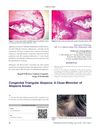
January 2011 in “International Journal of Trichology” CTA is often mistaken for AA but doesn't respond to steroids and may require hair transplantation.
 November 2025 in “Mendeley Data”
 JAK inhibitors can be safely used for alopecia areata in patients with latent hepatitis B or stable tuberculosis with proper monitoring.
 28 citations
,
July 2007 in “Development”
28 citations
,
July 2007 in “Development” TAF4 is important for skin cell growth and helps prevent skin cancer in mice.
 8 citations
,
October 2019 in “Immunological investigations”
8 citations
,
October 2019 in “Immunological investigations” The AIRE gene variant rs2075876 is linked to a higher risk of alopecia areata in males.
 January 2024 in “Elsevier eBooks”
 Increasing regulatory T cells may help treat alopecia areata by reducing autoimmunity and promoting hair growth.
 2 citations
,
October 2023 in “Philosophical transactions - Royal Society. Biological sciences”
2 citations
,
October 2023 in “Philosophical transactions - Royal Society. Biological sciences” Enzymes that change arginine to citrulline are important for skin barrier and hair formation, and their malfunction can lead to skin conditions and hair disorders.
 September 2014 in “SciBX”
 JAK inhibitors may help treat alopecia areata and promote hair regrowth.
18 citations
,
November 2009 in “Calcified tissue international” A genetic mutation caused severe rickets and alopecia in an Indian patient, but high-dose calcium and phosphate treatment improved their condition.
11 citations
,
November 2015 in “Carcinogenesis” Deleting TNFα gene reduces skin cancer risk in certain mice.
 June 2024 in “Annals of Medicine and Surgery”
 A 23-year-old Syrian woman has two rare hair disorders, and avoiding hair treatments plus using vitamins and minoxidil may help.
October 2024 in “Frontiers in Oncology” A new gene mutation linked to Olmsted syndrome may increase cancer risk, suggesting the need for ongoing patient monitoring.
 14 citations
,
December 2010 in “Journal of human genetics”
14 citations
,
December 2010 in “Journal of human genetics” A Japanese patient with IFAP syndrome had a severe MBTPS2 gene mutation but showed milder symptoms than previously observed cases.
7 citations
,
December 2016 in “Journal of the American Academy of Dermatology” NKG2D+CD4+ T cells are higher in alopecia areata patients and may be involved in the disease.
1 citations
,
January 2018 in “Indian dermatology online journal” Early diagnosis and genetic evaluation of ADULT syndrome are crucial to reduce stress and medical costs.
6 citations
,
July 2020 in “The Kaohsiung Journal of Medical Sciences” Inhibiting the PI3K/Akt pathway may help prevent radiation-induced liver injury.
July 2025 in “Journal of Investigative Dermatology” γδ T cells can prevent and treat alopecia areata, offering a new therapy option.
January 2005 in “Enlighten: Publications (The University of Glasgow)” Melanocyte pathology requires keratinocyte hyperplasia and regulation dysfunction.
 April 2026 in “Journal of Inflammation Research”
 Alopecia areata and atopic dermatitis share immune system issues, and treatments like JAK inhibitors can help both.
286 citations
,
August 2007 in “Journal of Clinical Investigation” Alopecia areata is an autoimmune disease where T cells attack hair follicles.
 August 2023 in “Sabuncuoglu Serefeddin Health Sciences”
 CT60 polymorphism might increase the risk of Alopecia Areata.
305 citations
,
March 2008 in “AJP Endocrinology and Metabolism” SSAT is a key enzyme affecting cell growth and metabolism, with potential but risky use in disease treatment.
April 2023 in “Journal of Investigative Dermatology” IL-17 plays a key role in severe hair loss in chronic alopecia areata.
 March 2025 in “Experimental Dermatology”
 Overexpression of IKZF1 and Ikaros causes hair loss in mice similar to alopecia areata.