 March 2024 in “Research Square (Research Square)”
 Sex steroids affect the MafB gene differently in male and female hamsters.
109 citations
,
November 2011 in “Nature Neuroscience”  1 citations
,
September 2012 in “Journal of Investigative Dermatology”
1 citations
,
September 2012 in “Journal of Investigative Dermatology” Aging reduces stem cell activation, leading to hair loss in mice lacking a specific enzyme.
 8 citations
,
January 2019 in “Experimental Dermatology”
8 citations
,
January 2019 in “Experimental Dermatology” The 3D skin model is better for hair growth research and testing treatments.
8 citations
,
January 1989 in “PubMed” Minoxidil did not affect hair growth in newborn mice.
188 citations
,
June 1998 in “Molecular cell” Researchers created a mouse with the same mutation as humans with trichothiodystrophy, showing similar symptoms and confirming the condition is due to defects in DNA repair and gene activity.
10 citations
,
June 2009 in “Acta Biochimica Polonica” Old C57BL/6 mice with unsynchronized hair cycles show less melanin in their spleens.
 29 citations
,
June 2005 in “Journal of Zoo and Wildlife Medicine”
29 citations
,
June 2005 in “Journal of Zoo and Wildlife Medicine” Most hair loss in captive rhesus macaques is likely due to environmental and behavioral factors.
January 2012 in “Zhongguo linchuang xinlixue zazhi” Chronic stress delays hair growth in mice, but antioxidants can help reverse this.
 3 citations
,
April 2010 in “Endocrinology”
3 citations
,
April 2010 in “Endocrinology” The mouse model suggests male pattern baldness may be due to an enzyme increasing DHT and higher androgen receptor levels in hair follicles.
21 citations
,
November 1969 in “Journal of Investigative Dermatology” A new staining method clearly shows nerves around eyebrow hair follicles.
35 citations
,
May 2008 in “Drug and Alcohol Dependence” Female mice are less affected by certain substances that alter alcohol consumption compared to male mice.
3 citations
,
July 1969 in “PubMed” Radiation reduced zinc levels, growth, organ weights, and hair pigment in swine.
93 citations
,
May 1990 in “The EMBO Journal” Mice with extra sheep genes had hair that fell out and regrew in cycles.
5 citations
,
August 2021 in “STAR Protocols” The protocol helps visualize detailed structures in mouse skin and cells using scanning electron microscopy.
Researchers created a new mouse model, G4, that mimics human PCOS symptoms and links the condition to a specific gene.
1 citations
,
November 2024 in “eLife” Mesenchymal MEIS2 is essential for whisker development without needing sensory nerves.
3 citations
,
May 2008 in “Journal of Visualized Experiments” Mouse Epidermal Neural Crest Stem Cells can become various cell types.
5 citations
,
June 1995 in “Comparative biochemistry and physiology. Part C. Comparative pharmacology and toxicology/Comparative biochemistry and physiology. C. Comparative pharmacology and toxicology” Removing mink's adrenal glands causes their summer fur to grow earlier.
1 citations
,
July 2007 in “Journal of Investigative Dermatology” The mutation causes hairless mice due to mislocalized and dysfunctional HR protein.
13 citations
,
July 1978 in “Journal of comparative pathology” Acanthospermum hispidum is toxic to mice, causing death and damage to internal organs.
5 citations
,
April 2019 in “Veterinary Dermatology” Cats infested with Lynxacarus radovskyi can lose hair without inflammation, treatable with selamectin.
 October 2013 in “Journal of Investigative Dermatology”
 Collagen VII helps skin heal and stay strong, sirolimus may lower skin cancer risk in kidney transplant patients, high-molecular-mass hyaluronan helps naked mole rats resist cancer, dermal γδ T cells aid in hair growth in rodents, and overexpression of IL-33 in mouse skin causes itchiness, offering a model for studying allergic inflammation treatments.
2 citations
,
October 1992 in “PubMed” WHV infection does not affect woodchuck skin anatomy.
18 citations
,
July 2013 in “Journal of Leukocyte Biology” Nonimmunogenic forms of keratins K71 and K31 can delay and prevent alopecia areata.
April 2026 in “Veterinary Medicine and Science” Adrenal tumors in hamsters are rare and hard to diagnose, highlighting the need for better diagnostic tools.
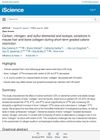
Calorie restriction changes the elemental and isotopic makeup of mouse hair and bone.
May 2014 in “The journal of immunology/The Journal of immunology” Early over-expression of FoxN1 harms immune and skin development.
 3 citations
,
July 2021 in “Life science alliance”
3 citations
,
July 2021 in “Life science alliance” PNKP is essential for keeping adult mouse progenitor cells healthy and growing normally.
80 citations
,
December 1996 in “Pain” Disruption of glycinergic circuits increases pain sensitivity, suggesting new pain treatment options.