 31 citations
,
April 1999 in “Dermatologic Clinics”
31 citations
,
April 1999 in “Dermatologic Clinics” Nd:YAG laser can reduce hair with multiple treatments, but permanent removal isn't guaranteed.
 July 2018 in “Elsevier eBooks”
 The most common cause of hair loss in children is tinea capitis, followed by alopecia areata and telogen effluvium.
 243 citations
,
September 2016 in “Dermatology and Therapy”
243 citations
,
September 2016 in “Dermatology and Therapy” Dermoscopy is a useful tool for identifying features of skin conditions, but more research is needed to define its role in dermatology.
 126 citations
,
January 1987 in “Journal of The American Academy of Dermatology”
126 citations
,
January 1987 in “Journal of The American Academy of Dermatology” The document concludes that understanding hair structure is key to diagnosing hair abnormalities and recommends gentle hair care for management.
 30 citations
,
October 2016 in “Current research in translational medicine”
30 citations
,
October 2016 in “Current research in translational medicine” Hair follicles on the scalp interact with and respond to the nervous system, influencing their own behavior and growth.
 November 2021 in “International journal of life science and pharma research”
 The new gel for psoriasis is effective, stable, and easy to apply.
 September 2003 in “Current Paediatrics”
 The document concludes that accurate diagnosis and understanding the type of hair disorder are crucial for treating hair loss in children.
 January 2026 in “International Research Journal of Modernization in Engineering Technology and Science”
 Alopecia areata causes patchy hair loss and is often treated with corticosteroids.

Plakophilin 1 helps control skin cell immune responses to prevent excessive inflammation.
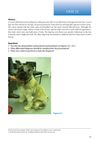 May 2019 in “Small Animal Dermatology”
 The dog had sebaceous adenitis, treated with ciclosporin, leading to some hair regrowth.
 202 citations
,
June 2005 in “Aaps Pharmscitech”
202 citations
,
June 2005 in “Aaps Pharmscitech” Lecithin organogels could be good for applying drugs to the skin because they are stable, safe, and can improve drug absorption.
 8 citations
,
November 2022 in “International Journal of Cosmetic Science”
8 citations
,
November 2022 in “International Journal of Cosmetic Science” Human hair varies widely and should be classified by curl type rather than race.
 5 citations
,
May 2021 in “International Journal of Cosmetic Science”
5 citations
,
May 2021 in “International Journal of Cosmetic Science” Healthy scalp leads to better hair quality and less damage.
 4 citations
,
March 2021 in “Journal of Surfactants and Detergents”
4 citations
,
March 2021 in “Journal of Surfactants and Detergents” Shampoo B, which uses water-soluble silicone, is better at detangling hair in wet conditions due to its two-layer conditioning film.
 1 citations
,
June 2025 in “Frontiers in Bioengineering and Biotechnology”
1 citations
,
June 2025 in “Frontiers in Bioengineering and Biotechnology” Glycopeptide hydrogels are promising for tissue repair, drug delivery, and healing due to their multifunctional properties.
 1 citations
,
January 2023 in “International journal of all research education and scientific methods”
1 citations
,
January 2023 in “International journal of all research education and scientific methods” Hair analysis is better than urine and blood for detecting past drug use.
 1 citations
,
April 2018 in “Journal of Investigative Dermatology”
1 citations
,
April 2018 in “Journal of Investigative Dermatology” People respond differently to hair loss treatment with PRP because of individual differences in growth factors from platelets.
 February 2026 in “The European Physical Journal E”
 Root hair growth mechanics depend on turgor pressure and cell wall properties.
 August 2025 in “bioRxiv (Cold Spring Harbor Laboratory)”
 Root hair stiffness is mainly influenced by tip compression and turgor pressure.

Stiffness gradients in alginate gels can guide cancer cell invasion and study cellular behaviors.
 December 2022 in “bioRxiv (Cold Spring Harbor Laboratory)”
 MicroRNA-205 helps hair grow by changing the stiffness and contraction of hair follicle cells.
 April 2018 in “Journal of Investigative Dermatology”
 Dsg1 is essential for maintaining a healthy skin barrier in mice.
 April 2018 in “Journal of Investigative Dermatology”
 IL-9 increases skin cell movement but decreases their ability to invade, and this effect is controlled by cell contractility, not by MMPs.
 April 2018 in “Journal of Investigative Dermatology”
 Nonmelanoma skin cancers have higher levels of certain osteopontin variants than normal skin.
 13 citations
,
March 2019 in “Journal of cosmetic dermatology”
13 citations
,
March 2019 in “Journal of cosmetic dermatology” Heat damages hair, with Asian hair losing more protein than Caucasian hair.
 1 citations
,
December 2018 in “IntechOpen eBooks”
1 citations
,
December 2018 in “IntechOpen eBooks” Human hair shows promise for non-invasive medical testing, but more research is needed to standardize its use.
 September 2025 in “Sahel Journal of Life Sciences FUDMA”
 Chemical hair straighteners can severely damage hair and scalp with repeated use.
 5 citations
,
June 2016 in “TURKDERM”
5 citations
,
June 2016 in “TURKDERM” Scoring systems help doctors assess and treat skin diseases effectively.
 151 citations
,
July 2011 in “Archives of Dermatological Research”
151 citations
,
July 2011 in “Archives of Dermatological Research” Liposomal systems show promise for delivering drugs through the skin but face challenges like high costs and stability issues.
 93 citations
,
April 2012 in “International Journal of Cosmetic Science”
93 citations
,
April 2012 in “International Journal of Cosmetic Science” Improving skin barrier and using antifungal treatments can help manage dandruff.