Search
for
Sort by
Research
810-840 / 1000+ resultsresearch Androgenetic alopecia: new insights into the pathogenesis and mechanism of hair loss (version 1; referees: 4 approved)
The arrector pili muscle plays a key role in hair loss in androgenetic alopecia.

research Androgenetic alopecia: Identification of four genetic risk loci and evidence for the contribution of WNT signaling to its etiology
Four genetic risk areas related to male-pattern baldness were identified, with WNT signaling playing a role in its development.
research Six novel susceptibility Loci for early-onset androgenetic alopecia and their unexpected association with common diseases
Early-onset hair loss is linked to Parkinson's disease and decreased fertility.

research Male pattern androgenetic alopecia
Male pattern baldness is a common type of hair loss in men.
research Androgenetic alopecia in men and women
Topical minoxidil helps hair regrowth in over 50% of men and women.
research Polycystic ovary syndrome
Polycystic Ovary Syndrome (PCOS) is a common condition in women that can cause metabolic, reproductive, and psychological issues, and requires lifestyle changes and medication for management.
research The 5 Alpha-Reductase Isozyme Family: A Review of Basic Biology and Their Role in Human Diseases
The document concludes that the 5 alpha-reductase enzymes are important in steroid metabolism and related to various human diseases, with inhibitors used to treat conditions like male pattern baldness and prostate issues.
research Treatment of alopecia areata: An Australian expert consensus statement
Alopecia areata treatment varies, with no optimal method established yet.
research Female pattern hair loss: a pilot study investigating combination therapy with low-dose oral minoxidil and spironolactone
Low-dose oral minoxidil and spironolactone combo effectively reduces hair loss and improves hair density in women.
research Oral tofacitinib: a promising treatment in atopic dermatitis, alopecia areata and vitiligo
Oral tofacitinib shows promise in treating atopic dermatitis and alopecia areata, but only slight improvement in vitiligo.
research Treatment of alopecia areata in pre‐adolescent children with oral tofacitinib: A retrospective study
Oral tofacitinib may effectively treat hair loss in children with alopecia areata.
research Sunscreen and facial skincare products in frontal fibrosing alopecia: a case–control study
Regular use of sunscreen may be linked to frontal fibrosing alopecia.

research An update of the pathogenesis of frontal fibrosing alopecia: What does the current evidence tell us?
The current understanding of frontal fibrosing alopecia involves immune, genetic, hormonal factors, and possibly environmental triggers, but more research is needed for effective treatments.
research Mechanisms underlying select chemotherapeutic-agent-induced neuroinflammation and subsequent neurodegeneration
Chemotherapy can cause brain inflammation and damage, and understanding this process could help manage side effects.
research Guidelines for clinical trials of frontal fibrosing alopecia: consensus recommendations from the International FFA Cooperative Group (IFFACG)*
Experts agreed on guidelines to improve research on Frontal Fibrosing Alopecia.

research Targeted expression of SV40 T antigen in the hair follicle of transgenic mice produces an aberrant hair phenotype
SV40 T antigen in hair follicles causes abnormal hair and health issues in mice.
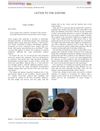
research Loose anagen hair syndrome: Treatment with systemic minoxidil characterised by marked hair colour change
Minoxidil treatment can reduce hair shedding, increase hair volume, and even change hair color in patients with loose anagen hair syndrome.
research Successful treatment of refractory folliculitis decalvans with secukinumab
Secukinumab effectively treated a difficult case of folliculitis decalvans.
research Sublingual tofacitinib for alopecia areata: a roll‐over pilot clinical trial and analysis of pharmacokinetics
The trial showed that a new under-the-tongue treatment for severe hair loss was somewhat effective in a small group of people.
research Low‐dose oral minoxidil improves global hair density and length in children with loose anagen hair syndrome
Low-dose oral minoxidil increases hair thickness and length in children with a hair disorder called Loose Anagen Hair Syndrome.

research Oral minoxidil bio‐activation by hair follicle outer root sheath cell sulfotransferase enzymes predicts clinical efficacy in female pattern hair loss
Minoxidil activation by hair enzymes predicts treatment success for female hair loss.
research Folliculitis decalvans responsive to tofacitinib: A case series
Tofacitinib may effectively treat folliculitis decalvans.
research Clinicopathological characteristics and treatment outcomes of fibrosing alopecia in a pattern distribution: A retrospective cohort study
Early treatment of fibrosing alopecia in a pattern distribution may improve outcomes.
research Topical tofacitinib for the treatment of alopecia areata affecting facial hair
Topical tofacitinib may effectively and safely regrow facial hair in some people with alopecia areata.

research Optogenetically Controlled TrkA Activity Improves the Regenerative Capacity of Hair‐Follicle‐Derived Stem Cells to Differentiate into Neurons and Glia
Blue-light activation of TrkA improves hair-follicle stem cells' ability to become neurons and glial cells.
research The Trichoscopy Derived Sinclair Scale: Enhancing visual assessment through quantitative trichoscopy
The Trichoscopy Derived Sinclair Scale offers a more accurate and reliable way to measure hair loss severity than the traditional visual method.
research Sublingual minoxidil for the treatment of male and female pattern hair loss: a randomized, double‐blind, placebo‐controlled, phase 1B clinical trial
Sublingual minoxidil safely promotes hair growth.
research Impacts of iron on phosphate starvation-induced root hair growth in Arabidopsis
Iron influences root hair growth during phosphate starvation by affecting auxin distribution and vesicle trafficking.
research Treatment of chronic alopecia areata with tildrakizumab: an open‐label pilot study
Tildrakizumab showed limited effectiveness in treating chronic alopecia areata in a small group of patients.