 March 2026 in “Frontiers in Medicine”
 New therapies for rare skin diseases show promise but need more research.
 January 2026 in “Dermatology Review”
 Celiac disease can cause skin issues, and a gluten-free diet can help improve them.
 April 2024 in “Frontiers in cellular and infection microbiology”
 Blue light might help treat skin conditions by affecting the skin's bacteria.
 October 2023 in “Journal of Medicine, University of Santo Tomas (JMUST Online)”
 Elderly patients frequently suffer from skin conditions, especially inflammatory ones, highlighting the need for better healthcare.
 September 2023 in “Cureus”
 Nails can reveal important health information about skin and body conditions.

Most postmenopausal women experience significant skin changes and various skin conditions.
 May 2023 in “Current Medicinal Chemistry”
 Microneedle patches improve drug delivery for skin treatments and cosmetic enhancements.
 January 2023 in “Our Dermatology Online”
 An old recipe called "Champigny Saumure" might help treat a rare scalp condition.
 October 2022 in “JAAD international”
 Most patients with autoimmune blistering diseases experienced some hair loss, which may be underreported and linked to disease severity.

Alopecia Areata has no cure, treatments are limited, and the condition often recurs, but new therapies like JAK inhibitors show promise.
 January 2021 in “Erciyes medical journal”
 The COVID-19 pandemic changed the types of skin conditions seen at a clinic, with fewer patients and varying numbers of specific conditions.
 September 2020 in “Annals of the National Academy of Medical Sciences. India”
 COVID-19 can cause skin issues like "COVID toes," rashes, hair loss, and hand eczema, and dermatologists are important for recognizing these signs.
 August 2018 in “Journal of The American Academy of Dermatology”
 A 16-year-old girl's skin rash was likely caused by an infection and improved with topical steroids.
An 11-year-old female Pinscher with Pemphigus Foliaceus was successfully diagnosed and treated.
 January 2018 in “Turkiye Klinikleri Journal of Dermatology”
 Eczema and acne were the most common skin issues in children at the clinic.
 January 2017 in “Acta dermato-venereologica”
 The congress showed that psychological therapy can help skin condition patients, social media affects acne stigma, education improves atopic dermatitis, and patient satisfaction in dermatology is high, especially with good doctor engagement.
 April 2014 in “Jurnal Biomedik : JBM”
 An 8-year-old girl had nail and hair issues that improved without specific treatment, but fungal nail infection was hard to cure.
 February 2014 in “Medicine - Programa De Formación Médica Continuada Acreditado”
 The document concludes that non-scarring alopecias can be reversed, but scarring alopecias cause permanent hair loss.
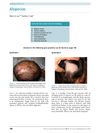 February 2013 in “Archives of Disease in Childhood: Education & Practice”
 Different types of alopecia in children require specific diagnoses and treatments.
 5 citations
,
June 2016 in “TURKDERM”
5 citations
,
June 2016 in “TURKDERM” Scoring systems help doctors assess and treat skin diseases effectively.

Exosomes show promise for skin treatments but need more research and regulation in India.
 24 citations
,
January 2008 in “KARGER eBooks”
24 citations
,
January 2008 in “KARGER eBooks” The document concludes that ongoing research using animal models is crucial for better understanding and treating Alopecia Areata.
 405 citations
,
May 2007 in “Journal of The American Academy of Dermatology”
405 citations
,
May 2007 in “Journal of The American Academy of Dermatology” Obesity affects skin health, causing conditions like acanthosis nigricans and may require different treatment approaches.
 151 citations
,
February 2007 in “International Journal of Dermatology”
151 citations
,
February 2007 in “International Journal of Dermatology” Alopecia areata causes hair loss, has no cure, and various treatments exist.
 100 citations
,
July 2018 in “Journal of The American Academy of Dermatology”
100 citations
,
July 2018 in “Journal of The American Academy of Dermatology” People with alopecia areata often have other health issues like skin diseases, metabolic syndrome, stomach infections, lupus, anemia, thyroid problems, mental health issues, vitamin D deficiency, and hearing and eye problems.
88 citations
,
August 2019 in “Frontiers in immunology” Tyrosine kinases are important in skin autoimmune diseases and could be targets for new treatments.
 68 citations
,
May 2016 in “Experimental dermatology”
68 citations
,
May 2016 in “Experimental dermatology” FFA's causes may include environmental triggers and genetic factors.
 56 citations
,
January 2021 in “Clinical and Experimental Medicine”
56 citations
,
January 2021 in “Clinical and Experimental Medicine” The document concludes that while there are various treatments for Alopecia Areata, there is no cure, and individualized treatment plans are essential due to varying effectiveness.
 51 citations
,
January 2014 in “Pediatric Clinics of North America”
51 citations
,
January 2014 in “Pediatric Clinics of North America” The guide explains how to identify and treat children's hair loss, including fungal infections, autoimmune disorders, hairstyle changes, self-correcting conditions, and behavioral therapy for hair-pulling.
 47 citations
,
September 2023 in “Pharmacological Reports”
47 citations
,
September 2023 in “Pharmacological Reports” Vitamins A, B3, C, D, and E can improve skin health and immunity.