 30 citations
,
June 2021 in “British Journal of Dermatology”
30 citations
,
June 2021 in “British Journal of Dermatology” Mutations in the WNT10A gene can cause skin, hair, teeth, and other disorders, and may also affect other areas like kidney and cancer, with potential for targeted treatments.
 28 citations
,
April 1996 in “Cell biology international”
28 citations
,
April 1996 in “Cell biology international” Changes in keratin affect skin health and can lead to skin disorders like blistering diseases and psoriasis.
 26 citations
,
May 2014 in “BioEssays”
26 citations
,
May 2014 in “BioEssays” Using neurohormones to control keratin can lead to new skin disease treatments.
 25 citations
,
March 2012 in “Journal of Dermatological Science”
25 citations
,
March 2012 in “Journal of Dermatological Science” Genetic variants linked to ten skin diseases were found, showing both immune and non-immune factors play a role.
 24 citations
,
January 2008 in “KARGER eBooks”
24 citations
,
January 2008 in “KARGER eBooks” The document concludes that ongoing research using animal models is crucial for better understanding and treating Alopecia Areata.
 14 citations
,
January 2018 in “Endocrine”
14 citations
,
January 2018 in “Endocrine” Cantú syndrome may be linked to pituitary adenomas.
 13 citations
,
June 2006 in “Pituitary”
13 citations
,
June 2006 in “Pituitary” A woman with acromegaloidism and normal growth hormone levels had a rare X-Tetrasomy, suggesting a need to study X-chromosome genes for their role in growth and facial development.
 11 citations
,
July 2001 in “APMIS. Acta pathologica, microbiologica et immunologica Scandinavica./APMIS”
11 citations
,
July 2001 in “APMIS. Acta pathologica, microbiologica et immunologica Scandinavica./APMIS” Estrogens are key for bone growth spurts in both boys and girls and affect growth into adulthood.
 7 citations
,
November 2000 in “Clinics in Dermatology”
7 citations
,
November 2000 in “Clinics in Dermatology” Most hair loss in children is caused by a few common conditions and is easy to diagnose, but rare types require careful evaluation.
 5 citations
,
February 2019 in “PloS one”
5 citations
,
February 2019 in “PloS one” Bald thigh syndrome in sighthounds is caused by structural defects in hair shafts due to downregulated genes and proteins.
 1 citations
,
August 2018 in “bioRxiv (Cold Spring Harbor Laboratory)”
1 citations
,
August 2018 in “bioRxiv (Cold Spring Harbor Laboratory)” A new mutation in the TMEM173 gene and a risk allele in IFIH1 cause a unique set of immune-related symptoms.
 January 2026 in “International Journal of Science and Research (IJSR)”
 Unani medicine and modern dermatology both offer treatments for ichthyosis, a condition causing dry, scaly skin.
 January 2026 in “Journal of Clinical and Investigative Dermatology”
 A father and son in Yemen have a genetic condition causing hair loss and nail problems.
 September 2024 in “Portuguese Journal of Dermatology and Venereology”
 CCCA and LPP may be related hair loss conditions influenced by genetics and environment, needing early treatment.

The document concludes that the development of certain tumors is influenced by genetic background and that a specific gene modification can lead to tumor regression and reduced growth.
 January 2020 in “Medical journal of clinical trials & case studies”
 A 37-year-old male with severe skin and internal issues has a rare inherited skin condition called dystrophic epidermolysis bullosa.
 June 2019 in “Pediatric Dermatology”
 Alopecia in patients with epidermolysis bullosa varies in severity and is often caused by skin blistering or trauma.
 May 2018 in “European Journal of Dermatology”
 The first Japanese family with Marie Unna hereditary hypotrichosis showed hair condition improvement in a child and highlighted the risk of misdiagnosis.
 July 2003 in “British Journal of Dermatology”
 Some skin conditions are associated with other serious diseases, and office microscopy may miss many fungal infections.
 98 citations
,
June 2008 in “Human mutation”
98 citations
,
June 2008 in “Human mutation” A genetic change in the EDAR gene causes the unique hair traits found in East Asians.
 82 citations
,
April 2008 in “Journal of Investigative Dermatology”
82 citations
,
April 2008 in “Journal of Investigative Dermatology” EDA2R gene linked to hair loss.
 191 citations
,
May 2018 in “British journal of dermatology/British journal of dermatology, Supplement”
191 citations
,
May 2018 in “British journal of dermatology/British journal of dermatology, Supplement” Alopecia areata is likely an autoimmune disease with unclear triggers, involving various immune cells and molecules, and currently has no cure.
 157 citations
,
May 2021 in “Endocrine Reviews”
157 citations
,
May 2021 in “Endocrine Reviews” Early diagnosis and individualized treatment improve outcomes for Congenital Adrenal Hyperplasia.
 138 citations
,
November 2015 in “Journal of Pharmacology and Experimental Therapeutics”
138 citations
,
November 2015 in “Journal of Pharmacology and Experimental Therapeutics” Protoporphyrin IX is useful in cancer treatment but can cause health problems if not properly regulated.
 137 citations
,
October 2009 in “The American journal of pathology”
137 citations
,
October 2009 in “The American journal of pathology” Matriptase is crucial for keeping epithelial tissues healthy and functioning properly.
 31 citations
,
May 2021 in “Journal of endocrinological investigation”
31 citations
,
May 2021 in “Journal of endocrinological investigation” APS-1 in Italy shows diverse AIRE mutations and various autoimmune issues.
 7 citations
,
December 2013 in “The Journal of Dermatology”
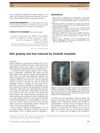
7 citations
,
December 2013 in “The Journal of Dermatology” A woman's hair turned gray and fell out after starting a cancer drug called imatinib mesylate.
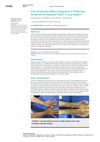
Doctors should consider Netherton syndrome in patients with chronic skin and hair issues to avoid misdiagnosis.
 30 citations
,
June 2014 in “Seminars in Immunology”
30 citations
,
June 2014 in “Seminars in Immunology” Future research on ectodysplasin should explore its role in diseases, stem cells, and evolution, and continue developing treatments for genetic disorders like hypohidrotic ectodermal dysplasia.
 September 2024 in “Egyptian Journal of Medical Human Genetics”
 Consider NF1 in newborns with rare congenital anomalies.