 81 citations
,
December 2009 in “Journal of Dermatological Science”
81 citations
,
December 2009 in “Journal of Dermatological Science” Fat tissue stem cells may help increase hair growth.
 209 citations
,
September 2008 in “Dermatologic Therapy”
209 citations
,
September 2008 in “Dermatologic Therapy” Androgens can both increase and decrease hair growth in different parts of the body.
 57 citations
,
November 1987 in “Pediatric Dermatology”
57 citations
,
November 1987 in “Pediatric Dermatology” Children's hair grows in different types from before birth through puberty, with growth rates and characteristics varying by age, sex, and race.
 4 citations
,
April 1999 in “Dermatologic Clinics”
4 citations
,
April 1999 in “Dermatologic Clinics” Androgens, like DHT, affect hair growth and treatments like finasteride may help.
 April 2019 in “Archives of aesthetic plastic surgery”
 Higher fluences in 808-nm diode laser treatments are more effective for axillary hair removal.
 11 citations
,
October 2020 in “Plant biotechnology journal”
11 citations
,
October 2020 in “Plant biotechnology journal” Overexpressing SIMK in alfalfa boosts root hair growth, nodule clustering, and shoot biomass.
 68 citations
,
March 1965 in “The BMJ”
68 citations
,
March 1965 in “The BMJ” Hormones and genetics affect hair growth and patterns, with some changes reversible and others not.
 62 citations
,
July 1993 in “Journal of Investigative Dermatology”
62 citations
,
July 1993 in “Journal of Investigative Dermatology” Hair growth is influenced by interactions between skin layers, growth factors, and hormones, but the exact mechanisms are not fully understood.
 26 citations
,
March 1986 in “Clinical and Experimental Dermatology”
26 citations
,
March 1986 in “Clinical and Experimental Dermatology” Scalp hair grows at 0.37 mm/day, forearm hair at 0.18 mm/day, and thigh hair at 0.30 mm/day, with no significant differences found in people with certain hair conditions.
 190 citations
,
October 2002 in “The FASEB journal”
190 citations
,
October 2002 in “The FASEB journal” Androgens may cause hair loss by increasing TGF-beta1 from scalp cells, which inhibits hair cell growth.
 51 citations
,
January 2003 in “Hormone Research in Paediatrics”
51 citations
,
January 2003 in “Hormone Research in Paediatrics” Hormones and their receptors, especially androgens, play a key role in hair growth and disorders like baldness.
 46 citations
,
May 1986 in “Seminars in Reproductive Medicine”
46 citations
,
May 1986 in “Seminars in Reproductive Medicine” Testosterone and dihydrotestosterone affect hair growth, and new techniques like the folliculogram help study it, but fully understanding hair growth is still complex.
 59 citations
,
May 2014 in “Expert Opinion on Therapeutic Targets”
59 citations
,
May 2014 in “Expert Opinion on Therapeutic Targets” The document concludes that targeting 5α-reductase, the androgen receptor, and hair growth genes, along with using compounds with anti-androgenic properties, could lead to more effective hair loss treatments.
 26 citations
,
December 1981 in “British journal of dermatology/British journal of dermatology, Supplement”
26 citations
,
December 1981 in “British journal of dermatology/British journal of dermatology, Supplement” Cyproterone acetate reduced hair growth in most hirsute females and made hair softer, thinner, and lighter.
 23 citations
,
January 2020 in “Frontiers in Pharmacology”
23 citations
,
January 2020 in “Frontiers in Pharmacology” Dihydrotestosterone affects hair growth by changing the Wnt/β-catenin pathway, with low levels helping and high levels hindering growth.
 January 1989 in “Clinical and Experimental Dermatology”
 The symposium concluded that hair growth involves complex processes, including the hair follicle life cycle, the role of the dermal papilla, hair strength, pigmentation, and the impact of diseases and treatments like minoxidil on hair and skin.
 19 citations
,
October 2017 in “The FASEB Journal”
19 citations
,
October 2017 in “The FASEB Journal” Male hormones cause different growth in identical human hair follicles due to their unique epigenetic characteristics.
 8 citations
,
October 1988 in “Clinics in Dermatology”
8 citations
,
October 1988 in “Clinics in Dermatology” Current research explores hair growth drugs, while future research aims for personalized treatments.
 July 1995 in “Journal of Dermatological Science”
 Cyclosporine starts hair growth faster, while minoxidil makes it last longer.
 92 citations
,
June 2005 in “Journal of Investigative Dermatology”
92 citations
,
June 2005 in “Journal of Investigative Dermatology” All-trans retinoic acid causes hair loss by increasing TGF-β2 in hair follicle cells.
 147 citations
,
April 1994 in “Drug Safety”
147 citations
,
April 1994 in “Drug Safety” Some drugs can cause hair loss or increase hair growth, but these effects are usually reversible when the drug is stopped.
 April 2024 in “Cognizance journal”
 The alexandrite laser effectively reduces unwanted hair by about 75%.
 157 citations
,
April 1994 in “Clinical endocrinology”
157 citations
,
April 1994 in “Clinical endocrinology” Androgens can cause hair growth in some areas and hair loss on the scalp.
 3 citations
,
April 2015 in “American journal of biomedical sciences”
3 citations
,
April 2015 in “American journal of biomedical sciences” Androgens play a key role in hair growth and disorders like baldness and excessive hairiness.
 59 citations
,
February 2012 in “Journal of Dermatological Science”
59 citations
,
February 2012 in “Journal of Dermatological Science” Environmental factors at different levels control hair stem cell activity, which could lead to new hair growth and alopecia treatments.
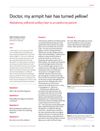
A 15-year-old boy's smelly, yellow armpit hair improved with clindamycin treatment.
15 citations
,
December 1994 in “The American Journal of Cosmetic Surgery” Half follicular grafts are not effective for hair transplants.
May 2009 in “Faculty Opinions – Post-Publication Peer Review of the Biomedical Literature” DHEA therapy improved pubic hair growth and psychological well-being in young females with adrenal insufficiency.
 66 citations
,
January 2000 in “Hormone Research in Paediatrics”
66 citations
,
January 2000 in “Hormone Research in Paediatrics” Androgens can both promote and prevent hair growth due to differences in gene expression in hair follicles.
 16 citations
,
December 2006 in “Expert Review of Dermatology”
16 citations
,
December 2006 in “Expert Review of Dermatology” Hair follicles are essential for skin health, aiding in hair growth, wound healing, and immune function.