 6 citations
,
February 2022 in “The journal of neuroscience/The Journal of neuroscience”
6 citations
,
February 2022 in “The journal of neuroscience/The Journal of neuroscience” Deleting the PTEN gene in mice causes nerve cells to grow larger and heal better after injury, but may cause overgrowth and hair loss in older mice.
 1 citations
,
March 2019 in “Konuralp tıp dergisi”
1 citations
,
March 2019 in “Konuralp tıp dergisi” MS patients often have skin issues, so regular skin checks are important.

A new microneedle patch helps repair spinal cord injuries by reducing scarring and promoting nerve growth.
 August 2012 in “Nature Cell Biology”
 Hair grows when stem cell offspring in the follicle base proliferate, influenced by the dermal papilla.
 August 2012 in “Nature Cell Biology”
 A pathway helps maintain long telomeres in both stem and cancer cells.
 August 2012 in “Nature Cell Biology”
 The tumor suppressor BRCA2 helps in cell division by bringing key proteins to the area where cells split.
 15 citations
,
May 2003 in “The Laryngoscope”
15 citations
,
May 2003 in “The Laryngoscope” FGF-1 causes spiral ganglion neurites to branch more.
 November 2021 in “International journal of research - granthaalayah”
 The document suggests that human hair has electrical charges because of a gap in nerve cell coverage that affects electromagnetic radiation.
 October 2018 in “bioRxiv (Cold Spring Harbor Laboratory)”
 Neuronatin is found in various cells of rat tissues and has a unique location in sperm cells.
 129 citations
,
January 2007 in “Otology & Neurotology”
129 citations
,
January 2007 in “Otology & Neurotology” Gene therapy with the Math1 gene helped regenerate balance-related cells and improve balance in mice.
November 2024 in “Journal of Investigative Dermatology” Skin and hair cells release serotonin and histamine naturally, which could help improve skin health.
 April 2026 in “bioRxiv (Cold Spring Harbor Laboratory)”
 Dopamine receptors in the brain influence itch-related scratching behavior.
109 citations
,
April 1997 in “Archives of Dermatological Research” Mast cell and nerve fiber interactions in mouse skin change with the hair cycle.
 1057 citations
,
November 2011 in “Annals of Biomedical Engineering”
1057 citations
,
November 2011 in “Annals of Biomedical Engineering” Low-level Laser Therapy may help reduce inflammation, pain, and aid healing, but more research is needed to confirm its effectiveness and establish standard treatment guidelines.
 480 citations
,
August 2014 in “Nature Biotechnology”
480 citations
,
August 2014 in “Nature Biotechnology” Changing the environment around stem cells could help tissue repair, but it's hard to be precise and avoid side effects.
 425 citations
,
January 2021 in “SN Applied Sciences”
425 citations
,
January 2021 in “SN Applied Sciences” Alginate is great for tissue engineering because it's safe, easy to use, and helps heal tissues.
 369 citations
,
June 2013 in “Biochimie”
369 citations
,
June 2013 in “Biochimie” Myo-inositol supplements may improve insulin sensitivity and help with conditions like PCOS and gestational diabetes, but more research is needed.
 271 citations
,
May 2019 in “Cells”
271 citations
,
May 2019 in “Cells” The secretome from mesenchymal stem cells is a promising treatment that may repair tissue and avoid side effects of stem cell transplantation.
 252 citations
,
February 2018 in “npj Regenerative Medicine”
252 citations
,
February 2018 in “npj Regenerative Medicine” Understanding different species' regeneration can improve mammalian healing.
 248 citations
,
December 2011 in “Journal of Neuroscience”
248 citations
,
December 2011 in “Journal of Neuroscience” Neurosteroids are crucial for stress response, and targeting specific receptors may help treat certain disorders.
 236 citations
,
July 2001 in “Trends in Molecular Medicine”
236 citations
,
July 2001 in “Trends in Molecular Medicine” Future hair loss treatments should aim to extend hair growth, reactivate resting follicles, reverse shrinkage, and possibly create new follicles, with gene therapy showing promise.
 222 citations
,
October 2014 in “Annual Review of Pharmacology and Toxicology”
222 citations
,
October 2014 in “Annual Review of Pharmacology and Toxicology” Eph receptors and ephrins may be promising targets for treating diseases, but more understanding is needed for effective and safe therapies.
 199 citations
,
April 2010 in “Nature”
199 citations
,
April 2010 in “Nature” A gene called APCDD1, which controls hair growth, is found to be faulty in a type of hair loss called hereditary hypotrichosis simplex.
 165 citations
,
January 2008 in “Journal of biomaterials science. Polymer ed.”
165 citations
,
January 2008 in “Journal of biomaterials science. Polymer ed.” The peptide GHK-Cu helps heal and remodel tissue, improves skin and hair health, and has potential for treating age-related inflammatory diseases.
 156 citations
,
September 2021 in “Pneumologie”
156 citations
,
September 2021 in “Pneumologie” The guideline offers practical advice for diagnosing and treating Post-COVID/Long-COVID.
 138 citations
,
June 2012 in “Genes & Development”
138 citations
,
June 2012 in “Genes & Development” Sonic hedgehog signaling is crucial for hair growth and maintaining hair follicle identity.
 135 citations
,
December 2015 in “Expert Opinion on Biological Therapy”
135 citations
,
December 2015 in “Expert Opinion on Biological Therapy” Exosomes could potentially enhance tissue repair and regeneration with lower rejection risk and easier production than live cell therapies.
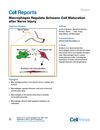 130 citations
,
September 2018 in “Cell Reports”
130 citations
,
September 2018 in “Cell Reports” Macrophages help heal nerves by aiding the maturation of Schwann cells and are important for nerve repair.
 119 citations
,
March 2020 in “Frontiers in Bioengineering and Biotechnology”
119 citations
,
March 2020 in “Frontiers in Bioengineering and Biotechnology” Asia has made significant progress in tissue engineering and regenerative medicine, but wider clinical use requires more development.
 119 citations
,
June 1993 in “BMJ”
119 citations
,
June 1993 in “BMJ” Alopecia is a key indicator of thallium poisoning.