 January 2017 in “Acta dermato-venereologica”
 The congress showed that psychological therapy can help skin condition patients, social media affects acne stigma, education improves atopic dermatitis, and patient satisfaction in dermatology is high, especially with good doctor engagement.
 January 2016 in “Human & Experimental Toxicology”
 A specific DNA sequence caused hair loss in male mice by activating immune cells and increasing a certain immune signal.
 January 2016 in “Research Explorer (The University of Manchester)”
 Activating the Eda/Edar pathway improves wound healing by enhancing hair follicle growth.
 March 2014 in “Journal of The American Academy of Dermatology”
 The document lists various dermatology topics, treatments, and diagnostic methods.
 November 2013 in “Elsevier eBooks”
 Skin and hair renewal is maintained by both fast and slow cycling stem cells, with hair regrowth primarily driven by specific stem cells in the hair follicle bulge. These cells can also help heal wounds and potentially treat hair loss.
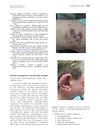
A 72-year-old man was diagnosed with a rare skin form of Rosai-Dorfman disease after years of misdiagnosis.
 September 2011 in “Cancer”
 Men who start losing hair at 20 may have a higher chance of getting prostate cancer later.
 December 2010 in “Jurnal Natural (Faculty of Mathematics and Natural Science, Syiah Kuala University)”
 Age, race, family history, and certain genetic factors increase prostate cancer risk.
 June 2008 in “Springer eBooks”
 The document concludes that permanent hair loss conditions are complex, require early specific treatments, and "secondary permanent alopecias" might be a more accurate term than "secondary cicatricial alopecia."
 July 1994 in “Annals of Pharmacotherapy”
 Cromolyn sodium's effectiveness for treating asthma in children under 2 is unclear, possibly more beneficial for older children, and further research is needed.
 June 2018 in “Advances in Cosmetic Surgery”
 Hair loss caused by genetics and hormones; more research needed for treatments.

EFBL offers hidden incisions, faster recovery, and fewer risks, but may raise hairline and cost more.
 August 2002 in “Dermatologic Surgery”
 Fluridil safely promotes hair growth in men with androgenetic alopecia.
 12 citations
,
March 1982 in “International Journal of Women's Dermatology”
12 citations
,
March 1982 in “International Journal of Women's Dermatology” Various hair camouflage options help people with hair loss improve appearance.
 February 2011 in “Expert Review of Dermatology”
 Researchers found potential new targets for treating melanoma and nonmelanoma skin cancers, and identified a possible cause and treatment for male pattern baldness and eczema.
1 citations
,
December 2023 in “International journal of molecular sciences” miR-199a-3p controls hair growth and is linked to alopecia areata.
18 citations
,
November 2022 in “The Journal of Dermatology” Alopecia areata affects 1.45% of people in Japan, impacting mood and self-esteem, with many not seeking treatment.
 December 2023 in “Clinical, cosmetic and investigational dermatology”
 The new hair transplant technique is fast, effective, and satisfying for patients with different hair types.
 27 citations
,
January 2008 in “Journal of Cutaneous and Aesthetic Surgery”
27 citations
,
January 2008 in “Journal of Cutaneous and Aesthetic Surgery” Modern hair restoration techniques have evolved from punch grafting to methods like micro-grafting and follicular unit transplantation, but they are labor-intensive, expensive, and can lead to patient dissatisfaction. Future treatments may involve cloned hair follicles and drugs like finasteride.
1 citations
,
May 2022 in “International Journal of Trichology” Hair camouflage techniques can help manage hair loss and boost confidence.
 February 2023 in “Scientific Reports”
 Cold Atmospheric Microwave Plasma (CAMP) helps hair cells grow and could potentially treat hair loss.
 50 citations
,
January 2007 in “PubMed”
50 citations
,
January 2007 in “PubMed” Minoxidil 2% and 5% are common treatments for female pattern hair loss, with other options including anti-androgens, oral contraceptives, and hair transplantation.
 15 citations
,
January 2020 in “Experimental Dermatology”
15 citations
,
January 2020 in “Experimental Dermatology” The document concludes that understanding and treatments for alopecia areata have significantly advanced, now recognizing it as an autoimmune disorder.
 8 citations
,
July 2016 in “Hair transplant forum international”
8 citations
,
July 2016 in “Hair transplant forum international” FUT-MD hair transplants have higher follicle survival rates than FUE transplants.
 7 citations
,
November 2021 in “Clinical, Cosmetic and Investigational Dermatology”
7 citations
,
November 2021 in “Clinical, Cosmetic and Investigational Dermatology” The new hair graft device is faster, more efficient, and reduces damage to hair follicles.
 1 citations
,
February 2023 in “ACS Biomaterials Science & Engineering”
1 citations
,
February 2023 in “ACS Biomaterials Science & Engineering” The new microwell device helps grow more hair stem cells that can regenerate hair.

The document's conclusion cannot be provided because the content is not accessible or understandable.
 June 2025 in “Stem Cell Research & Therapy”
 Combining stem cells with ATP significantly boosts hair regrowth in mice with hair loss.
January 2024 in “Case Reports in Endocrinology” Cortisone tapering may help improve severe myasthenia gravis and alopecia areata after thymectomy.

Local flaps are effective for covering small to large scalp and forehead defects with good cosmetic results.