1 citations
,
July 2025 in “Frontiers in Genetics” FilaggrinHigh melanomas have active FGFR signaling and weak GNA14 and Th1 signatures.
 October 2023 in “Journal of dermatological science”
 New mutations in MBTPS2 reduce its function and cause IFAP syndrome with unusual symptoms.
 182 citations
,
August 2016 in “Development”
182 citations
,
August 2016 in “Development” ATP-dependent chromatin-remodeling complexes are crucial for gene regulation, cell differentiation, and organ development in mammals.
207 citations
,
September 1973 in “Entomologia Experimentalis et Applicata” B-type hairs on female butterfly legs help them choose where to lay eggs.
September 2025 in “Figshare” Alopecia areata involves complex immune responses, suggesting broader treatments could help.
November 2025 in “Journal of Investigative Dermatology” Certain immune cells in atopic dermatitis skin could be targeted for treatment.
 8 citations
,
February 2005 in “British Journal of Haematology”
8 citations
,
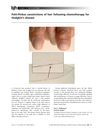
February 2005 in “British Journal of Haematology” Chemotherapy caused the patient's hair to have alternating thick and thin segments.
 July 2022 in “The journal of investigative dermatology/Journal of investigative dermatology”
 Particulate matter causes inflammation in hair cells, potentially harming hair growth.
 June 2023 in “Journal of Burn Care & Research”
 Using both bone marrow concentrate and platelet-rich plasma together improves skin wound healing in mice.
 November 2022 in “Journal of Investigative Dermatology”
 Dandruff is linked to changes in the immune system of hair follicles and skin.
49 citations
,
November 2021 in “Annual review of pathology” Lysophospholipids like LPA and S1P are important for hair growth, immune responses, and vascular development, and could be targeted for treating diseases.
20 citations
,
September 2003 in “Journal of Investigative Dermatology” Targeting MIG and MCP-1 may help treat inflammation in alopecia areata.
 21 citations
,
January 2018 in “Anticancer Research”
21 citations
,
January 2018 in “Anticancer Research” NBCCS and BFHS might be the same syndrome, helping better identify and manage cases.
 26 citations
,
August 2019 in “Stem Cell Research & Therapy”
26 citations
,
August 2019 in “Stem Cell Research & Therapy” PBX1 helps hair stem cells grow and change by turning on certain cell signals and preventing cell death, which may be useful for hair regrowth treatments.
109 citations
,
April 1997 in “Archives of Dermatological Research” Mast cell and nerve fiber interactions in mouse skin change with the hair cycle.
May 2022 in “The FASEB Journal” Finasteride may help treat Neutrophil Actin Dysfunction by reducing LSP1 gene activity.
17 citations
,
June 2023 in “Pharmaceuticals” Inflammasome proteins may help diagnose and treat Parkinson's disease.
 2 citations
,
January 2024 in “Proceedings of the National Academy of Sciences of the United States of America”
2 citations
,
January 2024 in “Proceedings of the National Academy of Sciences of the United States of America” The research created a detailed map of skin cells, showing that certain cells in basal cell carcinoma may come from hair follicles and could help the cancer grow.
 4 citations
,
July 2021 in “bioRxiv (Cold Spring Harbor Laboratory)”
4 citations
,
July 2021 in “bioRxiv (Cold Spring Harbor Laboratory)” BLMP-1 is important for regular molting and gene expression cycles in worms.
 1 citations
,
December 2022 in “BMC Plant Biology”
1 citations
,
December 2022 in “BMC Plant Biology” The black orchid Brasiliorchis schunkeana produces chemicals that attract certain insects and have potential antimicrobial properties.
4 citations
,
August 2024 in “Cells” Inflammasome proteins can predict inflammation and outcomes in aneurysmal subarachnoid hemorrhage.
June 2004 in “Journal of Investigative Dermatology” Apoptosis may play a role in feather and hair development, SF-36 is better for mental health in skin patients, a psoriasis gene is found in Caucasians, eosinophils might not be crucial for some skin allergies, and changes in atopic dermatitis could increase skin sensitivity.
July 2022 in “Journal of Investigative Dermatology” Arg1+ macrophages may play a role in Alopecia Areata, offering new treatment targets.
10 citations
,
April 2022 in “Critical reviews in food science and nutrition” Skin odorant receptors respond to flavors and could be targeted to improve skin health and treat diseases.
 48 citations
,
June 2020 in “Current Rheumatology Reports”
48 citations
,
June 2020 in “Current Rheumatology Reports” Different types of fibroblasts play various roles in both healthy and diseased tissues, and understanding them better could improve treatments for fibrotic diseases.
380 citations
,
March 2000 in “Proceedings of the National Academy of Sciences” Overexpressing GLI-1 in mice skin can cause tumors like human basal cell carcinomas.
333 citations
,
March 2000 in “Proceedings of the National Academy of Sciences” Overexpressing GLI-1 in mice skin can cause tumors like human basal cell carcinomas.
278 citations
,
May 2013 in “Ca” Targeted anticancer therapies can cause severe side effects similar to traditional chemotherapy, but with different types.
277 citations
,
December 2019 in “Frontiers in Immunology” JAK inhibitors show promise for treating skin disorders like alopecia, eczema, and psoriasis.
182 citations
,
November 2018 in “Cosmetics” Seaweeds have beneficial compounds for skin care, including anti-aging and protective effects.