 1 citations
,
January 2024 in “Wiadomości Lekarskie”
1 citations
,
January 2024 in “Wiadomości Lekarskie” Detecting early breast arterial calcifications can help assess cardiovascular disease risk.
79 citations
,
January 2002 in “Nucleic Acids Research” BMP-2 activates the Dlx3 gene in mouse skin cells, important for hair and skin development.
 1 citations
,
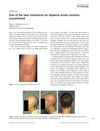
June 2018 in “International Journal of Dermatology”
1 citations
,
June 2018 in “International Journal of Dermatology” DNCB is highly effective for treating alopecia areata with minimal long-term side effects.
 72 citations
,
January 2003 in “American Journal of Pathology”
72 citations
,
January 2003 in “American Journal of Pathology” A protein called CBP is found in prostate cancer and can increase the effectiveness of certain prostate cancer treatments.
 1 citations
,
January 2024
1 citations
,
January 2024 CaBP1 and CaBP2 are necessary for proper hearing and neurotransmission in the ear's inner hair cells.

CaBP1 and CaBP2 are necessary for proper hearing and neurotransmission in the ear's inner hair cells.
November 2025 in “The Journal of Immunology” BST2 is highly expressed in certain immune cells in alopecia areata, suggesting a role in the disease.

CaBP1 and 2 are important for maintaining the activity of calcium channels necessary for hearing in inner ear cells.
 1 citations
,
January 2020 in “Benha Journal of Applied Sciences”
1 citations
,
January 2020 in “Benha Journal of Applied Sciences” Certain gene variations may increase the risk and severity of alopecia areata.
 1 citations
,
June 2023 in “Animals”
1 citations
,
June 2023 in “Animals” CRABP2 helps increase the growth of cells important for hair growth by activating a specific growth pathway.
April 2010 in “Cancer Research” Basal cell carcinomas may use IDO to protect themselves from the immune system.
 July 2026 in “bioRxiv (Cold Spring Harbor Laboratory)”
 ACA2 is crucial for root hair growth by controlling calcium levels in cells.
 April 2018 in “Journal of Investigative Dermatology”
 CREB, a protein that can promote cancer traits, is controlled by β-catenin in skin cancer cells.
 October 2024 in “Journal of the Endocrine Society”
 Certain genetic variants reduce enzyme activity, contributing to non-classic congenital adrenal hyperplasia.
 April 2019 in “Journal of Investigative Dermatology”
 Non-coding RNA boosts retinoic acid production and signaling, aiding regeneration.
November 2025 in “Journal of Investigative Dermatology” BTNL2 helps protect hair follicles from immune attacks.
 April 2017 in “Journal of Investigative Dermatology”
 The BMP/Smads pathway and Id2 gene control hair follicle stem cells, affecting their rest and growth phases.
 October 2024 in “Journal of the Endocrine Society”
 Certain genetic variants impair enzyme activity, contributing to non-classic congenital adrenal hyperplasia.
 11 citations
,
March 2014 in “Journal of Investigative Dermatology”
11 citations
,
March 2014 in “Journal of Investigative Dermatology” Genetic mutation and carcinogen treatment are both needed for skin cancer to develop in these specific mice.
 January 2025 in “Ciência Rural”
 Improper use of benzyl benzoate on a dog can cause severe skin reactions.
 14 citations
,
May 2019 in “Human gene therapy”
14 citations
,
May 2019 in “Human gene therapy” MC-DNA vector-based gene therapy can temporarily treat CBS deficiency in mice.
 42 citations
,
August 1999 in “The American journal of pathology”
42 citations
,
August 1999 in “The American journal of pathology” Basal cell carcinomas have much higher levels of Vitamin D3 receptors compared to healthy skin.

CaBP1 and CaBP2 are important for maintaining hearing by supporting continuous calcium currents and nerve signaling in the ear.
8 citations
,
August 1987 in “The Journal of Dermatology” BKN-1 antibody targets specific keratin in basal cell epithelioma and normal skin basal cells.
6 citations
,
January 2010 in “Journal of Biochemical and Molecular Toxicology” The ID2 gene can help distinguish between sensitizers and irritants in skin cells.
November 2025 in “The Journal of Immunology” BTNL2 helps protect hair follicles from immune attacks, which could aid in treating alopecia areata.
![Benzo[c]quinolizin-3-ones Theoretical Investigation: SAR Analysis and Application to Untested Compounds](/images/assets/6712367a-949f-47c7-a756-2bfe6316fc69/small/15331.jpg) 6 citations
,
August 2004 in “Journal of Chemical Information and Computer Sciences”
6 citations
,
August 2004 in “Journal of Chemical Information and Computer Sciences” The research found a link between certain molecular features and the biological activity of BC3, which can help identify or create new active compounds.
 3 citations
,
August 2021 in “Research Square (Research Square)”
3 citations
,
August 2021 in “Research Square (Research Square)” The most common sign of aging at the gene level is more Ectodysplasin A2 Receptor (EDA2R) being made.
 1 citations
,
August 2021 in “Journal of The American Academy of Dermatology”
1 citations
,
August 2021 in “Journal of The American Academy of Dermatology” Baricitinib helped improve hair, eyebrow, and eyelash growth in alopecia areata patients.
VDAC2 promotes cell death in cashmere goat hair follicles through the P53 pathway.