51 citations
,
November 1998 in “The journal of investigative dermatology/Journal of investigative dermatology” Beard cells, unlike scalp cells, produce growth factors in response to testosterone, which may explain differences in hair growth.
December 2022 in “Nature Communications” Bead-jet printing of stem cells improves muscle and hair regeneration.
 41 citations
,
June 2006 in “Journal of Investigative Dermatology”
41 citations
,
June 2006 in “Journal of Investigative Dermatology” Beard and scalp hair cells have different gene expressions, which may affect beard growth characteristics.
 38 citations
,
August 2012 in “Biochemical and biophysical research communications”
38 citations
,
August 2012 in “Biochemical and biophysical research communications” Human leukocytes and beard hair follicle cells have internal daily clocks, and PER1 and PER3 genes may indicate individual circadian rhythms.
124 citations
,
April 1992 in “Journal of Endocrinology/Journal of endocrinology” Beard hair follicles have more androgen receptors than non-balding scalp hair follicles.
 12 citations
,
January 2019 in “Sleep medicine”
12 citations
,
January 2019 in “Sleep medicine” Night shift work disrupts the body's natural clock genes.
December 2022 in “Faculty Opinions – Post-Publication Peer Review of the Biomedical Literature” March 2010 in “Faculty Opinions – Post-Publication Peer Review of the Biomedical Literature” Beard hair medulla cells have a unique and varied keratin pattern.
 16 citations
,
May 2017 in “American Journal of Clinical Dermatology”
16 citations
,
May 2017 in “American Journal of Clinical Dermatology” The document concludes that more research is needed to understand and treat Beard Alopecia Areata due to limited current knowledge and evidence.
 4 citations
,
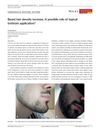
November 2016 in “Dermatologic Therapy”
4 citations
,
November 2016 in “Dermatologic Therapy” Topical tretinoin may increase beard hair density.
34 citations
,
July 1993 in “The journal of investigative dermatology/Journal of investigative dermatology” Human hair growth is influenced by androgen hormones, and red deer mane follicles have similar hormone receptors.
December 2025 in “Clinical Case Reports” The exosome injections were from stem cells and plants, not umbilical cords.
 51 citations
,
May 2019 in “Biomaterials”
51 citations
,
May 2019 in “Biomaterials” Researchers developed a method to grow hair follicles using special beads that could help with hair loss treatment.
 February 2024 in “Current Medicinal Chemistry”
 Minoxidil nanocrystals improved hair growth in mice more effectively and safely than regular Minoxidil.
 77 citations
,
March 2001 in “Clinics in Dermatology”
77 citations
,
March 2001 in “Clinics in Dermatology” Androgenetic alopecia involves genetics, hormones, and can be treated with medications or surgery.
January 2016 in “프로그램북(구 초록집)” Hormones and neuropeptides affect hair growth, with androgens having opposite effects on beard and scalp hair.
48 citations
,
April 1995 in “PubMed” Testosterone helps beard and axillary hair cells grow by releasing growth factors from dermal papilla cells.
January 2019 in “Institutional Repositories DataBase (IRDB)” Hair follicles and skin structures were successfully regenerated in the lab using specific cell arrangements and mechanical conditions.
4 citations
,
July 2006 in “British journal of dermatology/British journal of dermatology, Supplement” Testosterone increases hair follicle cell growth when beard or axillary skin cells are present together.
67 citations
,
August 2005 in “Journal of Investigative Dermatology Symposium Proceedings” Androgens promote beard growth but cause hair loss in androgenetic alopecia, with TGF-β1 as a potential treatment target.
25 citations
,
July 1994 in “Journal of dermatological science” Testosterone affects hair follicles differently across body sites, with beard hair follicles showing more activity of a specific enzyme and presence of androgen receptors compared to scalp hair.
38 citations
,
April 2005 in “Journal of Investigative Dermatology” Human hair follicle cells can become fat and bone cells, useful for therapy.
173 citations
,
July 1995 in “Biochemical and biophysical research communications” Male hormones promote hair cell growth by using a growth factor from nearby skin cells.
 63 citations
,
November 1999 in “British journal of dermatology/British journal of dermatology, Supplement”
63 citations
,
November 1999 in “British journal of dermatology/British journal of dermatology, Supplement” Hair sensitivity to androgens is partly controlled by specific enzyme expressions in different hair areas.
 27 citations
,
September 1999 in “Journal of Investigative Dermatology”
27 citations
,
September 1999 in “Journal of Investigative Dermatology” Human skin cells contain Protease Nexin-1, and male hormones can decrease its levels, potentially affecting hair growth.
24 citations
,
January 1989 Human papilla cells from hair follicles show unique growth behaviors but don't induce hair growth in vitro.
65 citations
,
May 2006 in “Journal of Investigative Dermatology” Dexamethasone may influence hair growth by altering estrogen receptor activity in hair cells.
 87 citations
,
July 2009 in “The journal of investigative dermatology/Journal of investigative dermatology”
87 citations
,
July 2009 in “The journal of investigative dermatology/Journal of investigative dermatology” Human beard hair medulla contains a unique and complex mix of keratins not found in other human tissues.
 30 citations
,
November 2013 in “PLOS ONE”
30 citations
,
November 2013 in “PLOS ONE” Androgen receptor signaling causes early aging of cells important for hair growth by damaging their DNA.
January 2016 in “AACE Clinical Case Reports” Treatment restored normal sexual characteristics and blood condition in a patient with testicular cancer.