2 citations
,
January 2016 in “Dermatology online journal” A 46-year-old man was diagnosed with frontal fibrosing alopecia, a condition usually seen in postmenopausal women.
39 citations
,
October 2012 in “Familial cancer” New therapies for Birt–Hogg–Dubé syndrome are being developed based on understanding the FLCN gene's role.
 11 citations
,
May 2023 in “Journal of Cutaneous Medicine and Surgery”
11 citations
,
May 2023 in “Journal of Cutaneous Medicine and Surgery” Plasma Rich in Growth Factors may help reduce hair loss in Frontal Fibrosing Alopecia.
 December 2022 in “Journal of neurodevelopmental disorders”
 Hair follicle sampling is a practical method for measuring biomarkers in children with and without Fragile X syndrome.
 1 citations
,
December 2019 in “Protetyka Stomatologiczna”
1 citations
,
December 2019 in “Protetyka Stomatologiczna” Platelet-Rich Fibrin shows promise in medicine and dentistry, but more research is needed to standardize its use.
 1 citations
,
September 2021 in “CRC Press eBooks”
1 citations
,
September 2021 in “CRC Press eBooks” Frontal Fibrosing Alopecia is a hair loss condition mainly affecting postmenopausal women, with unclear causes and various clinical patterns.
 72 citations
,
November 2012 in “PloS one”
72 citations
,
November 2012 in “PloS one” The protein folliculin, involved in a rare disease, works with another protein to control how cells stick together and their organization, and changes in this interaction can lead to disease symptoms.
 March 2026 in “Revista Ibero-Americana de Humanidades, Ciências e Educação”
 L-PRF effectively improved healing and bone integration in dental implant surgery.
 44 citations
,
October 2017 in “Scientific Reports”
44 citations
,
October 2017 in “Scientific Reports” Far-infrared radiation improves stem cell growth and movement, helping heart therapy.
 December 2021 in “Research Square (Research Square)”
 Hair follicle sampling is a feasible method to measure FMRP and FMR1 mRNA levels in children.
 January 2025 in “Indian Journal of Dermatology”
 Frontal fibrosing alopecia is a challenging hair loss condition with no known cause or definitive treatment.
7 citations
,
August 2017 in “Genetic testing and molecular biomarkers” A new mutation in the FLCN gene linked to Birt-Hogg-Dube syndrome was found, suggesting people with certain lung collapse should be tested for this mutation and screened for kidney and colon cancer.
4 citations
,
May 2023 in “Cells” Baricitinib and its combination with lonafarnib improve fat cell formation in certain genetic disorders.
 7 citations
,
January 2019 in “PeerJ”
7 citations
,
January 2019 in “PeerJ” A protein called sFRP4 can slow down hair regrowth.
 19 citations
,
May 2007 in “Dermatologic therapy”
19 citations
,
May 2007 in “Dermatologic therapy” The document concludes that various treatments, including laser therapy, are effective for managing pseudofolliculitis barbae, especially in darker skin types.
 46 citations
,
December 2001 in “Journal of Endocrinology/Journal of endocrinology”
46 citations
,
December 2001 in “Journal of Endocrinology/Journal of endocrinology” FLRG and follistatin have different roles in wound healing.
May 2026 in “Cell Reports Medicine” FR-1 reduces skin scarring and promotes healing without harmful effects.
 13 citations
,
March 2020 in “Genes”
13 citations
,
March 2020 in “Genes” Disrupting the FGF5 gene in rabbits leads to longer hair by extending the hair growth phase.
60 citations
,
July 2014 in “Autophagy” The protein FLCN is involved in cellular cleanup and is regulated by ULK1.
 October 2020 in “International Journal of Research in Dermatology”
 The review suggests more research is needed to understand Frontal fibrosing alopecia, a condition causing hairline recession in postmenopausal women.
 39 citations
,
July 2015 in “British Journal of Dermatology”
39 citations
,
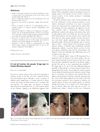
July 2015 in “British Journal of Dermatology” The pseudo 'fringe sign' can also appear in frontal fibrosing alopecia, not just in traction alopecia, showing that this condition may be more common than thought.
January 2013 in “Kidney international” A man with kidney tumors and lung cysts was diagnosed with Birt–Hogg–Dubé syndrome and treated successfully, with genetic testing confirming the diagnosis.
 July 2018 in “Elsevier eBooks”
 Frontal Fibrosing Alopecia is a type of hair loss affecting mostly older women, with no agreed best treatment.
Early diagnosis and treatment of frontal fibrosing alopecia are crucial to prevent permanent hair loss.
 8 citations
,
January 2017 in “Stem Cells International”
8 citations
,
January 2017 in “Stem Cells International” A protein called sFRP4 from skin cells stops the development of pigment-producing cells in hair.
 155 citations
,
September 2008 in “British journal of dermatology/British journal of dermatology, Supplement”
155 citations
,
September 2008 in “British journal of dermatology/British journal of dermatology, Supplement” FFA is more common in postmenopausal women, can affect younger women, and may stabilize over time.
 6 citations
,
January 2017 in “British Journal of Dermatology”
6 citations
,
January 2017 in “British Journal of Dermatology” Frontal fibrosing alopecia is a scarring hair loss condition mainly affecting older women, with no known cause and treatments that may help stabilize hair loss.
 2 citations
,
March 2005 in “Cancer biology & therapy”
2 citations
,
March 2005 in “Cancer biology & therapy” Bexxar treatment led to a high response rate in patients with advanced-stage, treatment-resistant follicular lymphoma.
 December 2025 in “International Journal of Surgery”
 GBP1 is a key target for treating Epstein-Barr virus-related kidney cancer, and finasteride may help.
May 2024 in “Reactions weekly”