 March 2024 in “Journal of Experimental & Biomedical Sciences/Biomedical Science Letters”
 BCC can protect heart cells from damage caused by oxidative stress.
 March 2024 in “Nevşehir Hacı Bektaş Veli Üniversitesi SBE Dergisi”
 Art therapy may help reduce anxiety and depression in people with Alopecia Areata.
The Chromolaena odorata patch significantly speeds up wound healing.
 February 2024 in “Curēus”
 Secukinumab can cause hair loss, which may improve after stopping the medication.
 January 2024 in “Research Square (Research Square)”
 Traditional Chinese medicine may help treat ischemic stroke by targeting specific genes and pathways.
 December 2023 in “Journal of nutritional science and vitaminology”
 A zinc-deficient diet stunted growth and affected organs in mice, with C57BL/6J mice showing more severe symptoms.
 November 2023 in “Deleted Journal”
 Cedrus libani has potential medicinal uses but needs more safety studies.
 November 2023 in “Jurnal Ilmu Kesehatan Hewan”
 The dog's condition improved after 21 days of treatment.
 November 2023 in “bioRxiv (Cold Spring Harbor Laboratory)”
 Scientists made a mouse that shows how a specific protein in the skin changes and affects hair growth and shape.
 October 2023 in “Urologie in der Praxis”
 Primary care providers should understand Geschlechtsinkongruenz to offer better care for transitioning individuals.
 October 2023 in “Frontiers in endocrinology”
 Effective PCOS treatments require targeting specific signaling pathways.
 October 2023 in “Frontiers in endocrinology”
 Androgens and androgen receptors are important for metabolic health, affecting how the body uses glucose and fats through mitochondrial function.
 October 2023 in “Research Square (Research Square)”
 Oxidative stress is linked to mild patchy alopecia areata.
 September 2023 in “bioRxiv (Cold Spring Harbor Laboratory)”
 The mTurq2-Col4a1 mouse model shows that cells can divide while attached to stable basement membranes during development.
 September 2023 in “HAL (Le Centre pour la Communication Scientifique Directe)”
 Peptide nanoparticles can effectively deliver CRISPR-Cas9 to target KRAS mutations in cancer.
Different amounts of propylene glycol change the thickness of katuk leaf hair tonic.
 July 2023 in “Frontiers in veterinary science”
 Certain long non-coding RNAs are important for controlling hair growth cycles in sheep.
 July 2023 in “Research Square (Research Square)”
 Skin's uneven surface and hair follicles affect its stress and strain but don't change its overall strength, and help prevent the skin from peeling apart.
 June 2023 in “Journal of multidisciplinary sciences (Online)”
 PCOS is linked to a higher risk of endometrial cancer but not ovarian or breast cancer, and more research is needed on its role in cancer development and treatment effects.
 June 2023 in “Deleted Journal”
 Healthy dogs and cats can carry and spread skin infections without showing symptoms.

Inhibiting AP-1 changes skin tumor types and affects tumor cell identity.
 March 2023 in “Здобутки клінічної і експериментальної медицини”
 Low vitamin D in overweight teens is linked to higher leptin and lower adiponectin, affecting metabolism.

Inhibiting AP-1 changes skin tumor types and affects tumor cell identity.
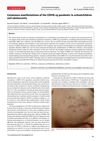 January 2023 in “Acta dermatovenerologica Alpina, Pannonica et Adriatica (Tiskana izd.)”
 The article concludes that schoolchildren and adolescents experienced various skin issues during the COVID-19 pandemic, including acne from masks and other skin reactions from the virus and vaccines.
 January 2023 in “European endocrinology”
 People with alopecia have a higher risk of thyroid cancer.
Lower LDL-c levels predict higher COVID-19 mortality.
 January 2023 in “Frontiers research topics”
 Skin conditions can cause significant psychological distress, so addressing mental health is crucial for improving quality of life.
 January 2023 in “Book of Abstracts”
 COVID-19 can cause different types of hair loss, with telogen effluvium being the most common.
 December 2022 in “Sudan Journal of Medical Sciences”
 Vaccination is the most effective way to reduce COVID-19 transmission.
Low-dose glucocorticoid treatment improves pregnancy and birth rates in women with nonclassical 21-hydroxylase deficiency.