 3 citations
,
January 2023 in “Materials horizons”
3 citations
,
January 2023 in “Materials horizons” The new biomaterial helps grow blood vessels and hair for skin repair.
 24 citations
,
January 2019 in “Biomaterials Science”
24 citations
,
January 2019 in “Biomaterials Science” The shape of fibrous scaffolds can improve how stem cells help heal skin.
80 citations
,
January 2020 in “Journal of Nanobiotechnology” Nanomaterials can aid tissue repair and healing but need more safety research.
39 citations
,
August 2017 in “Annual Review of Genetics” Understanding tissue regeneration in animals can improve regenerative medicine.

Advanced techniques show promise for hair regeneration, but more research is needed for practical use.
 39 citations
,
April 2019 in “Journal of Biomaterials Science, Polymer Edition”
39 citations
,
April 2019 in “Journal of Biomaterials Science, Polymer Edition” RADA16 is a promising material for tissue repair and regenerative medicine but needs improvement in strength and cost.
5 citations
,
June 2022 in “Biophysical Journal” TGF-β and TNF influence hair follicle cell fate, with TNF being more effective in triggering cell death.
January 2026 in “Chemical Engineering Journal” Engineered nanovesicles from hair follicle stem cells enable scarless healing of infected wounds.
January 2019 in “Data Archiving and Networked Services (DANS)” Current skin substitutes don't fully replicate natural skin, and better understanding of molecular mechanisms is needed for improvement.

The bar-cartridge type implanter is the best for implanting dermal papilla cells efficiently and at controlled depths.
CRISPR gene editing reduces harmful molecules in cells from Emery–Dreifuss Muscular Dystrophy patients.
 62 citations
,
March 2015 in “PLOS ONE”
62 citations
,
March 2015 in “PLOS ONE” Pre-seeding scaffolds with fibroblasts improves skin wound healing.
 September 2019 in “Journal of Investigative Dermatology”
 Scientists used stem cells to create a model of the skin disease Epidermolysis Bullosa simplex, which helped them understand its molecular mechanisms and could aid in finding treatments.
 44 citations
,
June 2018 in “Journal of Cellular Physiology”
44 citations
,
June 2018 in “Journal of Cellular Physiology” Researchers developed a 3D model of human hair follicle cells that can help understand hair growth and test new hair loss treatments.
 October 2021 in “QJM: An International Journal of Medicine”
 The experiment successfully created a 3D model of a rat lung using a natural scaffold.
April 2021 in “Journal of Investigative Dermatology” Early-stage skin substitutes improve wound healing and skin structure.
16 citations
,
January 2023 in “Regenerative Biomaterials” The scaffold with polydopamine and bioactive glass effectively promotes bone regeneration.
September 2016 in “Toxicology letters” The 5050 MHA42MCS45 hydrogel blend is suitable for repairing load-bearing soft tissues.
A new hydrogel made from human hair keratin can help regenerate skin and fight bacteria.
 December 2024 in “Regenerative Biomaterials”
 Electrospinning creates materials that help heal wounds by mimicking natural tissue and delivering proteins.
 1 citations
,
June 2023 in “ScienceRise Pharmaceutical Science”
1 citations
,
June 2023 in “ScienceRise Pharmaceutical Science” A semi-automated system can effectively help choose emulsion ingredients, simplifying the creation of medicinal and cosmetic products.
 3 citations
,
February 2021 in “Experimental dermatology”
3 citations
,
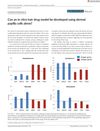
February 2021 in “Experimental dermatology” Dermal papilla microtissues could be useful for initial hair growth drug testing.
 1 citations
,
September 2023 in “ACS Biomaterials Science & Engineering”
1 citations
,
September 2023 in “ACS Biomaterials Science & Engineering” Human hair keratin hydrogels show promise for use in regenerative medicine.
March 2026 in “Bioconjugate Chemistry” Peptide-based PROTACs show promise in targeting hard-to-treat proteins, especially for cancer therapy.
 140 citations
,
August 2011 in “Biomaterials”
140 citations
,
August 2011 in “Biomaterials” Keratose, derived from human hair, is a non-toxic biomaterial good for tissue regeneration and integrates well with body tissues.
 6 citations
,
July 2013 in “Molecular Imaging”
6 citations
,
July 2013 in “Molecular Imaging” The technique allowed noninvasive tracking of hair stem cell survival and growth, showing potential for hair loss research.

Keratin hydrogels from human hair show promise for tissue engineering and regenerative medicine.
6 citations
,
January 2021 in “Journal of the mechanics and physics of solids/Journal of the Mechanics and Physics of Solids” The model shows that factors like follicle shape and stiffness are key for hair growth and anchoring.
March 2026 in “Experimental Dermatology” The new model helps understand and develop treatments for genetic skin disorders like AEC.
 51 citations
,
June 2021 in “Signal Transduction and Targeted Therapy”
51 citations
,
June 2021 in “Signal Transduction and Targeted Therapy” The document concludes that while there are promising methods to control CRISPR/Cas9 gene editing, more research is needed to overcome challenges related to safety and effectiveness for clinical use.