January 2026 in “eKNUTSHIR” Protein-based products are effective for wound healing and have a growing market.
July 2025 in “Journal of Investigative Dermatology” Wnt and SHH pathways help form hair follicles by coordinating cell processes.
October 2024 in “International Journal of Biological Macromolecules” Ginkgo biloba leaf polysaccharides have many health benefits and potential for commercial use.
June 2020 in “Zenodo (CERN European Organization for Nuclear Research)” Controlled microflora in animals delays immune cell maturation and affects immunity.
November 1997 in “Open Archive (Karolinska Institutet)” PTCH gene mutations contribute to basal cell carcinoma development.
5 citations
,
April 2025 in “Proceedings of the Royal Society B Biological Sciences” Humans heal wounds slower than non-human primates and rodents.

Monocyclic aromatic compounds are important for developing various drugs and treatments.
 January 2000 in “BioScience”
 The document concludes that understanding hair biology is key to treating hair disorders, with gene therapy showing potential as a future treatment.
 June 2023 in “Journal for international medical graduates”
 Smoking increases the risk of hair loss, especially male pattern baldness.
4 citations
,
August 2025 in “Journal of Food Science” Tremella fuciformis polysaccharide has many health benefits and potential uses in food, medicine, and cosmetics.
 January 2016 in “Springer eBooks”
 Understanding drug interactions, side effects, and patient-specific factors is crucial for effective dermatological care.
 March 2026 in “Frontiers in Pharmacology”
 New treatments for hair loss show promise but need more testing for effectiveness and safety.
1 citations
,
May 1987 in “The Lancet” Topical minoxidil may help hair growth by improving blood flow to hair follicles.
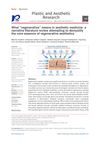 February 2026 in “Plastic and Aesthetic Research”
 Regenerative aesthetic medicine aims to restore tissue function, but needs more consistent evidence and standardized practices.
 140 citations
,
December 2017 in “Journal of Controlled Release”
140 citations
,
December 2017 in “Journal of Controlled Release” Microneedles improve drug delivery in various body parts, are safe and painless, and show promise in cosmetology, vaccination, insulin delivery, and other medical applications.
 3 citations
,
January 2020 in “Plastic and Aesthetic Research”
3 citations
,
January 2020 in “Plastic and Aesthetic Research” Non-surgical procedures can help reduce wrinkles and stimulate skin repair by understanding skin aging at the molecular level.
 3 citations
,
June 2017 in “Methods”
3 citations
,
June 2017 in “Methods” Researchers created a model to understand heart aging, highlighting the role of microRNAs and identifying key genes and pathways involved.
January 2026 in “Molecules” Dihydroartemisinin could be a versatile cosmetic ingredient but needs more research and development.
48 citations
,
April 1982 in “Clinics in Plastic Surgery” Male pattern baldness is common and can be managed with early intervention.
7 citations
,
June 2024 in “iScience” Androgens increase cervical cancer risk and affect its development.
 4 citations
,
September 2021 in “Frontiers in allergy”
4 citations
,
September 2021 in “Frontiers in allergy” The conclusion is that understanding the complex relationship between allergies, autoimmunity, and psychological factors is key to treating skin disorders with itching.
1 citations
,
April 2024 in “PubMed” Photobiomodulation is effective and safe for healing injuries and improving appearance.
 1 citations
,
March 2024 in “Signal transduction and targeted therapy”
1 citations
,
March 2024 in “Signal transduction and targeted therapy” NF-κB signaling is crucial in many diseases and can be targeted for new treatments.
 1 citations
,
March 2021 in “Journal of Dermatology Research and Therapy”
1 citations
,
March 2021 in “Journal of Dermatology Research and Therapy” Women with cicatricial hair loss may have a higher risk of hypertension.
 January 2026 in “Archives of Internal Medicine Research”
 PRP, exosomes, and physical therapies show promise for hair and tissue repair, but need more research for optimization.
 June 2011 in “CRC Press eBooks”
 Low-Level Laser Therapy can stimulate healing and cell function, potentially leading to wider medical use.
March 2009 in “The Journal of Urology” Finasteride helps treat hair loss and prostate issues by blocking a hormone.
45 citations
,
June 2003 in “Journal of Investigative Dermatology Symposium Proceedings” Understanding hair follicles through various models can help develop new treatments for hair disorders.
22 citations
,
January 2010 in “Humana Press eBooks” The vitamin D receptor can affect gene activity even without its usual hormone in hair and skin.
10 citations
,
November 2009 in “Pigment cell & melanoma research” The document concludes that MGRN1 affects mouse fur color by interfering with a receptor's signaling, but its full role in the body is still unknown.