2 citations
,
September 2024 in “Lasers in Surgery and Medicine” Noninvasive scalp imaging techniques can improve patient care by reducing the need for biopsies.
January 2026 in “SSRN Electronic Journal” 10 citations
,
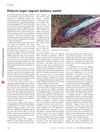
March 2016 in “Development Growth & Differentiation” Scientists created feather buds in lab-grown chick skin using specific cell interactions.
 3 citations
,
February 2016 in “Nature Biotechnology”
3 citations
,
February 2016 in “Nature Biotechnology” New drug shows promise for better hair growth in baldness treatment.
10 citations
,
June 2023 in “Preprints.org” Hydrogel-forming microneedles are a safe and effective method for delivering drugs through the skin.
 24 citations
,
December 2009 in “Future Medicinal Chemistry”
24 citations
,
December 2009 in “Future Medicinal Chemistry” Using computers to analyze drugs can find new uses for them, but actual experiments are needed to confirm these uses.
December 2011 in “University of Southern California Digital Library” High BMP signaling disrupts hair growth and balance in skin cells.
2 citations
,
November 2024 in “In Silico Pharmacology” November 2025 in “Psychoneuroendocrinology” Hair proteomics could be a useful, non-invasive tool for identifying stress-related disorders.
 256 citations
,
October 2013 in “Nature Communications”
256 citations
,
October 2013 in “Nature Communications” Bioengineered lacrimal glands can restore tear production and protect eyes.
The study identified a key protein involved in producing underarm odor and found ways to inhibit it.
1 citations
,
January 2018 Sphingosine 1-phosphate and its receptor S1PR3 are key in controlling mechanical pain.
May 2021 in “FEBS open bio”  16 citations
,
February 2018 in “BMC Genomics”
16 citations
,
February 2018 in “BMC Genomics” Certain genetic markers linked to reproductive potential were identified by their impact on a protein's ability to bind to genes.
1 citations
,
May 2025 in “European Polymer Journal” The MeGel-SFSR dressing helps diabetic wounds heal faster and better.
120 citations
,
September 2022 in “Materials Today Bio” Adhesive hydrogels with natural antibacterial agents are effective wound dressings that promote healing and prevent antibiotic resistance.
 April 2019 in “Journal of Investigative Dermatology”
 Calcium signals and SHH guide the direction of feather growth in chicken skin.
July 2023 in “Current Developments in Nutrition”  13 citations
,
November 2022 in “Chemical Science”
13 citations
,
November 2022 in “Chemical Science” Inorganic-based biomaterials can quickly stop bleeding and help wounds heal, but they may cause issues like sharp ion release and pH changes.
13 citations
,
February 2009 in “Pest management science” Reactive oxygen species are key for parasitic plant attachment and affect root development in various plants.
 7 citations
,
October 2013 in “Methods in molecular biology”
7 citations
,
October 2013 in “Methods in molecular biology” These methods help understand DNA changes in mouse skin.
 12 citations
,
August 2016 in “Current opinion in genetics & development”
12 citations
,
August 2016 in “Current opinion in genetics & development” Organs like hair follicles can renew themselves in complex ways, adapting to different needs and environments.
28 citations
,
September 2023 in “International Journal of Biological Macromolecules” The new dressing speeds up wound healing better than current options.
10 citations
,
February 2021 in “PLoS biology” Corin helps control salt and sweat release in sweat glands.
January 2026 in “Regenerative Biomaterials” Strontium and cerium are most effective for tissue repair.
July 2025 in “OPAL (Open@LaTrobe) (La Trobe University)” Ultrasound and GelMA hydrogel with stem cell vesicles improve skin healing and regeneration.
Some bacteria use arsenic compounds as antibiotics, and others have evolved resistance; a particular arsenic-based compound shows potential as a new antimalarial treatment.
17 citations
,
September 2016 in “Stem cells translational medicine” Using bioreactors, scientists can grow more skin stem cells that keep their ability to regenerate skin and hair.
 17 citations
,
January 2013 in “Journal of Cosmetics, Dermatological Sciences and Applications”
17 citations
,
January 2013 in “Journal of Cosmetics, Dermatological Sciences and Applications” 3D bioprinting could improve skin repair and treat conditions like vitiligo and alopecia by precisely placing cells.
 23 citations
,
March 2010 in “Medical hypotheses”
23 citations
,
March 2010 in “Medical hypotheses” Merkel cells may have roles in sensing magnetic fields, creating fingerprints, Reiki energy healing, passing on environmental information to offspring, and influencing hair shape.