173 citations
,
July 2012 in “British Journal of Dermatology” Dabrafenib can cause skin growths and sometimes low-grade skin cancer.
 4 citations
,
January 2018 in “International Journal of Trichology”
4 citations
,
January 2018 in “International Journal of Trichology” A rare genetic disease causes sparse hair and early blindness due to a gene mutation.
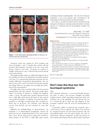 4 citations
,
February 2014 in “Journal of the European Academy of Dermatology and Venereology”
4 citations
,
February 2014 in “Journal of the European Academy of Dermatology and Venereology” Early diagnosis of hair tourniquet syndrome saved a baby's toe from being lost.
Trichoscopic examination is crucial for diagnosing congenital triangular alopecia.
9 citations
,
January 1975 in “Munich Personal RePEc Archive (Ludwig Maximilian University of Munich)” Rothmund-Thomson syndrome causes skin changes, hair loss, and slightly high lysine and cystine in urine.
 32 citations
,
December 1969 in “The Lancet”
32 citations
,
December 1969 in “The Lancet” Children with marasmus have more resting hair follicles and thinner, less pigmented hair, showing long-term malnutrition.
21 citations
,
April 2004 in “Australasian Journal of Dermatology” A 3-year-old girl has a rare condition causing sparse hair and nail issues, with minimal improvement from treatment.
 8 citations
,
March 2019 in “Progress in Human Geography”
8 citations
,
March 2019 in “Progress in Human Geography” Hair significantly shapes body identity and social interactions, influencing how we perceive and relate to our bodies.
December 1987 in “Pediatric Dermatology” Hair bands are a new symptom of facio-genito-popliteal syndrome.
7 citations
,
May 1978 in “Acta Dermato Venereologica” A 36-year-old man had unusual skin lesions on his face without hair loss.
59 citations
,
March 1984 in “Journal of Investigative Dermatology” 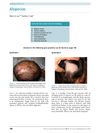 February 2013 in “Archives of Disease in Childhood: Education & Practice”
 Different types of alopecia in children require specific diagnoses and treatments.
1 citations
,
October 2016 Genetic hair disorders can indicate other hidden health problems.
 44 citations
,
January 2005 in “Dermatology”
44 citations
,
January 2005 in “Dermatology” Hair problems can be caused by genetics or the environment, and treatment should focus on the cause and reducing hair damage.
1 citations
,
March 2022 in “Anais brasileiros de dermatologia/Anais Brasileiros de Dermatologia” Trichoscopy helps tell apart hair loss due to alopecia areata from trichotillomania in eyebrows.
1 citations
,
April 2018 in “Turkish Journal of Dermatology” Childhood hypertrichosis is excessive hair growth not linked to hormones, with types based on location and origin.
14 citations
,
June 2011 in “Australasian Journal of Dermatology” An 8-year-old boy had both alopecia areata and vitiligo on the same spot on his scalp, which is very rare.
 January 2012 in “Journal of the Dermatology Nurses’ Association”
 The document explains hair growth, hair loss types, and other hair-related terms.
2 citations
,
November 2023 in “Skin Research and Technology” RCM and dermoscopy help identify different types of hair loss in children.
1 citations
,
June 2024 in “Anais Brasileiros de Dermatologia” Recognizing specific scalp patterns can help diagnose hair loss linked to breast cancer spread.
 7 citations
,
July 2003 in “Clinics in Dermatology”
7 citations
,
July 2003 in “Clinics in Dermatology” The article helps identify common, non-harmful skin conditions in newborns to avoid undue concern and treatment.
 17 citations
,
September 2019 in “Journal of Cell Biology”
17 citations
,
September 2019 in “Journal of Cell Biology” Hair follicle regeneration may slow tumor growth.
56 citations
,
October 2010 in “Pediatric Clinics of North America” Epidermal nevi are skin cell clusters linked to various syndromes.
 August 2022 in “Archives of pediatric surgery”
 Hair-Thread Tourniquet Syndrome is a rare condition where hair or thread tightly wraps around a child's body part, requiring quick treatment to prevent damage.
5 citations
,
November 2011 in “Journal of Cutaneous Medicine and Surgery” Hairless dogs can be used to study human hypertrophic scars.
20 citations
,
August 1981 in “Developmental Medicine & Child Neurology” 13 citations
,
June 1981 in “Developmental Medicine & Child Neurology” August 2023 in “Journal of the European Academy of Dermatology and Venereology” Onycholemmal horn is a rare nail tumor in elderly women, treated by surgical removal.
A new genetic mutation was found causing hair and eye issues in a boy.
1 citations
,
November 2003 in “Annals of saudi medicine/Annals of Saudi medicine” A 17-year-old in Saudi Arabia was diagnosed with a rare skin condition causing red-brown facial patches.