 193 citations
,
August 2005 in “Journal of Investigative Dermatology Symposium Proceedings”
193 citations
,
August 2005 in “Journal of Investigative Dermatology Symposium Proceedings” Hair loss common in Australia; men affected earlier, more often than Asians; women less concerned.
 18 citations
,
February 2014 in “PubMed”
18 citations
,
February 2014 in “PubMed” Androgenetic alopecia is a common hair loss condition caused by testosterone effects on hair follicles, leading to thinner, shorter, and less pigmented hair, diagnosed using scalp dermoscopy and treated with topical minoxidil, antiandrogen agents, and 5-alpha reductase inhibitors.
 4 citations
,
April 2020 in “JAAD case reports”
4 citations
,
April 2020 in “JAAD case reports” JAK inhibitors help hair regrowth but not fully effective for androgenetic alopecia.
 December 2024 in “Asian Journal of Medical Sciences”
 Low iron levels may be linked to hair loss in women with chronic telogen effluvium.
 January 2023 in “Springer eBooks”
 Most older adults experience pattern hair loss due to shrinking hair follicles, with men and women showing different balding patterns.
January 2004 in “Medicine Today” Topical minoxidil helps hair regrowth in over 50% of men and women.
3 citations
,
January 2002 in “Actas Dermo-Sifiliográficas” Excessive minoxidil use can damage hair structure.
 1 citations
,
March 2020 in “Australasian Journal of Dermatology”
1 citations
,
March 2020 in “Australasian Journal of Dermatology” The paper concludes that recognizing bitemporal alopecia areata is important for early treatment and preventing its progression.
 July 2026 in “Innovations in Pharmaceutical Sciences & Care”
 Combining mesotherapy injections with minoxidil improved hair growth and appearance.
 March 2017 in “Journal of Dermatology”
 Different hair loss patterns may be linked to varying male hormone levels.
 2 citations
,
February 2021 in “The Journal of clinical and aesthetic dermatology”
2 citations
,
February 2021 in “The Journal of clinical and aesthetic dermatology” Understanding the cause of bitemporal hair loss is key to deciding the right treatment.
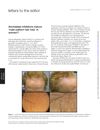 19 citations
,
May 2013 in “Annals of Oncology”
19 citations
,
May 2013 in “Annals of Oncology” Aromatase inhibitors cause male pattern hair loss in women.
 14 citations
,
January 2006 in “Australasian journal of dermatology”
14 citations
,
January 2006 in “Australasian journal of dermatology” Alopecia areata can look like frontal fibrosing alopecia, making diagnosis hard.

Topical Minoxidil is effective for hair loss after COVID-19.
 51 citations
,
January 2004 in “Skin Pharmacology and Physiology”
51 citations
,
January 2004 in “Skin Pharmacology and Physiology” The document explains hair growth and shedding, factors affecting it, and methods to evaluate hair loss, emphasizing the importance of skin biopsy for diagnosis.
 7 citations
,
January 2015 in “Case reports in genetics”
7 citations
,
January 2015 in “Case reports in genetics” Using SNP array testing helped quickly find the gene causing Woodhouse-Sakati syndrome in two related individuals.
April 2022 in “Journal of Investigative Dermatology” Androgenetic alopecia causes hair thinning due to increased androgen activity, treatable with minoxidil and finasteride.
 17 citations
,
June 2016 in “Australasian Journal of Dermatology”
17 citations
,
June 2016 in “Australasian Journal of Dermatology” Treatment with dutasteride, minoxidil, and artificial hair transplantation improved appearance but caused folliculitis.
 3 citations
,
February 2009 in “Journal of The European Academy of Dermatology and Venereology”
3 citations
,
February 2009 in “Journal of The European Academy of Dermatology and Venereology” Sparse hairs below frontal hairline can indicate early male balding.
 3 citations
,
July 1997 in “Current problems in dermatology”
3 citations
,
July 1997 in “Current problems in dermatology” Hair restoration surgery has evolved over time, with a focus on natural-looking results and managing patient expectations, while also considering potential complications and the lifelong progression of male pattern baldness.
 26 citations
,
August 2016 in “Actas Dermo-Sifiliográficas”
26 citations
,
August 2016 in “Actas Dermo-Sifiliográficas” Frontal Fibrosing Alopecia in men is often missed and can come with symptoms like facial bumps and hair loss on eyebrows and limbs.
 17 citations
,
October 2017 in “Journal of Cutaneous Medicine and Surgery”
17 citations
,
October 2017 in “Journal of Cutaneous Medicine and Surgery” No treatment has been proven to effectively stop hair loss or regrow hair in Frontal Fibrosing Alopecia, and more research is needed.
3 citations
,
February 2017 in “The American journal of dermatopathology/American journal of dermatopathology” Sarcoidosis can mimic other skin disorders, making diagnosis challenging.
July 2026 in “JAAD reviews.” Female Pattern Hair Loss affects women's quality of life, with limited treatment options and a need for more research.
2 citations
,
January 2019 in “Skin appendage disorders” Early diagnosis and quick treatment improve life quality for FFA patients.
 234 citations
,
December 1996 in “Journal of The American Academy of Dermatology”
234 citations
,
December 1996 in “Journal of The American Academy of Dermatology” Middle-aged women with chronic telogen effluvium experience increased hair shedding but usually don't get significantly thinner hair.
 75 citations
,
October 1996 in “Dermatologic Clinics”
75 citations
,
October 1996 in “Dermatologic Clinics” Chronic Telogen Effluvium is a hair loss condition in middle-aged women that usually doesn't lead to complete baldness.
 1 citations
,
January 2009 in “CRC Press eBooks”
1 citations
,
January 2009 in “CRC Press eBooks” Finasteride increases hair count and improves hair growth with low risk of side effects.
A hair transplant using hair from the back of the head and pubic area was successful in creating a feminine hairline for a male-to-female transgender person.
 January 2017 in “Springer eBooks”
 Over 40% of postmenopausal women experience hair loss, with treatments aiming to stop further loss and possibly thicken hair.