
Topical Minoxidil is effective for hair loss after COVID-19.
 18 citations
,
February 2014 in “PubMed”
18 citations
,
February 2014 in “PubMed” Androgenetic alopecia is a common hair loss condition caused by testosterone effects on hair follicles, leading to thinner, shorter, and less pigmented hair, diagnosed using scalp dermoscopy and treated with topical minoxidil, antiandrogen agents, and 5-alpha reductase inhibitors.
 2 citations
,
May 2018 in “Journal of The American Academy of Dermatology”
2 citations
,
May 2018 in “Journal of The American Academy of Dermatology” Hypothyroidism patients with hair loss typically have thinning hair, smaller hair follicles, and normal hair shedding.
 December 2024 in “Asian Journal of Medical Sciences”
 Low iron levels may be linked to hair loss in women.
 3 citations
,
April 2002 in “The Lancet”
3 citations
,
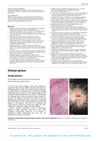
April 2002 in “The Lancet” Painful hair loss in an elderly woman was caused by giant cell arteritis, not just aging.
 January 2026 in “Journal of Clinical Practice and Research”
 Bitemporal alopecia often occurs with other hair conditions and can help predict and monitor these issues.
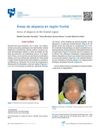 January 2025 in “Revista del Centro Dermatológico Pascua”
 Early diagnosis and treatment can help manage fibrosing alopecia in older women.
 November 2025 in “Scientific Reports”
 AI improves accuracy and consistency in diagnosing male pattern hair loss.
 2 citations
,
February 2021 in “The Journal of clinical and aesthetic dermatology”
2 citations
,
February 2021 in “The Journal of clinical and aesthetic dermatology” Understanding the cause of bitemporal hair loss is key to deciding the right treatment.
 December 2024 in “Asian Journal of Medical Sciences”
 Low iron levels may be linked to hair loss in women with chronic telogen effluvium.
7 citations
,
January 2016 in “Dermatology online journal” Persistent pulling on hair can cause permanent hair loss.
 June 2021 in “Journal of The American Academy of Dermatology”
 New scale reliably assesses male hair loss with female pattern.
 46 citations
,
February 2016 in “Experimental Dermatology”
46 citations
,
February 2016 in “Experimental Dermatology” Genes play a significant role in male-pattern baldness, and understanding them could lead to new treatments and insights into related health issues.
 193 citations
,
August 2005 in “Journal of Investigative Dermatology Symposium Proceedings”
193 citations
,
August 2005 in “Journal of Investigative Dermatology Symposium Proceedings” Hair loss common in Australia; men affected earlier, more often than Asians; women less concerned.
 6 citations
,
June 2004 in “Dermatologic Surgery”
6 citations
,
June 2004 in “Dermatologic Surgery” A woman had temporary hair loss after a facelift, which improved on its own within a year.
 October 2024 in “International Journal of Biology Pharmacy and Allied Sciences”
 Herbal treatments are gaining interest as alternatives for hair loss.
 July 2004 in “Dermatologic Surgery”
 A woman had temporary hair loss due to a stress-related condition after a facelift.
 2 citations
,
January 2019 in “PubMed”
2 citations
,
January 2019 in “PubMed” The study concluded that certain areas of the scalp and beard are safe for hair transplant donor sites in Indian men.
 January 1995 in “Surgical technology international”
 Using consecutive transposition flaps can manage gaps in hair growth after multiple hair loss surgeries.
April 2022 in “Journal of Investigative Dermatology” Androgenetic alopecia causes hair thinning due to increased androgen activity, treatable with minoxidil and finasteride.
 4 citations
,
January 2015 in “Annals of Dermatology”
4 citations
,
January 2015 in “Annals of Dermatology” A woman's temporary hair loss after face lift surgery stopped on its own, and hair grew back.
 July 2026 in “Innovations in Pharmaceutical Sciences & Care”
 Combining mesotherapy injections with minoxidil improved hair growth and appearance.
 7 citations
,
January 2015 in “Case reports in genetics”
7 citations
,
January 2015 in “Case reports in genetics” Using SNP array testing helped quickly find the gene causing Woodhouse-Sakati syndrome in two related individuals.
 21 citations
,
November 2012 in “Plastic and Reconstructive Surgery”
21 citations
,
November 2012 in “Plastic and Reconstructive Surgery” Both genetic and lifestyle factors significantly affect female hair loss.
 April 2026 in “Research Square”
 Trichoscopy is reliable for diagnosing different types of frontal non-scarring hair loss.
 July 2023 in “International journal of trichology”
 Cellcurin therapy with microneedling increases hair density and thickness in treating hair loss in men and women.
24 citations
,
January 2018 in “Indian Journal of Dermatology, Venereology and Leprology” Androgenetic alopecia is mainly caused by genetic factors and increased androgen activity, leading to hair follicle miniaturization.
4 citations
,
January 2015 in “Indian Journal of Dermatology” 15.33% of young Caucasian men have severe hair loss, with higher rates in Jewish men and links to age, BMI, and possibly metabolic syndrome.
January 2025 in “Surgical & Cosmetic Dermatology” Temporal triangular alopecia causes permanent hair loss and can be managed with treatments like minoxidil or hair transplantation.
 16 citations
,
June 2008 in “Springer eBooks”
16 citations
,
June 2008 in “Springer eBooks” Over 50% of women over 50 experience hair loss, with minoxidil being the only proven effective treatment.