1 citations
,
January 2009 in “Elsevier eBooks” Laser hair removal can be effective for darker skin but requires careful use to avoid side effects.
 September 2017 in “Journal of Investigative Dermatology”
 Stabilizing HIF-1A in hair follicles may reduce oxidative stress and promote hair growth by increasing glycolysis.
July 2022 in “Zenodo (CERN European Organization for Nuclear Research)” Nutrient-rich shampoos can help revitalize hair and potentially reverse thinning.
 June 2025 in “Current Issues in Molecular Biology”
 Minoxidil, caffeine, and biotin can improve hair shine by restoring certain genes.
2 citations
,
March 2024 in “Journal of Cosmetic Dermatology” White hair from alopecia areata can turn pigmented after treatment.
September 2016 in “Springer eBooks” Gray hair is caused by oxidative stress damaging hair cells.
 January 2026 in “Stem Cell Reviews and Reports”
 Hair graying may help prevent cancer by protecting stem cells.
December 2012 in “SWU eJournals System (Srinakharinwirot University)” Chemical hair removal can cause skin irritation and other issues, but natural alternatives are being explored.
23 citations
,
June 2021 in “Lasers in Medical Science” Blue light therapy may help with hair growth, but more research is needed.
 75 citations
,
November 1965 in “Textile research journal”
75 citations
,
November 1965 in “Textile research journal” Papain and bisulfite break down human hair by dissolving parts of it.
May 2025 in “Skin Appendage Disorders” Frontal fibrosing alopecia can be diagnosed by examining facial areas and treated with specific medications to stop its progression.
 112 citations
,
July 1998 in “Journal of Investigative Dermatology”
112 citations
,
July 1998 in “Journal of Investigative Dermatology” Ruby laser pulses best destroy hair follicles during the growth phase and effectiveness varies with laser intensity; melanin is key for targeting, and timing treatments can improve results.
October 2024 in “Cosmetics” ATG effectively reduces hair frizz without damaging hair strength.
January 2017 in “Durham e-Theses (Durham University)” Chemical stressors damage hair structure but the skin's outer layer protects living cells.
 15 citations
,
August 2019 in “Dermatologic Therapy”
15 citations
,
August 2019 in “Dermatologic Therapy” Platelet-rich plasma (PRP) may help treat hair loss in patients with frontal fibrosing alopecia who don't respond to other treatments.
 2 citations
,
August 2016 in “Lasers in Surgery and Medicine”
2 citations
,
August 2016 in “Lasers in Surgery and Medicine” Photodynamic therapy can remove nonpigmented hair in mice and might work for humans.
February 2025 in “Actas Dermo-Sifiliográficas” Low-dose oral minoxidil can help improve hair and eyebrow growth in people with frontal fibrosing alopecia.
 4 citations
,
March 2023 in “Current Oncology”
4 citations
,
March 2023 in “Current Oncology” Scalp cooling is the only FDA-approved method to prevent hair loss from chemotherapy, but other treatments like minoxidil and PRP are being tested.
 January 2026 in “Journal of Community Medicine and Health Solutions”
 PP405 shows promise as a new, effective treatment for hair loss with minimal side effects.
 3 citations
,
January 2004 in “Sen i Gakkaishi”
3 citations
,
January 2004 in “Sen i Gakkaishi” DTDG in hair treatments reduces damage and preserves hair structure.
 March 2025 in “Aging Cell”
 Reducing IGF-1 can help rejuvenate hair follicles and prevent hair graying and loss.
1 citations
,
March 2025 in “Journal of Cosmetic Dermatology” Exosomes and laser therapy can help regrow and repigment hair.
 26 citations
,
June 2018 in “Australasian Journal of Dermatology”
26 citations
,
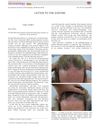
June 2018 in “Australasian Journal of Dermatology” Stopping sunscreen use on the forehead led to hair regrowth in a woman with frontal fibrosing alopecia.
 3 citations
,
January 2019 in “Skin Research and Technology”
3 citations
,
January 2019 in “Skin Research and Technology” Frequent use of hair straighteners can cause hair loss similar to scarring alopecia in young Turkish women.
 56 citations
,
November 2010 in “Pigment Cell & Melanoma Research”
56 citations
,
November 2010 in “Pigment Cell & Melanoma Research” Brain hormones significantly affect hair color and could potentially be used to prevent or reverse grey hair.
 May 2026 in “Zenodo (CERN European Organization for Nuclear Research)”
 The herbal hair dye with Barleria prionitis is a safe, effective, and natural alternative to chemical dyes.
 7 citations
,
August 2018 in “Journal of cosmetic dermatology”
7 citations
,
August 2018 in “Journal of cosmetic dermatology” Chemical hair straightening improves smoothness and shine but may cause side effects, suggesting a need for safer methods.
 April 2018 in “The journal of investigative dermatology/Journal of investigative dermatology”
 Higher fluence in hair removal damages hair follicles more, while lower fluence mimics natural hair regression, with long-term IPL treatments effectively reducing hair.
12 citations
,
November 2004 in “Photochemistry and Photobiology” Superoxide dismutase (SOD) can prevent hair graying in mice.
 May 2023 in “Brazilian Journal of Animal and Environmental Research”
 Photobiomodulation effectively treats hair loss in dogs with black hair follicular dysplasia.