 40 citations
,
February 1990 in “Journal of The American Academy of Dermatology”
40 citations
,
February 1990 in “Journal of The American Academy of Dermatology” A 17-year-old developed woolly hair nevus in adolescence, which is unusual, and over time the hair darkened and straightened slightly, but microscopic changes persisted.
Hair dysplasias involve various hair disorders causing fragility, breakage, and poor hair adhesion.
 July 2022 in “Journal of Investigative Dermatology”
 Substance P may contribute to hair loss by increasing oxidative stress and mitochondrial activity in hair follicles.
May 2024 in “JDDG Journal der Deutschen Dermatologischen Gesellschaft” A rare scalp tumor was removed from a 49-year-old woman, with a good outlook if benign but needing careful monitoring if malignant.
November 2021 in “Clinical, cosmetic and investigational dermatology” An elderly woman with cancer improved after treatment for a rare skin condition with coiled hairs.
27 citations
,
July 1993 in “The journal of investigative dermatology/Journal of investigative dermatology”  51 citations
,
January 2003 in “Hormone Research in Paediatrics”
51 citations
,
January 2003 in “Hormone Research in Paediatrics” Hormones and their receptors, especially androgens, play a key role in hair growth and disorders like baldness.
26 citations
,
October 2002 in “Journal of Investigative Dermatology” A specific gene mutation causes congenital hair loss.
21 citations
,
April 2000 in “Journal of Cutaneous Pathology” The hamartoma is an abnormal hair growth with limited development in the upper hair follicle.
December 2020 in “Dermatology practical & conceptual” Trichoscopy helped diagnose a teenage girl's hair loss as monilethrix.
 December 2019 in “Journal of pediatrics & neonatology”
 A 13-year-old boy had a rare, stable type of hair loss with little chance of regrowth, but treatment is available for looks.
40 citations
,
February 1994 in “Journal of Investigative Dermatology” 6 citations
,
February 2009 in “Journal of Investigative Dermatology”  23 citations
,
April 2002 in “Journal of the American Academy of Dermatology”
23 citations
,
April 2002 in “Journal of the American Academy of Dermatology” Depigmented hair regrowth after alopecia areata can be permanent.
April 2016 in “The journal of investigative dermatology/Journal of investigative dermatology” Neoplasms hide in hair follicles to avoid the immune system.
60 citations
,
December 2003 in “Journal of Investigative Dermatology” K6hf is found in specific parts of hair follicles, nails, and tongue, and is linked to hair growth and structure.
 3 citations
,
January 2015 in “Mathematical problems in engineering”
3 citations
,
January 2015 in “Mathematical problems in engineering” Hair damage increases significantly with higher temperatures and longer heating times.
 28 citations
,
December 2010 in “Langmuir”
28 citations
,
December 2010 in “Langmuir” Hair fibers interact through classical forces, which are influenced by treatments and products, important for hair care and other applications.
1 citations
,
March 2013 in “British Journal of Dermatology” Recognizing eyebrow hair loss linked to a rare skin condition is crucial for proper treatment.
 100 citations
,
June 2006 in “British Journal of Dermatology”
100 citations
,
June 2006 in “British Journal of Dermatology” Hair loss severity relates to increased miniaturization in female pattern hair loss.
 1 citations
,
January 2013 in “International Journal of Trichology”
1 citations
,
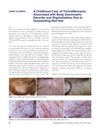
January 2013 in “International Journal of Trichology” A girl with red hair developed hair-pulling and body image disorders after being bullied for her hair color.
 April 2018 in “Journal of Investigative Dermatology”
 DNMT3A is crucial for healthy skin and hair growth.
March 2014 in “CRC Press eBooks” Human head hair can grow very long and is thicker than most body hair.
January 1990 in “The Nishinihon Journal of Dermatology” Follicular structures help differentiate keratoacanthoma from squamous cell carcinoma.
27 citations
,
September 1988 in “PubMed” Hair follicle shape determines hair type: curly, straight, or in-between.
January 2024 in “Updates in clinical dermatology” Trichorrhexis nodosa causes hair to break easily, often affecting young to middle-aged black women.
 40 citations
,
May 2012 in “British Journal of Dermatology”
40 citations
,
May 2012 in “British Journal of Dermatology” Recognizing specific features of African-American hair can help diagnose hair loss conditions.
 July 2023 in “Journal of Microbiology and Biotechnology”
 Terminalia bellirica extract may help promote hair growth and prevent hair loss caused by testosterone.
1 citations
,
January 2016 in “Journal of Advanced Plastic Surgery Research” The laser treatment effectively reduced hair growth in women with hirsutism, with temporary side effects.