 34 citations
,
January 2020 in “IEEE Access”
34 citations
,
January 2020 in “IEEE Access” A model called PM-DBiGRU was developed for analyzing sentiments in drug reviews, and it performed better than other models, but struggled with complex sentences and situations requiring background knowledge.
 24 citations
,
December 2009 in “Future Medicinal Chemistry”
24 citations
,
December 2009 in “Future Medicinal Chemistry” Using computers to analyze drugs can find new uses for them, but actual experiments are needed to confirm these uses.
 19 citations
,
November 2011
19 citations
,
November 2011 Using systemic drugs as creams for skin conditions shows promise, but more research is needed to confirm their effectiveness and safety.
 13 citations
,
October 2012 in “InTech eBooks”
13 citations
,
October 2012 in “InTech eBooks” Nanocarriers could improve how drugs are delivered through the skin but require more research to overcome challenges and ensure safety.
 9 citations
,
February 1996 in “Lancet”
9 citations
,
February 1996 in “Lancet” Some tuberculosis drugs may cause hair loss, but hair might regrow after treatment or changing the drugs.
 3 citations
,
July 2025 in “BIOMED natural and applied science”
3 citations
,
July 2025 in “BIOMED natural and applied science” Drug repurposing can create safer, cheaper treatments by finding new uses for existing drugs.
 3 citations
,
July 2017 in “Elsevier eBooks”
3 citations
,
July 2017 in “Elsevier eBooks” Skin reactions are a common reason for emergency visits due to drug allergies, with some severe cases needing intensive care.
 3 citations
,
January 2015 in “Social Science Research Network”
3 citations
,
January 2015 in “Social Science Research Network” The conclusion is that off-label drug use can lead to important medical discoveries and improve patient care.
 1 citations
,
March 1989 in “The BMJ”
1 citations
,
March 1989 in “The BMJ” A woman's hair grew back while she was taking sulphasalazine for arthritis.
 February 2026 in “Frontiers in Bioengineering and Biotechnology”
 Liposome-based systems improve skin wound healing effectively.
 October 2022 in “Journal of experimental and clinical medicine”
 Repurposing existing drugs for COVID-19 shows promise but requires more research to confirm effectiveness.
 March 2020 in “Journal of the turkish academy of dermatology”
 There's no significant link between blood fat levels and male pattern baldness.
 151 citations
,
November 2018 in “International Journal of Pharmaceutics”
151 citations
,
November 2018 in “International Journal of Pharmaceutics” Nanoparticles improve drug delivery through the skin but more research is needed on their long-term effects and skin penetration challenges.
 114 citations
,
January 2007 in “Drug Safety”
114 citations
,
January 2007 in “Drug Safety” Some drugs can cause skin, nail, and hair problems, which are important for healthcare professionals to recognize and report.
 47 citations
,
September 2015 in “Journal of Drug Delivery Science and Technology”
47 citations
,
September 2015 in “Journal of Drug Delivery Science and Technology” Nanoparticulate systems improve drug delivery by controlling release, protecting drugs, changing absorption and distribution, and concentrating drugs in targeted areas.
 39 citations
,
April 2011 in “Recent Patents on Drug Delivery & Formulation”
39 citations
,
April 2011 in “Recent Patents on Drug Delivery & Formulation” Nanoemulsion-based drug delivery systems are versatile and have potential for treating various medical conditions and improving vaccines.
 20 citations
,
November 1968 in “The Lancet”
20 citations
,
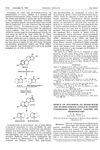
November 1968 in “The Lancet” Potassium levels affect blood sugar and insulin during dialysis, and malnutrition changes children's hair roots.
 19 citations
,
July 2020 in “Journal of drug delivery science and technology”
19 citations
,
July 2020 in “Journal of drug delivery science and technology” Nanoemulsions with minoxidil and clove oil effectively target hair follicles for better alopecia treatment.
 19 citations
,
October 2011 in “Clinics in Dermatology”
19 citations
,
October 2011 in “Clinics in Dermatology” New chemotherapy drugs cause skin side effects, but treatments like minocycline and tetracycline can help reduce them.
 18 citations
,
May 2013 in “Cutaneous and Ocular Toxicology”
18 citations
,
May 2013 in “Cutaneous and Ocular Toxicology” The cancer drugs bortezomib and lenalidomide cause skin side effects in many patients.
 12 citations
,
June 2003 in “Journal of the European Academy of Dermatology and Venereology”
12 citations
,
June 2003 in “Journal of the European Academy of Dermatology and Venereology” Some psychoactive drugs can cause skin reactions, with carbamazepine having a higher risk, and stopping the drug and seeing a dermatologist is important.
 11 citations
,
October 2017 in “International Journal of Molecular Sciences”
11 citations
,
October 2017 in “International Journal of Molecular Sciences” A new drug delivery system using oil body-bound oleosin-rhFGF-10 improves wound healing and hair growth in mice.
 4 citations
,
January 2012 in “Elsevier eBooks”
4 citations
,
January 2012 in “Elsevier eBooks” The document concludes that various skin conditions have specific treatments, ranging from antihistamines for urticaria to surgery and medication for tumors and chronic skin diseases.
 2 citations
,
June 2022 in “Northern Clinics of Istanbul”
2 citations
,
June 2022 in “Northern Clinics of Istanbul” No clear link between pilonidal sinus disease and polycystic ovary syndrome was found.
 January 2026 in “Frontiers in Drug Discovery”
 Transforming skin disease treatment requires new strategies, better drug models, and patient-focused research.
 October 2025 in “Asian Journal of Pharmaceutical Research and Development”
 Phytosome technology improves the absorption and effectiveness of citrus flavonoids.
 January 2024 in “International Research Journal of Modernization in Engineering Technology and Science”
 Fasting may reduce chemotherapy side effects.
 January 2024 in “RSC pharmaceutics”
 Removing the outer skin layer increases drug absorption and offers non-invasive treatment options, with some methods allowing for quick skin recovery.
 January 2024 in “Wiadomości Lekarskie”
 Pemigatinib may be effective for treating ZMYM2::FGFR1 fusion-positive leukemia.
 1 citations
,
January 2010 in “Elsevier eBooks”
1 citations
,
January 2010 in “Elsevier eBooks” Any drug can cause skin reactions, but antibiotics, NSAIDs, and psychotropic drugs are more common, with some reactions being life-threatening.