12 citations
,
January 1987 in “Ophthalmic Paediatrics and Genetics” Early diagnosis and treatment of biotinidase deficiency are crucial to prevent vision problems.
1 citations
,
January 2024 in “Journal of the Egyptian Womenʼs Dermatologic Society” Routine eye exams may be needed for alopecia areata patients due to common eye issues.
3 citations
,
February 2020 in “DOAJ (DOAJ: Directory of Open Access Journals)” Identifying and managing risk factors before cataract surgery is crucial to prevent complications.
13 citations
,
February 2019 in “Türk oftalmoloji dergisi” New treatments for chronic central serous chorioretinopathy show promise in preventing permanent vision loss.
January 2023 in “Al-Azhar International Medical Journal /Al-Azhar International Medical Journal” Treating eye issues can help manage alopecia areata better.
 July 2019 in “Journal of the European Academy of Dermatology and Venereology”
 Some eczema treatments may cause conjunctivitis, many people have sensitive eyes, air pollution can increase skin wrinkles, hair loss medication does not affect sexual function, and dermatologists can help identify torture signs on refugees' skin.
 September 2024 in “Meditsinskiy sovet = Medical Council”
 Excessive vitamin A intake can cause eye damage, but recovery is possible with proper treatment.
 March 2021 in “Indian Journal of Case Reports”
 A young woman with late-stage Vogt-Koyanagi-Harada disease was successfully treated at a hospital.
November 2017 in “DOAJ (DOAJ: Directory of Open Access Journals)” Certain medications and smaller pupil size increase the risk of intraoperative floppy iris syndrome during eye surgery.
5 citations
,
October 2001 in “British Journal of Ophthalmology” Sulphadiazine can cause crystals to form in urine.
 22 citations
,
March 2018 in “International Ophthalmology”
22 citations
,
March 2018 in “International Ophthalmology” Taking tamsulosin or finasteride and being older increase the risk of floppy iris during cataract surgery.
 April 2023 in “Actas Dermo-Sifiliográficas”
 Low doses of oral minoxidil, a hair loss treatment, can cause temporary morning swelling around the eyes, but it's not serious and can disappear with continued use or dose adjustment.
 July 2012 in “Reactions Weekly”
 Minoxidil use was linked to a rare eye condition that improved after stopping the treatment.
29 citations
,
October 2001 in “British Journal of Ophthalmology” April 2014 in “Investigative Ophthalmology & Visual Science”  August 2025 in “Ophthalmic Plastic and Reconstructive Surgery”
 Selumetinib significantly reduced tumor size and improved vision in a child with neurofibromatosis type 1.
 May 2025 in “Modern technologies in ophtalmology”
 Minoxidil might rarely increase eye pressure.
September 2014 in “Emergency Medicine News” The man's skin condition improved with sun protection and topical steroids, but UV exposure still caused flare-ups.
21 citations
,
August 2002 in “British Journal of Ophthalmology” Drug misuse can cause serious eye infections and other severe side effects.
 July 2020 in “Nepalese journal of ophthalmology”
 A boy with progeria had eye problems and signs of aging like hair loss and skin wrinkling.
 January 2022 in “Yonsei Medical Journal”
 Spironolactone helps reduce fluid in the eye in Central Serous Chorioretinopathy, but doesn't improve vision and recurrence is common.
January 2016 in “e-Oftalmo CBO Revista Digital de Oftalmologia” CSC is linked to mineralocorticoid receptor damage, stress, and steroid use, with treatments including drugs and laser therapies to prevent eye damage.
 4 citations
,
January 2021 in “Dermatology Review”
4 citations
,
January 2021 in “Dermatology Review” Demodex mites can cause eye problems like itching, dry eyes, and styes.
7 citations
,
September 2019 in “European Journal of Case Reports in Internal Medicine” Linagliptin may cause hair loss and skin blisters.
 6 citations
,
December 2004 in “Anais Brasileiros de Dermatologia”
6 citations
,
December 2004 in “Anais Brasileiros de Dermatologia” Some family members had a condition with both loose hair and unique eye changes, possibly indicating a new type of ectodermal dysplasia.
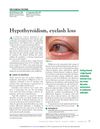 3 citations
,
November 2020 in “Cleveland Clinic Journal of Medicine”
3 citations
,
November 2020 in “Cleveland Clinic Journal of Medicine” Eyelash loss can be a sign of thyroid problems.
15 citations
,
June 2021 in “Medicina” Combined light therapy improves eye health and quality of life for those with meibomian gland dysfunction.
August 2024 in “Case Reports in Ophthalmology” Older patients with new retinal lesions may have cancer, and local radiation might not stop it from spreading.
 October 2022 in “Journal of ophthalmology”
 Light therapy may improve eye conditions by stimulating cell activity and increasing oxygen availability.
January 2011 in “Journal of the American Academy of Dermatology” Finasteride may cause pseudoporphyria, a blistering skin condition.