 7 citations
,
January 1998 in “EXPERIMENTAL ANIMALS”
7 citations
,
January 1998 in “EXPERIMENTAL ANIMALS” The skin of both rat strains showed similar lectin binding patterns.
34 citations
,
September 2007 in “Experimental Dermatology” The outer layer of Merino wool is rich in sulfur proteins, making it resistant to damage.
7 citations
,
January 1992 in “Acta Histochemica” Porcine and human pilosebaceous units are very similar.
21 citations
,
June 2003 in “Journal of Morphology” Monotreme and marsupial skin proteins show primitive features and species-specific differences compared to placental mammals.
 June 2023 in “Animal Bioscience”
 Vimentin and transthyretin proteins are linked to black coat color in sheep.
43 citations
,
July 1994 in “Journal of Cell Science” Cross-linked proteins help maintain the structure of hair, feathers, and hagfish teeth.
9 citations
,
September 2019 in “PLoS ONE” K42 and K124 keratins are only found in horse hoof lamellae.
86 citations
,
April 2009 in “Journal of anatomy” Hard skin features like scales, feathers, and hair evolved through specific protein changes in different animal groups.
 October 2023 in “Animal production science”
 Vitamin A deficiency changes cattle hair structure, while pregnancy may improve it, suggesting hair can indicate cattle health.
1 citations
,
February 2025 in “Journal of Dairy Science” The SLICK1 allele in Holstein heifers affects hair and immune traits without altering prolactin signaling.
2 citations
,
February 2021 in “Journal of comparative pathology” Sheep with chronic Sarcoptes scabiei dermatitis have altered keratin expression in their skin.
22 citations
,
January 1990 15 citations
,
November 2009 in “Journal of Comparative Pathology” Epidermolysis bullosa in calves was not caused by mutations in the keratin genes bKRT5 and bKRT14.
 9 citations
,
June 2020 in “Animal genetics”
9 citations
,
June 2020 in “Animal genetics” Scientists found genes linked to hair length in Brangus cattle that could help breed heat-tolerant cattle.
January 2018 in “bioRxiv (Cold Spring Harbor Laboratory)” The mutant HR bmh protein mis-localizes in cells, affecting skin and hair development.
7 citations
,
January 1997 in “Bioscience Biotechnology and Biochemistry” Sheep hair follicle transglutaminases are calcium-dependent.
TBX3 gene affects horse coat color, with higher expression in darker areas.
 18 citations
,
February 2015 in “Acta Crystallographica Section D: Structural Biology”
18 citations
,
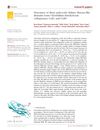
February 2015 in “Acta Crystallographica Section D: Structural Biology” The study concludes that certain domains in Clostridium histolyticum enzymes are structurally unique, bind calcium to become more stable, and play distinct roles in breaking down collagen, with potential applications in medicine and drug delivery.
January 1996 in “TURKISH JOURNAL OF VETERINARY AND ANIMAL SCIENCES” Brown bear skin has two main layers, with the thickest skin on the back and thinnest on the belly.
44 citations
,
July 1993 in “Journal of Investigative Dermatology”  2 citations
,
March 2014 in “Veterinary World”
2 citations
,
March 2014 in “Veterinary World” Indian bison, black buck, and nilgai have distinct hair follicle patterns useful for species identification.
10 citations
,
January 2001 in “Bioscience Biotechnology and Biochemistry” Ubiquitin, a protein, is found in hair, nails, and skin.
 15 citations
,
January 2012 in “Journal of Veterinary Science”
15 citations
,
January 2012 in “Journal of Veterinary Science” Different dog breeds have varying skin thickness and protein expression in their skin.
13 citations
,
September 2012 in “Cell & tissue research/Cell and tissue research” pCLCA2 protein may help maintain skin structure and function.
 18 citations
,
December 2009 in “Canadian Journal of Animal Science”
18 citations
,
December 2009 in “Canadian Journal of Animal Science” The BMP2 gene is more active in the early growth phase of Cashmere goat hair and may affect hair regeneration and textile production.
22 citations
,
June 1994 in “Journal of Investigative Dermatology” January 2007 in “Journal of Inner Mongolia University” The research helps in creating genetically modified animals to study hair growth.
 February 2025 in “Animals”
 Understanding proteins in skin structures like claws and hair is crucial for future research.
 December 2023 in “Sains Malaysiana”
 The enzyme Rand protease works well for leather dehairing and its stability is important, with Leu75 playing a key role.
June 2005 in “Journal of Investigative Dermatology” A bull with a gene mutation was asymptomatic, synthetic retinoids cause hair loss, and new therapeutic targets were identified for skin diseases.