June 2026 in “Acta Dermato Venereologica” JAK inhibitors can help some people with long-standing alopecia areata regrow hair, but many stop treatment due to limited effectiveness.
18 citations
,
December 2005 in “Journal of Medicinal Chemistry” A brominated phenoxy compound effectively inhibits a human enzyme and shows potential for clinical use.
September 2025 in “Journal of Skin and Stem Cell” Baricitinib shows promise for treating various skin conditions beyond alopecia areata.
 184 citations
,
February 2015 in “EBioMedicine”
184 citations
,
February 2015 in “EBioMedicine” A patient with Alopecia Areata had complete hair regrowth after using the drug baricitinib.
 January 2018 in “Journal of the American Academy of Dermatology”
 More extensive trials are needed to understand tofacitinib's role in treating severe hair loss.
June 2025 in “Medical alphabet” JAK inhibitors may help treat alopecia areata in children, but their safety needs careful evaluation.
 September 2023 in “British Journal of Dermatology”
 Hair regrowth from severe alopecia areata treatment with baricitinib can vary, with faster results in those with shorter hair loss duration.
July 2024 in “Journal of Investigative Dermatology” A KLK5 inhibitor effectively improved skin symptoms in a mouse model of Netherton Syndrome.
January 2026 in “Rinsho Shinkeigaku” Finasteride and minoxidil may increase stroke risk by affecting blood clotting and blood pressure.
1 citations
,
March 2022 in “British Journal of Clinical Pharmacology” 5α-reductase inhibitors do not increase anaemia risk compared to α-blockers in men with BPH.
 32 citations
,
October 2004 in “Pharmacotherapy”
32 citations
,
October 2004 in “Pharmacotherapy” Peginterferon alfa-2b and ribavirin therapy for hepatitis C can cause serious side effects, some different from those reported in clinical trials.
 7 citations
,
April 2023 in “Frontiers in immunology”
7 citations
,
April 2023 in “Frontiers in immunology” Oral baricitinib and ruxolitinib are effective and safe for treating alopecia areata.
 July 2025 in “SKIN The Journal of Cutaneous Medicine”
 Adding dupilumab led to almost complete hair regrowth in a patient with alopecia areata who only partially responded to baricitinib.
March 2023 in “Clinical Toxicology”  January 2023 in “Journal of The American Academy of Dermatology”
 Baricitinib helped most teenagers with severe hair loss regrow hair and had mild side effects.
 January 1983 in “Side effects of drugs annual”
 Beta-blockers and anti-anginal medications have various side effects and interactions that require careful monitoring and individualized treatment.
 5 citations
,
August 2018 in “PubMed”
5 citations
,
August 2018 in “PubMed” An 8-year-old with severe hair loss regrew all hair after six months of tofacitinib treatment.
73 citations
,
October 2001 in “Epilepsia” Children taking higher doses of valproic acid had lower biotinidase activity, which may lead to biotin deficiency, but biotin supplements could help.
 1 citations
,
September 2022 in “BioNanoScience”
1 citations
,
September 2022 in “BioNanoScience” Tofacitinib can help hair grow back in alopecia patients but hair loss might return if the dose is lowered.
 4 citations
,
October 2018 in “Asia-Pacific Journal of Clinical Oncology”
4 citations
,
October 2018 in “Asia-Pacific Journal of Clinical Oncology” CDK4/6 inhibitors have improved treatment outcomes for certain advanced breast cancer patients.
 9 citations
,
March 1989 in “The BMJ”
9 citations
,
March 1989 in “The BMJ” Adding diltiazem to a beta blocker can cause dangerously slow heart rates.
 24 citations
,
June 2016 in “Acta dermato-venereologica”
24 citations
,
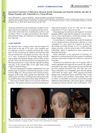
June 2016 in “Acta dermato-venereologica” Tofacitinib helped a young woman's severe hair loss and arthritis but not her plaque psoriasis.
 January 2024 in “Clinical and Experimental Dermatology”
 Baricitinib helps treat severe hair loss in people over 65.
 March 2024 in “EMBO molecular medicine”
 Antiviral drugs, especially daclatasvir, may be a new treatment for a rare skin disease, improving survival and reducing symptoms in mice.
 2 citations
,
April 2017 in “Journal of Investigative Dermatology”
2 citations
,
April 2017 in “Journal of Investigative Dermatology” Tofacitinib helped over half of the patients with severe hair loss regrow at least 50% of their hair.
May 2025 in “CPT Pharmacometrics & Systems Pharmacology” A 50 mg non-loading dose of ritlecitinib is safe for adults and adolescents.
January 2026 in “JAAD International” Baricitinib effectively promotes beard regrowth in most men with alopecia areata universalis.
 15 citations
,
January 2024 in “The AAPS Journal”
15 citations
,
January 2024 in “The AAPS Journal” 50-mg ritlecitinib capsules are bioequivalent to 100-mg capsules.
 December 2025 in “International Journal of Innovative Technologies in Social Science”
 Oral JAK inhibitors effectively treat alopecia areata and are generally well-tolerated.
 6 citations
,
August 1996 in “The Journal of Clinical Endocrinology and Metabolism”
6 citations
,
August 1996 in “The Journal of Clinical Endocrinology and Metabolism” MK-386 and finasteride together effectively reduce DHT levels, potentially treating acne and male pattern baldness.