 30 citations
,
October 2016 in “Current research in translational medicine”
30 citations
,
October 2016 in “Current research in translational medicine” Hair follicles on the scalp interact with and respond to the nervous system, influencing their own behavior and growth.
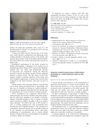 2 citations
,
December 2008 in “Clinical and Experimental Dermatology”
2 citations
,
December 2008 in “Clinical and Experimental Dermatology” A small forehead lesion led to the discovery of a significant brain arteriovenous malformation in a young girl.
99 citations
,
January 2004 in “Progress in brain research” Neurotrophins are important for hair growth and could help treat hair loss.
May 2015 in “European Journal of Paediatric Neurology” ECCL should be considered in patients with specific skin and eye lesions.
12 citations
,
February 1986 in “PubMed” Injecting newborn mice with a niacin blocker caused skin, gut, and brain damage similar to human pellagra.
40 citations
,
July 1981 in “Journal of Neuropathology & Experimental Neurology” Copper injections improved symptoms and prevented brain damage in brindled mice.
10 citations
,
April 2003 in “Clinical neurology and neurosurgery” Autoimmune polyglandular syndrome can cause temporary brain issues that may improve on their own.
 11 citations
,
May 1998 in “Child's nervous system”
11 citations
,
May 1998 in “Child's nervous system” A baby had a rare condition with abnormal blood vessels in the brain and unusual skin and hair growth, possibly a new syndrome.

Ca²⁺-mediated protein citrullination controls cell growth in the CNS and may help treat brain tumors.
87 citations
,
June 2010 in “Stem Cell Research & Therapy” Stem cells can move to brain injury sites and be tracked, showing promise for treating brain diseases.
47 citations
,
April 2000 in “Experimental Dermatology” A new gene mutation causes a rare type of hair loss.
 32 citations
,
February 2019 in “Journal of neurochemistry”
32 citations
,
February 2019 in “Journal of neurochemistry” Sex hormones affect brain injury differently in males and females.
March 2025 in “International Journal of Clinical Dermatology” Psychodermatosis is reclassified based on brain-skin interaction, dividing conditions into psychogenic and psychosomatic categories.
 March 2023 in “Pediatrics & neonatology”
 A baby girl had two brain-related growths removed and is developing normally.
28 citations
,
November 2017 in “Molecular and cellular endocrinology” Testosterone and its byproducts help support male sexual behavior through different pathways in the brain and body.
October 2025 in “Brazilian Journal of Veterinary Research and Animal Science” Neotropical porcupines can get co-infected with poxvirus and Toxoplasma gondii.
 13 citations
,
January 2013 in “Molecular genetics and metabolism”
13 citations
,
January 2013 in “Molecular genetics and metabolism” Proper diet management is crucial for phenylketonuria patients to avoid severe health issues.
 1 citations
,
March 2012 in “Revue neurologique”
1 citations
,
March 2012 in “Revue neurologique” Proper diet management is crucial for preventing severe symptoms in phenylketonuria.
 66 citations
,
February 2013 in “Pediatric Dermatology”
66 citations
,
February 2013 in “Pediatric Dermatology” Dermoscopy improves diagnosis and treatment monitoring for children's skin infections, inflammations, and hair disorders.
 72 citations
,
February 2011 in “The American Journal of Dermatopathology”
72 citations
,
February 2011 in “The American Journal of Dermatopathology” Anti-TNF therapy can cause a unique type of hair loss that may get better with topical treatments without stopping the therapy.
 18 citations
,
September 2006 in “Dermatologic Surgery”
18 citations
,
September 2006 in “Dermatologic Surgery” Aggressive scalp squamous cell carcinomas have a high death rate and need early, strong treatment.
 March 2023 in “Journal of Veterinary Medicine and Animal Health”
 The fly larvae infestation caused severe skin damage and health issues in Kenyan dogs.
 3 citations
,
March 2010 in “Dermatologica Sinica”
3 citations
,
March 2010 in “Dermatologica Sinica” A Taiwanese patient had hair loss and skin bumps without the usual gene mutation, suggesting other genetic factors might be involved.
 1 citations
,
June 2022 in “International Journal of Health Sciences”
1 citations
,
June 2022 in “International Journal of Health Sciences” Lower BDNF levels link to worse depression in alopecia areata patients.
Blocking autophagy worsens lipid buildup and dysfunction in brain cells after injury.
 January 2024 in “Wiadomości Lekarskie”
 Structured prevention strategies and Brain Health Clinics can help prevent Alzheimer's.
 January 2022 in “bioRxiv (Cold Spring Harbor Laboratory)”
 Skin lesions in Carney complex are likely caused by a specific group of skin cells that promote pigment production due to a genetic mutation.
 November 2019 in “Neuro-oncology”
 Rind-based techniques can lower scalp radiation dose and reduce hair loss in brain cancer treatment.
 August 2018 in “Journal of Investigative Dermatology”
 The conclusion is that using light-sheet fluorescence microscopy with a special solution can effectively create detailed 3D images of human skin for dermatological research.
 91 citations
,
December 2010 in “Stem Cells”
91 citations
,
December 2010 in “Stem Cells” Wnt signaling helps control how brain stem cells divide and is important for brain repair after injury.