 11 citations
,
August 2015 in “PLOS ONE”
11 citations
,
August 2015 in “PLOS ONE” Finasteride affects brain stress and enzyme activity differently in various regions, possibly helping with liver-related brain issues.
December 2015 in “PLOS ONE”  January 2018 in “bioRxiv (Cold Spring Harbor Laboratory)”
 Researchers found key regions in the mouse hairless gene that control its activity in skin and brain cells, affecting hair follicle function.
 22 citations
,
December 2010 in “Journal of Cosmetic Dermatology”
22 citations
,
December 2010 in “Journal of Cosmetic Dermatology” Finasteride may increase depression by reducing brain cell growth.
 14 citations
,
February 2018 in “Psychoneuroendocrinology”
14 citations
,
February 2018 in “Psychoneuroendocrinology” Mice lacking steroid 5α-reductase 2 show less aggression and better impulse control.
 3 citations
,
April 2025 in “Nature Communications”
3 citations
,
April 2025 in “Nature Communications” GIANT improves brain imaging by using genetics to better map brain regions.
January 2005 in “Psychoneuroendocrinology” Finasteride may affect brain chemistry and behavior, offering potential for treating certain mental health conditions.
11 citations
,
October 2010 in “Behavioural Brain Research” Early neurosteroid changes can alter adult brain function and behavior.
2 citations
,
July 2025 in “Forensic Sciences” Anabolic-androgenic steroids can damage the brain, causing mood and cognitive problems.
13 citations
,
December 2021 in “Molecules” Inorganic nanomaterials can improve brain disease imaging by being more precise and faster than traditional methods.
 33 citations
,
December 2015 in “Neuroendocrinology”
33 citations
,
December 2015 in “Neuroendocrinology” Finasteride treatment changes brain steroid levels and receptors, affecting brain function even after stopping treatment.
8 citations
,
November 2019 in “Journal of Trace Elements in Medicine and Biology” Higher hair iron levels are linked to changes in brain structure and function.
5 citations
,
August 2023 in “Skin Research and Technology” Hairy skin feels prickling more intensely than smooth skin.
 May 2024 in “Scientific Reports”
 Androgen receptors in the mouse brain may explain cognitive and mood changes in prostate cancer treatment.
100 citations
,
April 2007 in “Neuroscience” Reducing neurosteroid levels worsens brain injury in fetal sheep.
48 citations
,
January 2011 in “Neuropharmacology” Isolation stress in rats reduces brain enzyme levels, affecting dopamine function.

Lower DHT and higher testosterone levels increase brain activation but don't change behavior in heavy drinkers.
January 2017 in “Archivio Istituzionale della Ricerca (Universita Degli Studi Di Milano)” Short-term diabetes can cause changes in brain steroids, cholesterol balance, and mitochondrial function.
 4 citations
,
February 2020 in “Cell & tissue research/Cell and tissue research”
4 citations
,
February 2020 in “Cell & tissue research/Cell and tissue research” Hair follicle stem cells might help treat traumatic brain injury.
January 2026 in “Addiction Biology” Finasteride may help reduce alcohol cravings and related brain activity.
 September 2018 in “Value in Health”
 Kids from areas with more high school dropouts have higher rates of brain injuries.
August 2018 in “Illinois Digital Environment for Access to Learning and Scholarship (University of Illinois at Urbana-Champaign)” Chronological age affects the mouse auditory cortex more than hearing loss, and the brain may be less sensitive to mitochondrial dysfunction.
 November 2002 in “Dermatologic Surgery”
 Scalp reduction gives the most natural result for significant crown baldness, despite potential complications, and a systematic approach to surgical hair restoration results in few complications and high graft survival.
December 2004 in “Neuropsychopharmacology” Long-term alcohol exposure alters brain receptor function differently in various brain regions.
 2 citations
,
December 2008 in “Clinical and Experimental Dermatology”
2 citations
,
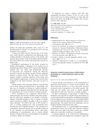
December 2008 in “Clinical and Experimental Dermatology” A small forehead lesion led to the discovery of a significant brain arteriovenous malformation in a young girl.
 August 2025 in “Arabixiv (OSF Preprints)”
 Male pattern baldness is mainly caused by brain heat stress, not DHT.
 September 2024 in “Cermin Dunia Kedokteran”
 Fahr syndrome causes brain calcification and is managed by treating symptoms and underlying issues.
October 2022 in “Amplla Editora eBooks” Deep Brain Stimulation helps manage Parkinson's symptoms when medication isn't enough.
48 citations
,
September 2007 in “European Journal of Neuroscience” Ethanol blocks memory formation in rats by enhancing certain brain chemicals.
11 citations
,
November 2021 in “International journal of molecular sciences” Gut microbes significantly affect brain steroid levels.