 6 citations
,
October 2012 in “Journal of Heredity”
6 citations
,
October 2012 in “Journal of Heredity” The Itpr3 gene causes a specific hair pattern in mice.
 December 2013 in “Appetite”
 A defective gene causes hair loss and taste insensitivity in BTBR mice.
9 citations
,
January 2022 in “Biology” Male mice are more susceptible to autism-like changes from valproic acid than female mice.
 March 2025 in “World Journal of Stem Cells”
 Stem cell exosomes may help treat hair loss by promoting hair growth.
 1 citations
,
March 2024 in “Signal transduction and targeted therapy”
1 citations
,
March 2024 in “Signal transduction and targeted therapy” NF-κB signaling is crucial in many diseases and can be targeted for new treatments.
 January 2024 in “Genetics in Medicine Open”
 Adults with Tatton-Brown-Rahman syndrome may have serious heart problems and need lifelong heart monitoring.
 1 citations
,
December 2018 in “Journal of genetic medicine”
1 citations
,
December 2018 in “Journal of genetic medicine” A small change in the TRPS1 gene leads to a less severe form of a syndrome affecting hair, nose, and finger development.
5 citations
,
October 2021 in “American Journal of Medical Genetics Part A” A new genetic variant causes BRESHECK syndrome by disrupting cell growth and stress response.
29 citations
,
April 2020 in “Biomolecules” Brassinosteroids may be useful in treating cancer, infections, and other diseases.
 1 citations
,
April 2023 in “International Journal of Molecular Sciences”
1 citations
,
April 2023 in “International Journal of Molecular Sciences” Botryococcus terribilis Ethanol Extract may reduce inflammation by changing gene expression in cells.
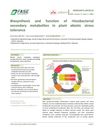 November 2025 in “Frontiers of Agricultural Science and Engineering”
 Rhizobacterial strain RT3 helps lettuce survive drought by producing protective substances like proline.
60 citations
,
September 2023 in “Science” BTNL proteins help control inflammatory bowel disease by maintaining specific immune cells.
3 citations
,
January 2021 in “Molecular genetics & genomic medicine” The study found two new mutations in a Chinese patient with severe biotinidase deficiency.
9 citations
,
May 2014 in “BMC medical genetics” A woman with a unique syndrome similar to TRPS has a genetic change near the TRPS1 gene, affecting its regulation.
July 2025 in “Clinical Case Reports” A new genetic mutation in the TRPS1 gene causes Trichorhinophalangeal Syndrome, leading to specific hair, dental, and bone issues.
 August 2019 in “Journal of Invertebrate Pathology”
 Thymosin beta 4 protects cells from damage by blocking a harmful microRNA and boosting a protective gene.
1 citations
,
February 2025 in “Journal of the Neurological Sciences” Beta-trace protein may help diagnose and predict treatment response in certain nerve disorders.
 1 citations
,
June 2021 in “bioRxiv (Cold Spring Harbor Laboratory)”
1 citations
,
June 2021 in “bioRxiv (Cold Spring Harbor Laboratory)” GTL1 is needed to control root hair growth and prevent problems when there are too many nutrients.
1 citations
,
May 2020 in “bioRxiv (Cold Spring Harbor Laboratory)” The fer-ts mutation in plants prevents root hair growth at high temperatures.
4 citations
,
November 2016 in “The Journal of Dermatology” Pili torti hair is fragile due to loose keratin filaments and weak disulfide bonds.
A new mutation in the TRPS1 gene caused Trichorhinophalangeal syndrome in a 17-year-old, highlighting the need for genetic testing.
January 2026 in “American Journal of Medical Genetics Part A” A new genetic variant causes trichothiodystrophy in two brothers, but their mother may carry it without showing symptoms.
 January 1999 in “American Journal of Medical Genetics Part A”
 The report expanded knowledge of MBTPS1-related disorders by identifying new symptoms.
 October 2025 in “Cermin Dunia Kedokteran”
 Early detection, prevention, and proper management can reduce TB-IRIS complications and deaths in HIV patients.
5 citations
,
July 1996 in “Journal of Cutaneous Medicine and Surgery” TTD patients don't have a higher skin cancer risk because their main issue is with transcription, not DNA repair.
 April 2024 in “bioRxiv (Cold Spring Harbor Laboratory)”
 A gene network led by RSL4 is crucial for early root hair growth in response to cold in Arabidopsis thaliana.
 February 2024 in “Planta”
 TRM21 helps control flavonoid production and root hair growth in Arabidopsis thaliana.
2 citations
,
March 1986 in “BMJ” 188 citations
,
June 1998 in “Molecular cell” Researchers created a mouse with the same mutation as humans with trichothiodystrophy, showing similar symptoms and confirming the condition is due to defects in DNA repair and gene activity.
September 2024 in “Journal of Ethnopharmacology” Terminalia bellirica extracts effectively promote hair regrowth and treat androgenetic alopecia.