
A man developed an eye nerve issue after hair surgery due to prolonged upright posture affecting brain fluid balance.
 March 2025 in “Pain Physician”
 Cooling the skin before injections reduces pain for patients with hair loss.
 December 2024 in “Deleted Journal”
 New therapies show promise for wound healing, but more research is needed for safe, affordable options.
 February 2024 in “International Journal For Multidisciplinary Research”
 Nanostructured lipid carriers are effective for treating hyperpigmentation in women aged 30-40.
 February 2024 in “Curēus”
 Regional nerve blocks are better than ring blocks for pain relief during PRP hair treatment.
 March 2022 in “International Journal of Health Sciences”
 Pentoxifylline helps hair regrowth in rats with hair loss.
 April 2021 in “Advances in Cosmetic Surgery”
 Hair restoration can be achieved through non-surgical treatments like minoxidil, antiandrogens, phototherapy, and PRP procedures, or through surgical methods like hair transplantation. Continued treatment is needed to maintain results, and full results are visible after 12-18 months.
 March 2021 in “Journal of Maxillofacial and Oral Surgery”
 Beard hair can be used for hair transplants in severe alopecia cases, with minimal complications and good results.

Using calvarial bone for maxilla augmentation is less painful and allows for single-procedure dental implants.
 April 2019 in “Advances in Cosmetic Surgery”
 The document concludes that ongoing medical therapy is crucial for preventing hair loss, and surgical options can restore hair, with future treatments for hair loss being promising.
 November 2018 in “Springer eBooks”
 The document concludes that specialized hair transplant techniques can be effective, with varying success rates depending on the donor area and patient factors.
 January 2017 in “Elsevier eBooks”
 The document concludes that choosing the right forehead and brow lifting technique based on individual patient characteristics is crucial to prevent complications and achieve desired results.

Follicular unit grafting is a procedure used to treat hair loss, where small hair grafts are placed into the scalp, with future treatments likely to involve smaller incisions and cell-based therapies.
 January 2014 in “Journal of the turkish academy of dermatology”
 Hair transplantation is safe and effective for permanent hair loss due to scarring, with high patient satisfaction.

CRPS I is complex, linked to immune and nerve issues, and needs comprehensive treatment.
 June 1996 in “Irish Journal of Medical Science (1971 -)”
 The document summarizes medical findings on topics like heart rhythm treatment, sleep apnea therapy, and various health conditions and treatments.
 15 citations
,
May 2016 in “Die Pharmazie”
15 citations
,
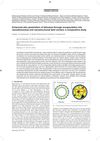
May 2016 in “Die Pharmazie” Nanostructured lipid carriers deliver lidocaine to the skin better than nanoethosomes.
 November 2022 in “Journal of the Endocrine Society”
 Long-term treatment with buprenorphine/naloxone for opioid addiction may lead to secondary adrenal insufficiency.
October 2018 in “Clinical approaches and procedures in cosmetic dermatology” Hyaluronic acid fillers are a safe and popular choice for enhancing lips, with manageable side effects and complications.
 153 citations
,
August 2002 in “Dermatologic Surgery”
153 citations
,
August 2002 in “Dermatologic Surgery” Follicular Unit Extraction (FUE) is a less invasive hair transplant method with minimal scarring, suitable for about 60% of patients, especially those needing fewer grafts and quicker recovery.
 87 citations
,
September 2016 in “Dermatologic Surgery”
87 citations
,
September 2016 in “Dermatologic Surgery” PRP shows potential for treating female hair loss, but more research needed.
 41 citations
,
August 2013 in “Facial Plastic Surgery Clinics of North America”
41 citations
,
August 2013 in “Facial Plastic Surgery Clinics of North America” FUE provides minimal scarring and quick recovery in hair transplantation, and surgeons not using it may lag in technology.
 31 citations
,
November 2013 in “Dermatologic Clinics”
31 citations
,
November 2013 in “Dermatologic Clinics” The ARTAS robotic system for hair restoration is efficient with fewer cuts than manual methods, but it's limited to certain hair types and can still leave scars.
 18 citations
,
April 2010 in “Actas Dermo-Sifiliográficas”
18 citations
,
April 2010 in “Actas Dermo-Sifiliográficas” Follicular unit hair transplantation is the standard method for natural-looking hair restoration in androgenic alopecia.
 13 citations
,
August 2002 in “Dermatologic Surgery”
13 citations
,
August 2002 in “Dermatologic Surgery” FUE is a less invasive hair transplant method suitable for many patients, but it has limitations and may not replace traditional techniques.
 12 citations
,
July 2016 in “Atlas of the Oral and Maxillofacial Surgery Clinics”
12 citations
,
July 2016 in “Atlas of the Oral and Maxillofacial Surgery Clinics” The document concludes that the endoscopic brow lift is a less invasive cosmetic surgery that requires careful technique and patient selection to achieve lasting, aesthetically pleasing results.
 12 citations
,
August 2013 in “Facial Plastic Surgery Clinics of North America”
12 citations
,
August 2013 in “Facial Plastic Surgery Clinics of North America” Hair transplantation is the only permanent solution for female pattern hair loss and can greatly improve quality of life with careful planning.
 6 citations
,
February 2013 in “Journal of Visualized Experiments”
6 citations
,
February 2013 in “Journal of Visualized Experiments” The method quickly analyzes hair growth genes and shows that blocking Smo in skin cells stops hair growth.
 4 citations
,
April 2020 in “Facial Plastic Surgery Clinics of North America”
4 citations
,
April 2020 in “Facial Plastic Surgery Clinics of North America” Hair loss in women is complex to diagnose and treat, and hair restoration should be done by experts. Using minoxidil before surgery can help manage post-surgery hair shock loss. The Follicular Unit Transplantation method is recommended for women due to its speed, no need for shaving, and better graft quality. Strategies like L, T, and reverse L patterns can help restore central hair density, and regenerative methods can improve graft survival in hair transplants.
 4 citations
,
May 2005 in “Seminars in Plastic Surgery”
4 citations
,
May 2005 in “Seminars in Plastic Surgery” Carlos Oscar Uebel developed a hair transplant method that looks natural, has low risk, and shows full growth in 6-12 months.