 September 1998 in “JEADV. Journal of the European Academy of Dermatology and Venereology/Journal of the European Academy of Dermatology and Venereology”
 The document concludes that individualized treatments for hair issues are effective, certain hair changes can indicate neurocutaneous diseases, specific lotions improve skin health, laser hair removal works but needs more study on long-term effects, men's cosmetics are diverse, peeling is effective but can have side effects, and facial pigmentation is often due to overactive skin cells.
 September 2024 in “Journal of Investigative Dermatology”
 A new tool can analyze hair to detect changes due to hormones, genetics, and aging.
 3 citations
,
January 2018 in “International Journal of Cosmetic Science”
3 citations
,
January 2018 in “International Journal of Cosmetic Science” Hair stiffness increased by 13.2% after caffeine treatment, validating the Stiffness-Angle Law as an effective measurement method.
 7 citations
,
January 2020 in “International Journal of Molecular Sciences”
7 citations
,
January 2020 in “International Journal of Molecular Sciences” Low-frequency electromagnetic fields can boost molecules related to hair growth in human skin cells.
 24 citations
,
January 2006 in “Dermatologic clinics”
24 citations
,
January 2006 in “Dermatologic clinics” Hair sunscreens are important for maintaining hair's cosmetic value.
26 citations
,
December 2020 in “Photodermatology Photoimmunology & Photomedicine” Photobiomodulation can improve hair density and thickness, but it's costly and needs more research.
April 2019 in “Journal of Investigative Dermatology” Stabilizing HIF1A in hair follicles may boost hair growth by enhancing energy production and blood vessel formation.
 1 citations
,
February 1988 in “The BMJ”
1 citations
,
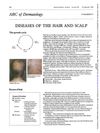
February 1988 in “The BMJ” The document explains different hair and scalp conditions, including common hair loss after pregnancy or illness, drug-induced hair loss, hereditary excessive hair growth, patterned baldness, autoimmune hair loss, and permanent loss due to skin disease, with generally limited treatment options.
Understanding hair follicle communication can help treat hair loss.
 June 2026 in “arXiv (Cornell University)”
 Hair beds in fluid show nonlinear response due to viscosity, inertia, and elasticity.
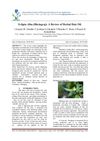
Eclipta Alba (Bhringraj) in hair oils promotes hair growth, reduces hair loss, and is safe with fewer side effects.
 March 2026 in “INDIAN DRUGS”
 The herbal hair mask with flaxseed and rice water promotes healthier, stronger hair naturally.
2 citations
,
January 1972 Hair can measure exposure to radioisotopes.
 7 citations
,
August 2005 in “Evolutionary anthropology”
7 citations
,
August 2005 in “Evolutionary anthropology” Human hair is unique and important for understanding human evolution and identity.
 January 2025 in “Yonsei Medical Journal”
 Mastic gum and peppermint extracts may promote hair growth and health.
2 citations
,
January 2000 Lasers are effective for hair removal, especially for conditions like excessive hair growth.
 60 citations
,
May 2014 in “British Journal of Dermatology”
60 citations
,
May 2014 in “British Journal of Dermatology” Caffeine affects hair growth and health differently in men and women.
 15 citations
,
February 2017 in “International Journal of Women's Dermatology”
15 citations
,
February 2017 in “International Journal of Women's Dermatology” Hair camouflage offers various options for hair loss, helping reduce psychological impact.
March 2018 in “New scientist” April 2026 in “Spectrochimica Acta Part A Molecular and Biomolecular Spectroscopy” 6 citations
,
November 2001 in “Der Hautarzt” Photothermolysis is the best method for permanent hair removal.

Beta vulgaris L. fruit extracts, especially ethanolic, effectively promote hair growth.
 November 2020 in “Holistic Nursing Practice”
 COVID-19 can cause hair loss, loss of taste and smell, skin changes, and eye problems.
August 2004 in “CRC Press eBooks” New hair restoration techniques look more natural, increasing their popularity.
 April 2013 in “Developmental Cell”
 Brg1 is crucial for keeping hair follicle stem cells and repairing skin, working with the Sonic Hedgehog pathway to promote hair growth.
51 citations
,
March 2001 in “Clinics in dermatology” Bleaching damages hair, making it rougher and weaker.
 January 2005 in “Seibutsu Butsuri/Seibutsu butsuri”
 Chemical treatments damage hair more than UV exposure, making it thinner and less flexible.
May 2026 in “Applied Spectroscopy” Humidity affects hair structure changes during stretching.
A bald man grew hair on his head after taking a drug called diazoxide, but lost it again when he stopped the medication.
 January 1998 in “KAGAKU TO SEIBUTSU”
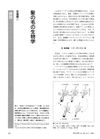
 The document suggests that male hormones likely affect hair growth and baldness, and future treatments might involve stem cells and androgen-independent cells.