8 citations
,
October 2024 in “Frontiers in Cell and Developmental Biology” Telocytes help organize male reproductive tissues and their changes can lead to diseases.
![Synthesis, Biological Evaluation, and Molecular Docking of 4-Amino-2H-benzo[h]chromen-2-one Analogs Containing the Piperazine Moiety](/images/assets/2ecf4eed-7dbe-4f1a-83db-739625546cdd/small/31808.jpg) 7 citations
,
August 2019 in “Bioorganic & medicinal chemistry”
7 citations
,
August 2019 in “Bioorganic & medicinal chemistry” Analog 23 is a promising compound for prostate cancer treatment.
 4 citations
,
December 2013 in “Archivio italiano di urologia, andrologia”
4 citations
,
December 2013 in “Archivio italiano di urologia, andrologia” Dutasteride reduces hospitalization and prostate cancer risk compared to finasteride, potentially offsetting its higher cost.
 4 citations
,
May 2013 in “Canadian Urological Association Journal”
4 citations
,
May 2013 in “Canadian Urological Association Journal” Finasteride reduces prostate cancer risk by 30% without affecting Gleason scores.
 1 citations
,
April 2019 in “Clinical Breast Cancer”
1 citations
,
April 2019 in “Clinical Breast Cancer” Medicines for enlarged prostate may raise the risk of breast growth and tenderness but not breast cancer.
 1 citations
,
June 2015 in “Cancer”
1 citations
,
June 2015 in “Cancer” Finasteride and dutasteride may lower melanoma risk, with teenage acne possibly indicating higher risk.
1 citations
,
January 2014 in “ScholarWorks - University of Montana (University of Montana)” Finasteride reduces low-grade prostate cancer but may not be beneficial overall.
March 2026 in “European Urology Focus” Finasteride improves prostate cancer prediction by adjusting kallikrein marker levels.
 December 2024 in “Frontiers in Endocrinology”
 Continued research and awareness are needed to improve treatments for androgen-dependent diseases.
Antiandrogens might help prevent or treat COVID-19 by blocking the virus's entry into cells.
October 2015 in “Prostate Cancer” Finasteride and dutasteride reduce prostate cancer risk, but finasteride may increase higher-grade cancer risk.
April 2012 in “The Journal of Urology” Finasteride therapy reduces PSA levels and prostate size, helping diagnose prostate cancer.
 February 2012 in “Community oncology”
 The document concludes that accurately identifying leukemia types is crucial, and the risks of cancer from finasteride need careful evaluation against its benefits.
April 2011 in “Cancer Research” 20(S)-Protopanaxadiol-aglycone may help prevent and treat prostate cancer by reducing androgen receptor activity.
 September 2010 in “European Urology Supplements”
 PSA testing is a reliable method for detecting prostate cancer, and opioids may lower PSA levels, but triglycerides don't affect prostate cancer risk.
August 2010 in “Oncology Times” Provenge extends prostate cancer survival by about 4 months.
 451 citations
,
March 2005 in “Endocrine Reviews”
451 citations
,
March 2005 in “Endocrine Reviews” The enzyme steroid sulfatase is linked to breast cancer and other conditions, and inhibitors are being developed for treatment.
 403 citations
,
November 2005 in “Journal of Endocrinology”
403 citations
,
November 2005 in “Journal of Endocrinology” Dehydroepiandrosterone (DHEA) is a prohormone important for producing sex steroids and has potential health benefits.
309 citations
,
June 2001 in “Molecular and Cellular Endocrinology” Mutations in the androgen receptor gene cause androgen insensitivity, leading to female traits in genetically male individuals.
 218 citations
,
December 2011 in “Advances in Urology”
218 citations
,
December 2011 in “Advances in Urology” The document concludes that the 5 alpha-reductase enzymes are important in steroid metabolism and related to various human diseases, with inhibitors used to treat conditions like male pattern baldness and prostate issues.
 124 citations
,
September 1992 in “Endocrinology”
124 citations
,
September 1992 in “Endocrinology” The human type II 5α-reductase gene, linked to certain male health conditions, has a specific structure and low similarity to other related genes.
 121 citations
,
November 2020 in “Endocrine”
121 citations
,
November 2020 in “Endocrine” Male hormones like testosterone may make COVID-19 worse, and testing for sensitivity to these hormones could help predict how severe a patient's symptoms might be. Treatments that reduce these hormones are being explored.
 101 citations
,
April 1994 in “Baillière's clinical endocrinology and metabolism”
101 citations
,
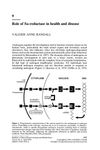
April 1994 in “Baillière's clinical endocrinology and metabolism” 5α-reductase is essential for male sexual development and its inhibitors have potential in treating various conditions related to hormone action.
 97 citations
,
November 1986 in “Journal of Steroid Biochemistry”
97 citations
,
November 1986 in “Journal of Steroid Biochemistry” Antiandrogens affect androgen-dependent body functions and are used for various medical conditions, with some risks like fetus feminization, but new forms like 17α-propylmesterolone show promise for acne without systemic effects.
 88 citations
,
February 2008 in “Journal of Medicinal Chemistry”
88 citations
,
February 2008 in “Journal of Medicinal Chemistry” Scientists made the first metal-based compounds from a nonsteroidal antiandrogen drug, which showed potential in fighting both hormone-dependent and independent prostate cancer cells.
 61 citations
,
May 2010 in “Integrative Cancer Therapies”
61 citations
,
May 2010 in “Integrative Cancer Therapies” There is no clear recommendation for using selenium in cancer patients; it may be beneficial to correct low selenium levels before treatment.
 60 citations
,
June 1997 in “Drugs & Aging”
60 citations
,
June 1997 in “Drugs & Aging” Mitoxantrone with a corticosteroid helps manage symptoms for some advanced prostate cancer patients but doesn't extend life.
 54 citations
,
November 2001 in “Urology”
54 citations
,
November 2001 in “Urology” The length of the CAG repeat in the androgen receptor gene affects the risk and progression of prostate cancer, BPH, infertility, and undermasculinized genitalia.
 49 citations
,
January 2004 in “Journal of steroid biochemistry and molecular biology/The Journal of steroid biochemistry and molecular biology”
49 citations
,
January 2004 in “Journal of steroid biochemistry and molecular biology/The Journal of steroid biochemistry and molecular biology” Selective non-steroidal inhibitors of 5α-reductase type 1 can help treat DHT-related disorders.
 46 citations
,
September 2011 in “Journal of Endocrinology”
46 citations
,
September 2011 in “Journal of Endocrinology” Natural 5α-reduced glucocorticoids might be anti-inflammatory with fewer side effects than current options.