 February 2024 in “Recima21”
 Covid-19 can cause hair loss due to immune and psychological factors.
 February 2024 in “Infection and drug resistance”
 Tinea capitis in a child was caused by a fungus from cats, highlighting the need for accurate diagnosis and treatment.
 January 2024 in “Medicina estética/Medicina estética”
 Es crucial diferenciar entre dermatitis seborreica y liquen plano antes de un trasplante capilar para asegurar mejores resultados.
January 2024 in “Surgical & Cosmetic Dermatology” Hair transplants can help transgender individuals match their appearance with their gender identity.
 January 2024 in “Más dermatología”
 "Antiaging capilar" aims to restore youthful hair appearance by addressing age-related changes.
January 2024 in “SAGE Open Medical Case Reports” Combining surgery and photodynamic therapy effectively treated a rare scalp condition when other treatments failed.
 September 2023 in “Cumhuriyet science journal”
 Myrtle essential oil has a higher antioxidant capacity than orange essential oil.
 August 2023 in “Authorea (Authorea)”
 Tinea capitis should be considered in adults with scalp issues for proper treatment.
 July 2023 in “RCMOS - Revista Científica Multidisciplinar O Saber”
 Scalp therapy in barbershops boosts service quality and business opportunities in men's grooming.
 July 2023 in “International journal of dermatology, venereology and leprosy sciences”
 Most rural children with scalp ringworm had a non-inflammatory type and early treatment is important to prevent complications.
 March 2023 in “Journal of Cosmetic Dermatology”
 Dilated scalp capillaries might be a sign of hair loss related to COVID-19.
 November 2022 in “The journal of investigative dermatology/Journal of investigative dermatology”
 Researchers made a detailed map of gene activity for different parts of human hair follicles to help create targeted hair disorder treatments.
 November 2022 in “Journal of Investigative Dermatology”
 The extract of Silybum marianum, Manganese PCA, and Lespedeza capitata can boost hair growth and extend the growth phase when combined in a serum.
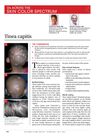 October 2022 in “The Journal of Family Practice”
 Tinea capitis is a scalp fungal infection in children that can cause hair loss, scaling, and other symptoms.
The serum with these ingredients may help reduce hair loss and promote growth.
 July 2022 in “Berkala Ilmu Kesehatan Kulit dan Kelamin/Berkala ilmu kesehatan kulit dan kelamin (Periodical of dermatology and venerology)”
 Most tinea capitis patients were young boys with cat contact, had scaly patches caused by Microsporum canis, and improved with griseofulvin treatment.
 July 2022 in “The journal of investigative dermatology/Journal of investigative dermatology”
 Scientists created a detailed map of gene activity in different parts of human hair follicles.
 July 2022 in “The journal of investigative dermatology/Journal of investigative dermatology”
 Silybum marianum extract, Manganese PCA, and Lespedeza capitata extract may help with hair growth and anchorage, potentially aiding in hair loss treatment.
May 2022 in “Journal of Cutaneous Immunology and Allergy” Asymptomatic cats can spread scalp infections to humans.
 March 2022 in “Berkala Ilmu Kesehatan Kulit dan Kelamin/Berkala ilmu kesehatan kulit dan kelamin (Periodical of dermatology and venerology)”
 Touching cats can increase the risk of getting a fungal scalp infection, especially in boys and kids over 5.
 March 2022 in “Benha Journal of Applied Sciences”
 ULBP3 levels are higher in Tinea capitis patients and may help predict the disease's severity.
 January 2022 in “Eduvest”
 A teenage girl with a fungal scalp infection got better with antifungal and allergy medication, plus medicated shampoo.
 January 2022 in “International Journal of Research Publications”
 Griseofulvin effectively treats tinea capitis caused by Microsporum canis.
November 2021 in “CRC Press eBooks” Tinea capitis is a fungal infection of the scalp that mainly affects children and can cause symptoms from mild itching to severe inflammation.

The FUE hair transplant technique provides a natural and satisfying solution for male pattern baldness.
 September 2021 in “International Ayurvedic Medical Journal”
 Bhringraj capsule and oil with Nasya effectively reduce hair fall and related symptoms.
 January 2021 in “Advances in health sciences research/Advances in Health Sciences Research”
 Two siblings with gray patch tinea capitis were successfully treated after identifying risk factors.

Maidenhair fern extract may help treat COVID-19 symptoms.
May 2020 in “The Journal of Pediatrics” Tinea capitis can be quickly diagnosed and treated using dermoscopy to prevent hair damage.
 January 2020 in “Indian Journal of Pharmaceutical Sciences”
 Kuntai capsules combined with nilestriol tablets effectively reduce perimenopausal symptoms and improve hormone levels.