17 citations
,
June 2003 in “The journal of investigative dermatology. Symposium proceedings/The Journal of investigative dermatology symposium proceedings” Mutations in hKAP1 genes may cause hereditary hair disorders.
13 citations
,
September 2012 in “Cell & tissue research/Cell and tissue research” pCLCA2 protein may help maintain skin structure and function.

CaBP1 and 2 are necessary for maintaining calcium currents and hearing in inner ear cells.
 January 2025 in “Nature Communications”
 CPK1 helps root hair growth in Arabidopsis by activating channels for calcium signaling.
January 2020 in “Archivio Istituzionale della Ricerca (Universita Degli Studi Di Milano)” Polycomb Repressive Complex 1 is crucial for keeping stem cells stable and maintaining healthy adult tissues.
 1 citations
,
January 2024
1 citations
,
January 2024 CaBP1 and CaBP2 are necessary for proper hearing and neurotransmission in the ear's inner hair cells.

CaBP1 and CaBP2 are necessary for proper hearing and neurotransmission in the ear's inner hair cells.
2 citations
,
April 2023 in “American Journal of Dermatopathology” CCCA may involve the PD1/PDL1 pathway and increased caspase 3, leading to permanent hair loss.
 62 citations
,
January 2004 in “The journal of investigative dermatology/Journal of investigative dermatology”
62 citations
,
January 2004 in “The journal of investigative dermatology/Journal of investigative dermatology” A second domain of high sulfur KAP genes on chromosome 21q23 is crucial for hair structure.
24 citations
,
February 2002 in “The journal of investigative dermatology/Journal of investigative dermatology” Two new proteins, hKAP1.6 and hKAP1.7, are found in the hair follicle cortex.
 11 citations
,
June 2017 in “Journal of cell science”
11 citations
,
June 2017 in “Journal of cell science” AGD1's PH domain is essential for its role in root hair growth and polarity.
CCC1 is essential for ion balance and proper plant cell function.
4 citations
,
April 2024 in “The Journal of Cell Biology” Caspase-1 helps hair stem cells move to heal wounded or inflamed skin.
GPC1 is important for hair growth by helping blood vessels form around hair follicles.
 December 2023 in “The journal of investigative dermatology/Journal of investigative dermatology”
 MCPIP1 in myeloid cells is important for skin cancer development and healthy hair growth.
11 citations
,
January 2021 in “British Journal of Dermatology” Mutations in the AP1B1 gene cause a new syndrome with skin, hearing, and developmental issues.

CaBP1 and CaBP2 are important for continuous hearing by preventing inactivation of calcium currents in ear cells, with CaBP2 also able to restore hearing when reintroduced.
28 citations
,
January 2015 in “Journal of Cell Science” PINCH-1 is crucial for skin cell adhesion and movement, working with EPLIN and ILK.
 23 citations
,
December 2013 in “British Journal of Dermatology”
23 citations
,
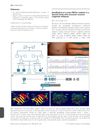
December 2013 in “British Journal of Dermatology” A new gene mutation linked to a skin condition was found in a Spanish family.
 199 citations
,
April 2010 in “Nature”
199 citations
,
April 2010 in “Nature” A gene called APCDD1, which controls hair growth, is found to be faulty in a type of hair loss called hereditary hypotrichosis simplex.
GPC1 is important for blood vessel growth in hair follicles and could help treat hair loss.
 1 citations
,
December 2018 in “Journal of genetic medicine”
1 citations
,
December 2018 in “Journal of genetic medicine” A small change in the TRPS1 gene leads to a less severe form of a syndrome affecting hair, nose, and finger development.
51 citations
,
January 2007 in “The journal of investigative dermatology/Journal of investigative dermatology” Scientists discovered a unique hair protein, KAP24.1, with a special structure, found only in the upper part of hair cuticles.
 September 2024 in “Genes”
 CRABP1 boosts hair cell growth in Hu sheep by affecting key genes.
GPC1 is important for blood vessel growth in hair follicles and could help treat hair loss.
9 citations
,
November 2013 in “Journal of Investigative Dermatology” Overexpressing CtBP1 in skin cells causes skin and hair problems.
 April 2018 in “Journal of Investigative Dermatology”
 CENPV, a new partner of CYLD, helps regulate ciliary acetylated tubulin and is overexpressed in certain skin tumors.
70 citations
,
August 2006 in “Cancer Research” AP-1 controls tumor cell type by affecting key signaling pathways.
Glypican-1 is important for hair follicle blood vessel growth and could be a target for treating hair loss.
100 citations
,
December 2002 in “Journal of biological chemistry/The Journal of biological chemistry” Researchers mapped and categorized specific keratin-associated protein genes on human chromosome 21q22.1.