January 2016 in “Refubium (Universitätsbibliothek der Freien Universität Berlin)” CAP7.1 is generally safe at 200 mg/m²/day, but can cause fatigue, nausea, hair loss, fever, and blood-related issues.
 April 2019 in “Journal of Medical Science And clinical Research”
 The grey patch variant of tinea capitis is most common, mainly spread through family and animals.
15 citations
,
July 2015 in “Journal of exotic pet medicine” Humans, especially vulnerable groups, can catch skin infections from small mammals.
January 2008 in “Memorial University Research Repository (Memorial University)” Pygopus 2 helps ovarian cancer cells grow by aiding ribosomal RNA production, independent of Wnt signaling.
 7 citations
,
September 2024 in “BMC Genomics”
7 citations
,
September 2024 in “BMC Genomics” Two genes, ERBB4 and ROR1, may cause the unique pigmentation in Lanping black-boned sheep.
 2 citations
,
June 2003 in “International Journal of Acarology”
2 citations
,
June 2003 in “International Journal of Acarology” Researchers found a new mite species causing severe hair loss and skin problems in yellow-bellied marmots.
3 citations
,
March 2022 in “Journal of Infection” Infectious virus was not found after the third remdesivir dose, suggesting early end of isolation is possible.
 October 2022 in “Gadua Journal of Pure and Allied Science”
 Terbinafine is the most effective treatment for tinea capitis, a scalp infection often confused with other conditions.
May 2010 in “OPAL (Open@LaTrobe) (La Trobe University)” Vaccines and targeting TrxR variants can help prevent cancer and reduce metastasis.
 December 2024 in “Indian Journal of Veterinary Public Health”
 Argentine-cross polo ponies commonly develop sarcoid tumors with distinct types and histopathological features.
 January 2021 in “Journal of Entomology and Zoology Studies”
 The piglets fully recovered from psoroptic mange after treatment.
38 citations
,
January 2017 in “PPAR Research” PPAR-γ helps control skin oil glands and inflammation, and its disruption can cause hair loss diseases.
27 citations
,
June 2020 in “Genes” Lykoi cats' unique sparse hair is linked to specific genetic variants in the Hairless gene.
March 2026 in “Journal of Enzyme Inhibition and Medicinal Chemistry” PROTACs show promise in cancer treatment by effectively degrading specific harmful proteins.
7 citations
,
January 2014 in “International Journal of Trichology” Primary idiopathic pseudopelade of Brocq causes gradual, scarring hair loss with no effective treatment.
9 citations
,
January 2015 in “Veterinary record case reports” A dog in Germany was successfully treated for a rare bacterial infection without spreading it to humans.
 April 2018 in “Journal of Investigative Dermatology”
 People with palmoplantar pustulosis, especially with bone issues, have different mouth bacteria compared to healthy people.
91 citations
,
July 2020 in “JAMA Dermatology” Minoxidil can improve hair growth in some patients with woolly hair due to LIPH variants, with varying responses and mild side effects.
2 citations
,
January 2025 in “Veterinary Dermatology” Male Pomeranians with woolly coats are more likely to develop alopecia X.
 1 citations
,
May 2019 in “Cytotherapy”
1 citations
,
May 2019 in “Cytotherapy” The new ddPCR method reliably detects unwanted viruses in CAR-T cell products, ensuring their safety for patients.
November 2025 in “Journal of Investigative Dermatology” A new genetic mutation causing Xeroderma Pigmentosum was found in an 8-year-old girl, affecting her DNA repair.
 22 citations
,
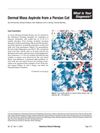
December 2003 in “Veterinary clinical pathology”
22 citations
,
December 2003 in “Veterinary clinical pathology” The Persian cat has a skin infection caused by a fungus, treatable with antifungal medication.
1 citations
,
December 2016 in “Revista română de medicină de laborator” The NIPAL4 mutation c.527C>A is common in Romanian patients with autosomal recessive congenital ichthyosis.
 3 citations
,
March 2010 in “Dermatologica Sinica”
3 citations
,
March 2010 in “Dermatologica Sinica” A Taiwanese patient had hair loss and skin bumps without the usual gene mutation, suggesting other genetic factors might be involved.
 14 citations
,
January 2016 in “Experimental and molecular pathology”
14 citations
,
January 2016 in “Experimental and molecular pathology” Giving immune serum from vaccinated mice to mice without T cells prevents infection and tumor growth.
RXR and RAR proteins in skin may help with cell growth, hair growth, and gland function.

IP-PA1 helps grow hair in mice and affects human cell growth-related genes differently than traditional hair growth treatments.
2 citations
,
January 2017 in “Ciência Rural” A capuchin monkey with a skin infection was successfully treated with itraconazole.
3 citations
,
December 2004 in “PubMed” A fungal infection caused skin lesions in farmed mink kits, but they remained healthy.
 10 citations
,
April 2013 in “Veterinary dermatology”
10 citations
,
April 2013 in “Veterinary dermatology” A new skin disease in four Labrador retrievers responded well to immunosuppressive treatment.