January 2010 in “BMC Genomics” Key genes influence cashmere growth cycles, aiding goat breeding.
 January 2008 in “Vestnik Tomskogo gosudarstvennogo universiteta Filologiya”
 Overexpressing the Tβ4 gene in goats can increase cashmere production.

Different wool coat types in goats are linked to specific gene expressions, which could improve cashmere quality.
Metabolic processes and key genes like FGF5, FGFR1, and RRAS significantly affect hair follicle growth in Inner Mongolian Cashmere goats.
26 citations
,
October 1996 in “Journal of Endocrinology/Journal of endocrinology” Goat hair follicles have insulin-like growth factor-I receptors that might affect hair growth, but no melatonin receptors were found.
6 citations
,
January 2014 in “Genetics and Molecular Research” The method successfully created stable transfection donor cells for goat hair follicle research.
Melatonin shortens the hair growth cycle by increasing PDGFA gene expression.
January 2011 in “China Animal Husbandry & Veterinary Medicine” Constant-release melatonin reduces SOX21 gene expression in goats during the hair follicle resting phase.
 October 1993 in “Proceedings of The Nutrition Society”
 Dietary choices, especially fat type, can influence health.
1 citations
,
August 2025 in “Epigenetics & Chromatin” H3K4me3 helps control RSPO3 to influence hair growth and development.
 1 citations
,
August 2014 in “Asian-Australasian Journal of Animal Sciences”
1 citations
,
August 2014 in “Asian-Australasian Journal of Animal Sciences” Recombinant goat VEGF164 speeds up hair growth in mice.
1 citations
,
January 2008 in “China Journal of Bioinformatics” Goat skin has more keratin genes, while the mammary gland has more immunity-related genes.
 May 2026 in “Research Square”
 The polyG fragment in Hoxc13 protein helps evolve mammalian skin and hair by enhancing gene interactions.

CRISPR/Cas9 gene-editing shows promise for livestock breeding but faces challenges like low efficiency and off-target effects.
July 2020 in “Research Square (Research Square)” The study found key long non-coding RNAs involved in yak hair growth cycles.
June 2020 in “Research Square (Research Square)” The study found key long non-coding RNAs involved in yak hair growth cycles.
March 2020 in “Research Square (Research Square)” Different long non-coding RNAs in yaks change during hair growth cycles and are involved in key growth pathways.
8 citations
,
October 2024 in “Cochrane Database of Systematic Reviews” Tolvaptan can slow kidney disease progression, but doesn't affect mortality or kidney failure.
September 2019 in “Mağallaẗ al-ʿulūm al-ṭabīʿiyyaẗ wa-al-ḥayātiyyaẗ wa-al-taṭbīqiyyaẗ” Camel hair from Afif can be improved for textiles by adding chemicals or blending with other fibers.

Curly wool has more orthocortex than straight wool.
 October 2014 in “Springer eBooks”
 Rabbit hair fibers are similar to wool and have a hollow center like feathers.
January 2013 in “Wool textile journal”  7 citations
,
October 1963 in “Textile Research Journal”
7 citations
,
October 1963 in “Textile Research Journal” Merino wool fibers change shape with moisture, while human hair shape stays the same.
3 citations
,
December 2021 in “Proteins” Wool fiber curliness is linked to the presence of certain proteins and K38.
9 citations
,
December 2018 in “Journal of Natural Fibers” Magra sheep's wool luster is linked to specific keratin gene expression and protein variations.
1 citations
,
February 2023 in “Journal of Natural Fibers” Higher keratin protein levels are important for the wool's shine in Magra sheep.
 191 citations
,
November 1959 in “Annals of the New York Academy of Sciences”
191 citations
,
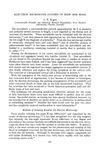
November 1959 in “Annals of the New York Academy of Sciences” Hair and wool have complex microscopic structures with microfibrils and varying cystine content.
12 citations
,
October 1947 in “Journal of the Society of Dyers and Colourists” Mercuric acetate makes wool unshrinkable by changing its elastic properties.
January 2025 in “Animal Science Journal” Golden takin's hair structure is adapted to maintain body temperature in harsh winters.