 11 citations
,
August 2010 in “Developmental neurobiology”
11 citations
,
August 2010 in “Developmental neurobiology” Ptprq has multiple forms that change during inner ear development.
 35 citations
,
September 2012 in “PloS one”
35 citations
,
September 2012 in “PloS one” Two distinct pathways direct proteins to vacuoles in Arabidopsis, affecting root hair growth and protein targeting.
8 citations
,
January 2017 in “Journal of Biological Chemistry” Astrotactin-2 is cleaved in a specific way that helps understand its maturation.
 28 citations
,
December 2018 in “Plant, cell & environment/Plant, cell and environment”
28 citations
,
December 2018 in “Plant, cell & environment/Plant, cell and environment” A protein called PLC2 is important for the growth and development of plant roots influenced by auxin.
21 citations
,
January 2006 in “Hormone Research in Paediatrics” A mutation in the VDR gene affects hair cycling without needing ligand binding.
July 2024 in “Journal of Investigative Dermatology” Versican in dermal papilla cells is crucial for healthy hair growth.
 3 citations
,
April 2023 in “Frontiers in Pharmacology”
3 citations
,
April 2023 in “Frontiers in Pharmacology” ATP-sensitive K+ channel subunits, particularly Sur2A, play a significant role in various cancers.
 98 citations
,
June 2001 in “Journal of biological chemistry/The Journal of biological chemistry”
98 citations
,
June 2001 in “Journal of biological chemistry/The Journal of biological chemistry” A cluster of sulfur-rich hair protein genes was found on chromosome 17.
14 citations
,
August 2014 in “The FASEB Journal” CAP1/Prss8 does not activate PAR2 or inhibit PN-1.
1 citations
,
January 2024 in “International journal of molecular sciences” TRPV4 helps cells repair tissue and reduce scarring by controlling calcium levels.
2 citations
,
September 2004 in “Experimental Dermatology” VR1 signaling can inhibit hair growth by affecting cell processes and increasing hair growth inhibitors.
 November 2022 in “The journal of investigative dermatology/Journal of investigative dermatology”
 Deleting the CD271 gene in mouse skin cells leads to disorganized skin and increased hair growth, suggesting CD271 is important for skin health.
January 2022 in “International journal of dermatology and venereology” A Chinese man with KID syndrome had a new mutation in the GJB2 gene.
9 citations
,
July 2022 in “Journal of Biological Chemistry” WWP2 is crucial for tooth development in mice.
 October 2024 in “Journal of the Endocrine Society”
 Certain genetic variants reduce enzyme activity, contributing to non-classic congenital adrenal hyperplasia.
February 2020 in “Oxford University Press eBooks” The alpha-helix was confirmed as a key structure in proteins.
 August 1994 in “Molecular Endocrinology”
 Changing protein kinase levels in pituitary cells affects calcium flow and beta-endorphin release.
 October 2007 in “Clinical Biochemistry”
 New genotype linked to non-classical congenital adrenal hyperplasia found in Italian siblings.
 March 2023 in “Pediatrics & neonatology”
 A baby girl had two brain-related growths removed and is developing normally.
227 citations
,
February 1989 in “The Journal of Comparative Neurology” CGRP-IR axons may help maintain and renew tissues.
57 citations
,
August 1997 in “Pediatrics International” VDDR I and II are genetic disorders affecting vitamin D use, causing rickets, with VDDR I treatable by vitamin D supplements and VDDR II needing high doses and calcium.
Sphingosine 1-phosphate helps control mechanical pain.
62 citations
,
December 2007 in “Journal of Cellular and Molecular Medicine” Kremen is crucial for proper development and preventing tumors by regulating Wnt signaling.
27 citations
,
February 2003 in “European Journal Of Oral Sciences” SVpgC2a cells show abnormal growth and keratin changes, modeling early cancer development.
12 citations
,
July 2004 in “Molecular genetics and genomics” A new mouse mutation causes skin and hair defects due to a gene change.
September 2021 in “The journal of investigative dermatology/Journal of investigative dermatology” Three genes linked to the development of trichilemmal cysts were found.
26 citations
,
May 2024 in “Molecular Neurodegeneration” H1 increases risk for neurodegenerative diseases, while H2 offers protection but is linked to other disorders.
 18 citations
,
February 2015 in “Acta Crystallographica Section D: Structural Biology”
18 citations
,
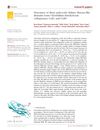
February 2015 in “Acta Crystallographica Section D: Structural Biology” The study concludes that certain domains in Clostridium histolyticum enzymes are structurally unique, bind calcium to become more stable, and play distinct roles in breaking down collagen, with potential applications in medicine and drug delivery.
10 citations
,
May 2024 in “BioEssays” TRPV3 is important for skin health and could be a target for treating skin diseases.
Whiskers can form without sensory nerves or Foxd1, thanks to Meis2 in mesenchymal cells.