December 2004 in “Neuropsychopharmacology” Long-term alcohol exposure alters brain receptor function differently in various brain regions.
53 citations
,
August 2017 in “Journal of Investigative Dermatology”  April 2017 in “Journal of Investigative Dermatology”
 Targeted siRNA therapy may be a promising treatment for KID syndrome by reducing mutant gene expression and improving cell communication.
11 citations
,
November 2019 in “The FASEB Journal” A mutation in the MAP2 gene causes reduced hair follicle density, leading to hairlessness.
1 citations
,
May 2024 in “Animal Biotechnology” Reducing miR-361-5p boosts hair growth in cashmere goats by activating stem cells.
72 citations
,
July 2002 in “Journal of Investigative Dermatology” Desmoglein 1 can partly make up for the loss of Desmoglein 3 in hair adhesion but not in mucous membranes.
January 2014 in “Duo Research Archive (University of Oslo)” Steroid hormones may affect sexual maturation in cod by altering certain KCa channel expressions.
221 citations
,
July 2012 in “Proceedings of the National Academy of Sciences of the United States of America” BMAL1 controls skin cell growth and UV damage risk, peaking at night.
2 citations
,
September 2014 in “Nature reviews. Drug discover/Nature reviews. Drug discovery” Specific immune cells cause alopecia areata and blocking certain proteins can prevent it.
December 2015 in “OPAL (Open@LaTrobe) (La Trobe University)” Minoxidil sulfate significantly improved hair growth in mice.
December 2015 in “OPAL (Open@LaTrobe) (La Trobe University)” Oleuropein increases IGF-1 levels in mouse skin.
 April 2017 in “Journal of Investigative Dermatology”
 Blocking JAK-STAT5 signaling in mice leads to hair growth.
48 citations
,
January 2011 in “Neuropharmacology” Isolation stress in rats reduces brain enzyme levels, affecting dopamine function.
A new image-based method improves accuracy in measuring hair loss in mice.
Lhx2 helps retinal cells respond to signals for eye development.
September 2017 in “Journal of Investigative Dermatology” LRIG1 protein affects hair growth by regulating skin receptors, leading to hair loss when overexpressed.
 52 citations
,
October 2012 in “Journal of Dermatological Science”
52 citations
,
October 2012 in “Journal of Dermatological Science” The document concludes that mouse models are crucial for studying hair biology and that all mutant mice may have hair growth abnormalities that require detailed analysis to identify.
 April 2016 in “Journal of Investigative Dermatology”
 Mice without the p21 gene can fully regenerate injured ears due to reduced Sdf1 increase and leukocyte recruitment, suggesting new ways to induce tissue regeneration in mammals.
 25 citations
,
February 2013 in “The journal of investigative dermatology/Journal of investigative dermatology”
25 citations
,
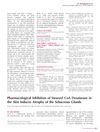
February 2013 in “The journal of investigative dermatology/Journal of investigative dermatology” Blocking SCD1 in the skin with XEN103 shrinks sebaceous glands in mice.
 13 citations
,
September 2019 in “Scientific Reports”
13 citations
,
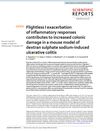
September 2019 in “Scientific Reports” High levels of the protein Flightless I worsen ulcerative colitis symptoms in mice.
1 citations
,
November 2025 in “Science Advances” Two gene variants cause white spots in cattle.
 131 citations
,
March 2004 in “The American journal of pathology”
131 citations
,
March 2004 in “The American journal of pathology” Modulating BMP activity changes the number, size, shape, and type of ectodermal organs.
79 citations
,
October 2003 in “PubMed” Overexpression of PKCepsilon leads to increased TNFalpha, promoting metastatic squamous cell carcinoma in mice.
14 citations
,
September 2001 in “Archives of Dermatological Research” Blocking hair follicle development stops key gene signals needed for hair growth in mice.
 7 citations
,
October 2017 in “Behavioural Pharmacology”
7 citations
,
October 2017 in “Behavioural Pharmacology” Fluoxetine's effectiveness as an antidepressant in mice depends on a specific protein activity and a 5-minute pretest.
 4 citations
,
July 2013 in “Journal of Dermatological Science”
4 citations
,
July 2013 in “Journal of Dermatological Science” Pregnancy right after giving birth in mice lacking IL-10 causes milk that leads to liver issues and hair loss in their babies.
May 2023 in “The Journal of Immunology” Alopecia areata involves unique activation of certain immune cells.
4 citations
,
July 2024 in “Animals” A new depilation method using cold wax reduces injury and improves hair growth studies in mice.
 18 citations
,
February 2022 in “Cell Death Discovery”
18 citations
,
February 2022 in “Cell Death Discovery” ECM1-modified stem cells can effectively treat liver cirrhosis.
333 citations
,
March 2000 in “Proceedings of the National Academy of Sciences” Overexpressing GLI-1 in mice skin can cause tumors like human basal cell carcinomas.