20 citations
,
March 1990 in “Archives of Dermatology” Nonimmunosuppressive cyclosporines might treat skin diseases by affecting cell growth.
104 citations
,
July 1994 in “The Journal of Cell Biology” Basonuclin helps keratinocytes multiply and prevents them from fully maturing.
 62 citations
,
June 2015 in “The Journal of Dermatology”
62 citations
,
June 2015 in “The Journal of Dermatology” People with alopecia areata have more Th17 cells and fewer Treg cells, which may be key to the condition's development.
33 citations
,
May 2018 in “Stem Cell Reports” Krt15+ cells in the mouse intestine resist radiation and can start tumors.
June 2024 in “The Journal of Dermatology” 7 citations
,
January 2021 in “bioRxiv (Cold Spring Harbor Laboratory)” Skin cells control immune cell placement, helping the skin respond better to challenges.
 February 2026 in “Nature Communications”
 A specific group of immune and skin cells may cause chronic inflammation in atopic dermatitis.
 45 citations
,
December 2014 in “Journal of the European Academy of Dermatology and Venereology”
45 citations
,
December 2014 in “Journal of the European Academy of Dermatology and Venereology” Plasmacytoid dendritic cells are a key factor in causing hair loss in alopecia areata and could help differentiate it from other hair loss conditions.
 6 citations
,
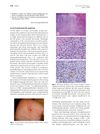
February 2010 in “Journal of The American Academy of Dermatology”
6 citations
,
February 2010 in “Journal of The American Academy of Dermatology” A woman had a rare skin condition with recurring painful nodules that heal in 6 weeks, often without needing treatment.
 November 2022 in “Journal of Investigative Dermatology”
 Dandruff is linked to changes in the immune system of hair follicles and skin.
14 citations
,
February 2008 in “Stem Cells and Development” Seven genes are highly expressed in both germ-line and hematopoietic stem cells.
September 2011 in “Chinese Journal of Dermatology” A man's skin condition was misdiagnosed and later identified as a rare type of skin cancer, which did not improve with treatment.
25 citations
,
May 2017 in “InTech eBooks” Catalytic antibodies are early indicators and active participants in the development of systemic lupus erythematosus.
1 citations
,
January 2018 in “Journal of Cosmetics Dermatological Sciences and Applications” A targetoid hair regrowth pattern indicates recovery in alopecia areata.
July 2026 in “bioRxiv (Cold Spring Harbor Laboratory)” TCDD exposure causes sebaceous glands to differentiate and produce more lipids before shrinking.
 14 citations
,
January 2012 in “International Journal of Trichology”
14 citations
,
January 2012 in “International Journal of Trichology” Hodgkin's lymphoma can show up as hair loss.
1 citations
,
April 2017 in “Journal of Dermatological Science” Certain immune cells may cause hair loss by reacting to stressed hair follicles.
33 citations
,
June 2021 in “Dermatologic Therapy” COVID-19 vaccines can trigger autoimmune flares but are still beneficial for patients with autoimmune conditions.
 April 2023 in “Journal of Investigative Dermatology”
 ALRN-6924 can protect hair follicles from chemotherapy damage by temporarily stopping cell division.
January 2016 in “AACE Clinical Case Reports” Treatment restored normal sexual characteristics and blood condition in a patient with testicular cancer.
 November 2023 in “Nature Communications”
 Cells lacking the Bax protein can outcompete others, leading to better tissue repair and hair growth.
 68 citations
,
September 2003 in “British Journal of Dermatology”
68 citations
,
September 2003 in “British Journal of Dermatology” Shrinking skin cancer increases the chance of cancer in nearby lymph nodes.
 November 2022 in “The journal of investigative dermatology/Journal of investigative dermatology”
 IL-15 promotes hair growth and protects hair follicles.
 2 citations
,
January 2024 in “Proceedings of the National Academy of Sciences of the United States of America”
2 citations
,
January 2024 in “Proceedings of the National Academy of Sciences of the United States of America” The research created a detailed map of skin cells, showing that certain cells in basal cell carcinoma may come from hair follicles and could help the cancer grow.
3 citations
,
August 2022 in “International Journal of Molecular Sciences” TSC2-/meth cells can cause skin lesions, hair growth, and lung issues, and may be treated with chromatin remodeling agents.
 120 citations
,
August 2008 in “The journal of investigative dermatology/Journal of investigative dermatology”
120 citations
,
August 2008 in “The journal of investigative dermatology/Journal of investigative dermatology” Cytokeratin 19 and cytokeratin 15 are key markers for monitoring the quality and self-renewing potential of engineered skin.
 278 citations
,
March 2013 in “Gut”
278 citations
,
March 2013 in “Gut” Anti-IL-12/IL-23 antibody therapy effectively treats psoriasiform skin lesions in IBD patients.
February 2026 in “Journal of Allergy and Clinical Immunology” Alopecia areata involves immune system issues and specific cell types that disrupt hair growth, leading to hair loss.
 4 citations
,
April 2016 in “Journal of The American Academy of Dermatology”
4 citations
,
April 2016 in “Journal of The American Academy of Dermatology” A patient with advanced kidney cancer and no hepatitis C developed skin inflammation due to a drug called interferon alpha-2a.
Deleting the MAD2L1 gene is tolerated in certain mouse cancer models.