October 2025 in “Cell Death and Disease” CD271 is crucial for maintaining healthy skin and preventing inflammation.
2 citations
,
September 2024 in “PLoS ONE” Bendamustine combined with tucidinostat may effectively treat adult T-cell leukemia.
69 citations
,
February 2008 in “The American journal of pathology” Controlled delivery of specific RNA and IL-4 restored hair growth in mice with autoimmune alopecia.
9 citations
,
December 1991 in “Annals of the New York Academy of Sciences”  3 citations
,
February 2022 in “Frontiers in cell and developmental biology”
3 citations
,
February 2022 in “Frontiers in cell and developmental biology” A specific RNA molecule, circCOL1A1, affects the growth and quality of goat hair by interacting with miR-149-5p and influencing cell growth pathways.
May 2024 in “International journal of medicine and psychology.” Monoclonal antibodies LT-1, LT-2, and LT-7 help diagnose certain blood cancers.
January 2024 in “Animals” Circular RNA ERCC6 helps activate stem cells important for cashmere goat hair growth by interacting with specific molecules in an m6A modification-dependent way.
January 2019 in “11th World congress for hair research” 45 citations
,
March 1997 in “Journal of Investigative Dermatology”  6 citations
,
April 2017 in “Experimental dermatology”
6 citations
,
April 2017 in “Experimental dermatology” CD80CD86 deficiency causes hair loss by disrupting regulatory T cells.
13 citations
,
August 1985 in “The Journal of Dermatology” HKN-2 antibody targets specific skin and hair cells, showing keratin complexity.
2 citations
,
June 2025 in “Journal of Investigative Dermatology” CD8+ T cells re-expressing CD45RA may predict treatment resistance in severe alopecia areata.
 February 2025 in “PubMed”
 CS12192 effectively treats alopecia areata with better safety than current options.
 April 2018 in “Journal of Investigative Dermatology”
 Researchers found that the Leptin receptor is a consistent marker for hair follicle dermal cells, which may help future hair research.
 October 2023 in “Regular and Young Investigator Award Abstracts”
 Baricitinib treatment helped reduce hair loss symptoms in mice by decreasing inflammation-related immune cells.
26 citations
,
June 2005 in “British Journal of Dermatology” Calretinin identifies the companion cell layer in human hair follicles.
51 citations
,
December 2006 in “Mammalian Genome” 5 citations
,
March 2020 in “Thoracic Cancer” CT-707 is effective and safe for treating certain Chinese lung cancer patients.
 120 citations
,
August 2008 in “The journal of investigative dermatology/Journal of investigative dermatology”
120 citations
,
August 2008 in “The journal of investigative dermatology/Journal of investigative dermatology” Cytokeratin 19 and cytokeratin 15 are key markers for monitoring the quality and self-renewing potential of engineered skin.
 27 citations
,
May 2007 in “Archives of dermatological research”
27 citations
,
May 2007 in “Archives of dermatological research” Diphencyprone treatment increases CD8 lymphocytes in the scalp, which is associated with hair regrowth in alopecia areata patients.
 April 2018 in “Journal of Investigative Dermatology”
 CREB, a protein that can promote cancer traits, is controlled by β-catenin in skin cancer cells.
41 citations
,
December 1988 in “Journal of Investigative Dermatology” January 2026 in “Medicina” CD34 is absent in most basal cell carcinoma cells but present in surrounding skin.
 13 citations
,
June 2020 in “BMC genomics”
13 citations
,
June 2020 in “BMC genomics” A specific microRNA, chi-miR-30b-5p, slows down the growth of hair-related cells by affecting the CaMKIIδ gene in cashmere goats.
 1 citations
,
June 2018 in “International Journal of Dermatology”
1 citations
,
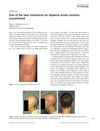
June 2018 in “International Journal of Dermatology” DNCB is highly effective for treating alopecia areata with minimal long-term side effects.
 December 2024 in “Kırıkkale Üniversitesi Tıp Fakültesi Dergisi”
 Chromosomal microarray analysis is important for diagnosing rare genetic variations and guiding treatment.
November 2025 in “The Journal of Immunology” A humanized IL-2 fusion protein boosts T regulatory cells and helps control hair loss in Alopecia Areata.
April 2023 in “Journal of Investigative Dermatology” Increased TEMRA cells can predict treatment outcomes in rapidly progressive alopecia areata.
1 citations
,
January 1989 Four antibodies were developed to help study hair follicle cell differentiation.
 April 2017 in “Journal of Investigative Dermatology”
 The protein CTCF is essential for skin development, maintaining hair follicles, and preventing inflammation.