The nail immune system is similar to hair but different from skin, with fewer immune markers.
July 2025 in “Journal of Investigative Dermatology” γδ T cells can prevent and treat alopecia areata, offering a new therapy option.
5 citations
,
May 2018 in “Cancer Cell” Less differentiated melanoma cells are more vulnerable to a type of cell death, which could improve cancer treatments.
 6 citations
,
February 2025 in “Scientific Reports”
6 citations
,
February 2025 in “Scientific Reports” MEGA PROTAC improves prediction and ranking of protein complexes better than existing methods.
 8 citations
,
September 2016 in “The American Journal of Dermatopathology”
8 citations
,
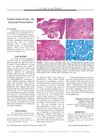
September 2016 in “The American Journal of Dermatopathology” Enlarged sweat gland ducts may indicate scarring hair loss.
 April 2026 in “bioRxiv (Cold Spring Harbor Laboratory)”
 A new microneedle patch significantly improves melanoma treatment by using a special material to activate cancer-fighting drugs and disrupt cancer cells.
 April 2023 in “The journal of investigative dermatology/Journal of investigative dermatology”
 The study found that a key immune pathway protecting hair follicles is reduced in a mouse model of scarring hair loss.
 20 citations
,
December 1995 in “International Journal of Pharmaceutics”
20 citations
,
December 1995 in “International Journal of Pharmaceutics” Liposomes can make the antiandrogen RU 58841 more effective for skin application by reducing absorption, increasing skin retention, and targeting sebaceous structures.
June 2020 in “Zenodo (CERN European Organization for Nuclear Research)” The DNMT3B -579G>T polymorphism may increase the risk of colorectal cancer.
7 citations
,
March 2023 in “Lasers in Surgery and Medicine” Ablative fractional laser treatment nearly matches the gene reduction effects of topical vismodegib in skin cancer.
1 citations
,
July 2020 in “The Egyptian Journal of Hospital Medicine” The MDR1 C3435T polymorphism does not significantly affect methotrexate response in rheumatoid arthritis patients.
4 citations
,
November 2020 in “Acta Dermato Venereologica” Tofacitinib effectively improved severe skin symptoms in a patient with Hypohidrotic Ectodermal Dysplasia.
7 citations
,
October 2016 in “Cellular and Molecular Bioengineering” E-cadherin is important for cell movement in electric fields, and the new tracking method works well.
29 citations
,
June 2015 in “Kidney International” Disrupting the Flcn gene in mice causes early kidney cysts and tumors, which can be treated with rapamycin.
 February 2024 in “Advanced Functional Materials”
 The hydrogel patch helps heal diabetic wounds by releasing a healing agent in response to harmful molecules and improving skin regeneration.
45 citations
,
January 2021 in “Drug Delivery” MM-CEP/NLCs could effectively treat lung inflammation.
 6 citations
,
October 2012 in “Journal of Heredity”
6 citations
,
October 2012 in “Journal of Heredity” The Itpr3 gene causes a specific hair pattern in mice.
 2 citations
,
March 2023 in “JAAD case reports”
2 citations
,
March 2023 in “JAAD case reports” Hair repigmentation can indicate malignancy and should be investigated.
 4 citations
,
October 2018 in “Asia-Pacific Journal of Clinical Oncology”
4 citations
,
October 2018 in “Asia-Pacific Journal of Clinical Oncology” CDK4/6 inhibitors have improved treatment outcomes for certain advanced breast cancer patients.
 April 2023 in “The journal of investigative dermatology/Journal of investigative dermatology”
 p120-catenin helps control skin inflammation by regulating cadherin levels.
 56 citations
,
February 2010 in “PLOS ONE”
56 citations
,
February 2010 in “PLOS ONE” Blocking Wnt signaling in young mice causes thymus shrinkage and cell loss, but recovery is possible when the block is removed.
 April 2018 in “Journal of Investigative Dermatology”
 The document concludes that ERBB2 mutations are common in extramammary Paget disease and may respond to systemic treatments like cancer immunotherapy.
 3 citations
,
January 2023 in “Science advances”
3 citations
,
January 2023 in “Science advances” The enzymes Tet2 and Tet3 are important for skin cell development and hair growth.
 25 citations
,
August 2007 in “Molecular Therapy”
25 citations
,
August 2007 in “Molecular Therapy” Researchers found a safe and effective way to pick genetically modified skin cells with high growth potential using CD24.
 8 citations
,
March 2020 in “Frontiers in Cell and Developmental Biology”
8 citations
,
March 2020 in “Frontiers in Cell and Developmental Biology” Researchers created immortal human skin cells with constant testosterone receptor activity to study hair loss and test treatments.
A rare genetic mutation causes severe immune issues, hair loss, and nail problems.
 August 2023 in “The journal of investigative dermatology/Journal of investigative dermatology”
 Longer immunotherapy treatment may improve outcomes for Merkel cell carcinoma patients.
180 citations
,
April 2002 in “Cell Death and Differentiation”  August 2025 in “MedScien”
 Tumor-targeted drug carriers can improve chemotherapy precision and reduce side effects.
April 2017 in “The journal of investigative dermatology/Journal of investigative dermatology” Double stranded RNA helps skin wounds heal by coordinating specific proteins and signaling pathways.