April 2012 in “Neuropediatrics” Trichothiodystrophy is a rare genetic disorder causing hair issues and sometimes linked to DNA repair defects.
 6 citations
,
July 2015 in “International Journal of Dermatology”
6 citations
,
July 2015 in “International Journal of Dermatology” Trichoepitheliomas can be hard to distinguish from other skin conditions and often start in teenage years.
January 2026 in “Human Mutation” T cell subsets are crucial in kidney cancer, and a new model predicts patient outcomes using key genes.
52 citations
,
July 2011 in “PubMed” TRPS1 is crucial for bone, kidney, and hair follicle development.
A neck lesion misdiagnosed as benign was later treated successfully with Mohs Micrographic Surgery.
23 citations
,
June 1992 in “PubMed” RAR-gamma 1 is important for normal skin maintenance and differentiation.
 April 2019 in “Journal of Investigative Dermatology”
 Merkel cell carcinoma is most likely to recur within two years of diagnosis, and factors like immune suppression, being over 75, and male sex increase this risk.
 5 citations
,
June 2001 in “Annals of Internal Medicine”
5 citations
,
June 2001 in “Annals of Internal Medicine” Rituximab effectively treated a woman's bone lymphoma that was resistant to other treatments.
 61 citations
,
April 2014 in “Radiation Research”
61 citations
,
April 2014 in “Radiation Research” RTA 408 cream protects mice from radiation skin damage.
 September 2023 in “Research Square (Research Square)”
 TNC+ fibroblasts play a key role in skin inflammation by interacting with T cells.
1 citations
,
August 2016 in “Journal of Investigative Dermatology” Vδ1+ T-cells in the skin contribute to hair loss in alopecia areata and could be targeted for treatment.
11 citations
,
April 1993 in “PubMed” Human hair cells can change based on their environment, especially interactions with certain skin cells.
1 citations
,
November 2022 in “Journal of Investigative Dermatology” ALRN-6924 may prevent hair loss caused by chemotherapy.
 7 citations
,
July 2019 in “The Journal of Dermatology”
7 citations
,
July 2019 in “The Journal of Dermatology” Terbinafine effectively treated kerion celsi despite disrupted immune responses.
July 2023 in “Nature Immunology” CD8+ virtual memory T cells may cause hair loss in alopecia areata.
April 2019 in “The journal of investigative dermatology/Journal of investigative dermatology” A specific mutation in the TRPV3 gene causes hair follicle cells to develop improperly, leading to hair loss.
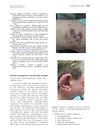
A 72-year-old man was diagnosed with a rare skin form of Rosai-Dorfman disease after years of misdiagnosis.
 12 citations
,
March 2016 in “BBA clinical”
12 citations
,
March 2016 in “BBA clinical” Increased Toll-like receptors in blood cells may contribute to alopecia areata and could be a target for new treatments.
 2 citations
,
December 2020 in “American Journal of Dermatological Research and Reviews”
2 citations
,
December 2020 in “American Journal of Dermatological Research and Reviews” The combination therapy was effective and well-tolerated, especially in young patients.
 April 2023 in “The journal of investigative dermatology/Journal of investigative dermatology”
 Researchers found three types of melanocytes in developing mouse skin, each with different genes and locations.
 16 citations
,
March 2013 in “The Journal of Dermatology”
16 citations
,
March 2013 in “The Journal of Dermatology” Low TRPS1 expression in skin and hair cells is linked to hair problems in Trichorhinophalangeal syndrome.
28 citations
,
April 2024 in “Immunity” CD80 on skin stem cells helps expand Treg cells to aid wound healing.
OCT4B1 and SOX-2 levels are higher in Crohn's and ulcerative colitis patients, possibly aiding tissue repair.
 5 citations
,
December 2017 in “Tissue and cell/Tissue & cell”
5 citations
,
December 2017 in “Tissue and cell/Tissue & cell” Researchers found stem cells in dog hair follicles using specific markers.
13 citations
,
August 2000 in “Blood” Measuring minimal residual disease on day 15 helps identify high-risk leukemia patients.
October 2025 in “Cell Death and Disease” CD271 is crucial for maintaining healthy skin and preventing inflammation.
 6 citations
,
January 2021 in “Frontiers in Immunology”
6 citations
,
January 2021 in “Frontiers in Immunology” Certain immune cells worsen post-surgery gut paralysis by activating a specific immune response.
 January 2025 in “Dermatology Review”
 Trichilemmal carcinoma is rare, usually benign after removal, but needs close follow-up due to recurrence risks.
22 citations
,
March 2017 in “Transplant Infectious Disease” Leflunomide successfully treated a rare skin condition in a liver transplant patient.
33 citations
,
October 2006 in “European Journal of Immunology” The CD44-CD49d complex boosts T cell activation and survival in autoimmune disease.